Shaping Federal Policy to Power Arizona Innovation: Highlights from the Arizona Technology Council’s 2026 DC Fly-In
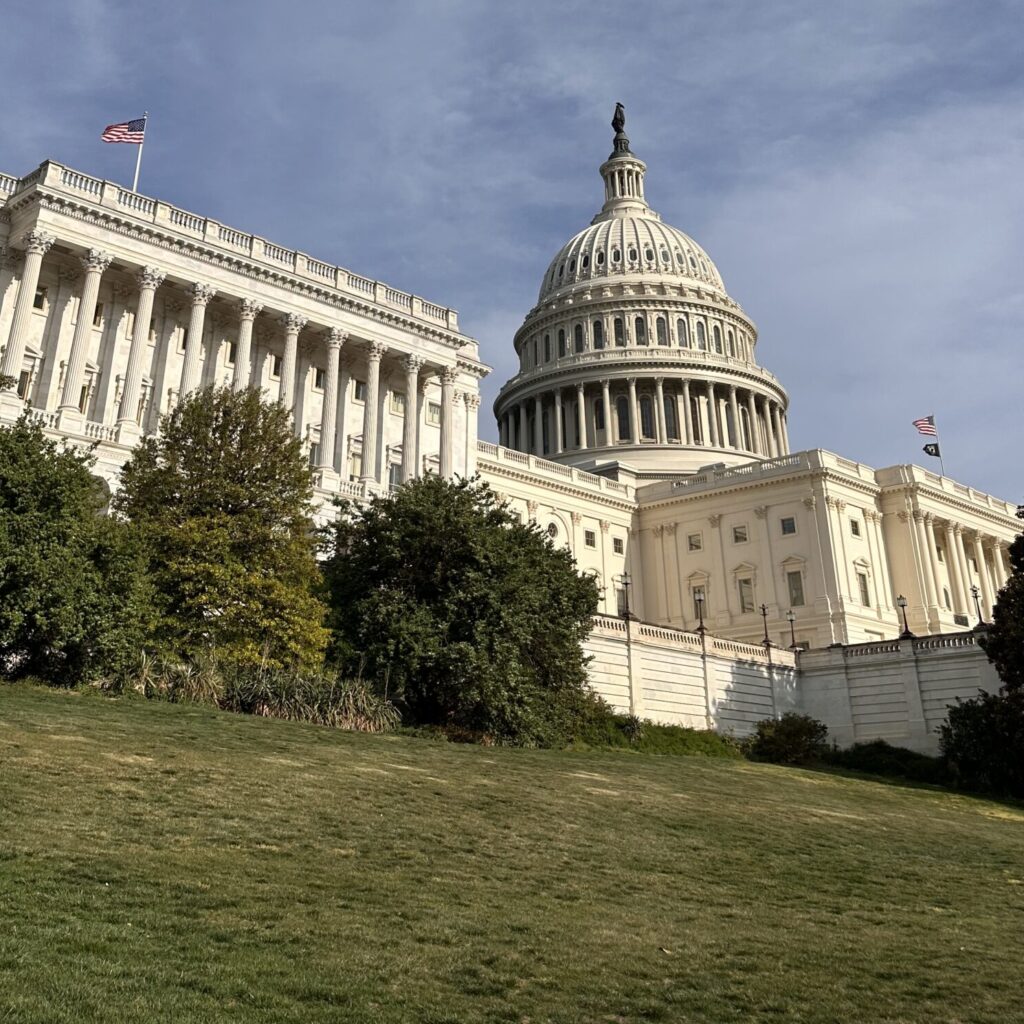
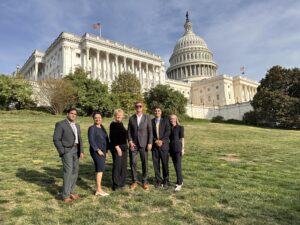
In April, the Arizona Technology Council returned to Washington, D.C., for its annual DC Fly-In, bringing together Council leadership, members and national partners for a powerful agenda of policy engagement, collaboration and advocacy on behalf of Arizona’s fast-growing technology ecosystem.
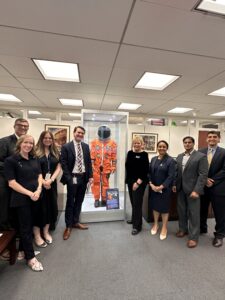
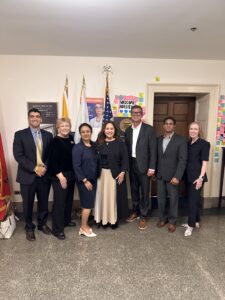
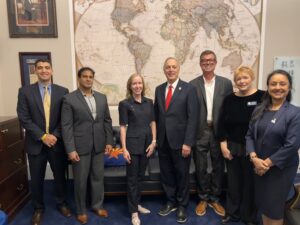
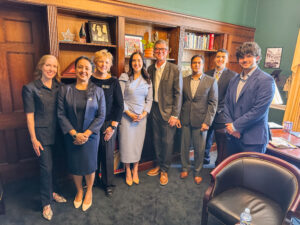
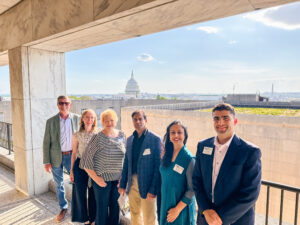
AZTC’s 2026 DC Fly-In Delegation:
Arizona Technology Council Staff:
- Steven G. Zylstra, President and CEO
- Cepand Alizadeh, Government Relations Specialist
- Leslie Marquez, Director of Marketing + Communications
AZTC Members:
- Linda Bixby, Chief Research Partnerships Officer, Office of Research and Partnerships, The University of Arizona
- Rachna Nath, Founder and CEO, DRIPBL
- Sreeram Vadlamudi, Enterprise AI and Data Strategy Professional
National Insights + Strategic Dialogue
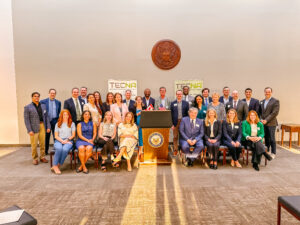
With support from the Technology Councils of North America (TECNA), the Arizona delegation joined other technology council representatives from across the country for policy briefings, networking and panel discussions with congressional staff, federal agency representatives and national policy experts. Conversations focused on some of the most pressing issues shaping the future of innovation, including artificial intelligence infrastructure, federal AI policy framework, workforce development and the upcoming mandatory joint review of the United States-Mexico-Canada Agreement (USMCA) enacted in 2020.
These discussions provided valuable insights into the evolving federal landscape and reinforced the importance of ensuring Arizona’s technology industry voice remains strong and aligned with national priorities.
Advocating Arizona on Capitol Hill
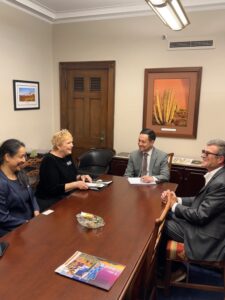
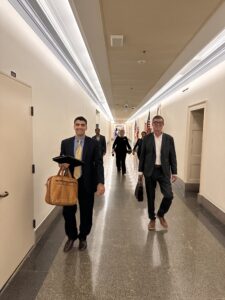
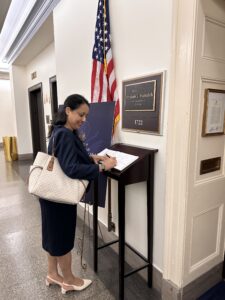
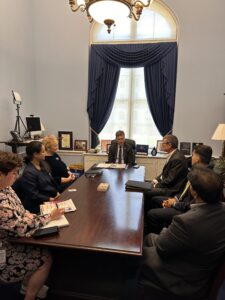
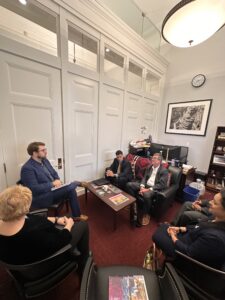
The centerpiece of the DC Fly-In was a non-stop day of meetings on Capitol Hill, where the Council team met with lawmakers and staff from 10 of Arizona’s 11 congressional offices.
During these meetings, Steve shared the Council’s 2026 Policy Agenda, emphasizing federal actions needed to sustain Arizona’s economic momentum and global competitiveness:
- Advanced Manufacturing + Tax Policy
Advocating federal tax policies that strengthen innovation-driven economies, especially for semiconductors, clean energy, aerospace and health care. - Aerospace + Defense
Supporting the extension of Foreign-Derived Deduction Eligible Income (FDDEI) provisions and broader export tax relief tools critical to Arizona companies competing globally, including those in the aerospace and defense, energy, and semiconductor sectors. - Data Centers + AI Infrastructure
Championing policies that support energy diversification, streamlined permitting and workforce development to sustain and ensure Arizona’s leadership in AI and data center growth. - Manufacturing Extension Partnership (MEP)
Calling for continued federal investment in MEP programs that empower small- and medium-sized manufacturers to scale, innovate and compete. - STEM Workforce + Talent
Urging support for high-skilled immigration reform and expanded workforce development pathways in emerging technology fields. - United States-Mexico-Canada Agreement (USMCA)
Advocating USMCA’s renewal and potential modernization as part of the 2026 joint review process by highlighting the agreement’s critical role in Arizona’s economy, including supporting more than $32 billion in exports. - Advancing Clean Energy + Infrastructure Priorities
Emphasizing the importance of a reliable, resilient and diversified energy future to support continued expansion of Arizona’s high-tech industries and data infrastructure.
Key priorities include:
- Streamlining permitting for utility-scale solar, wind and transmission projects
- Promoting responsible resource use and innovative solutions like “bring-your-own-capacity” (BYOC) for large energy users
- Expanding investment in battery energy storage systems (BESS) to enhance grid reliability and manage increasing demand
Together, these efforts are essential to ensuring Arizona can meet future energy needs while maintaining affordability, reliability and long-term economic competitiveness.
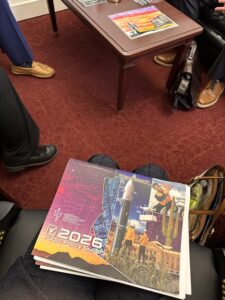
In each meeting, the Council’s delegation provided tailored and detailed leave-behinds, as well as copies of the 2026 Public Policy Guide for representatives, senators and staffers. Conversations with lawmakers and their staff were collaborative and the feedback was overwhelmingly positive. Several indicated specific ways they would follow up, including event attendance, supporting federal appropriations, advocating specific programs, future conversations and more.
Member Voices Elevating Critical Priorities
A defining strength of the DC Fly-In is the opportunity for Council members to share their firsthand expertise and perspectives directly with policymakers.
- Sreeram Vadlamudi highlighted the urgent need for quantum-ready workforce development, emphasizing that advancements in post-quantum cryptography and quantum systems will require talent pipelines extending beyond Ph.D.-level researchers to include engineers, cybersecurity professionals and technicians.
- Rachna Nath underscored the importance of aligning education and industry, from K-12 through higher education and into the workforce, to prepare for the next wave of innovation driven by quantum technologies and STEAM-focused learning.
- Linda Bixby contributed insights on strengthening research partnerships and advancing academic-industry collaboration to accelerate innovation across sectors, as well as provided insight into the $30 million appropriations request for the High-Energy Laser (HELTech) next-generation laser weapons system at The University of Arizona’s Center for Directed Energy.
Positioning Arizona for What’s Next
Discussions throughout the DC Fly-In made clear that Arizona sits at the intersection of several transformative technology sectors supporting U.S. competitiveness and national security. The state’s growing leadership in photonics, space technologies, robotics, fusion and quantum innovation presents a unique opportunity, where these fields increasingly converge through shared talent pipelines, advanced manufacturing capabilities and integrated research ecosystems.
This synergy will accelerate both discovery and commercialization, positioning Arizona as a national leader in next-generation computing, sensing and secure communications.
Looking Ahead
The 2026 DC Fly-In reinforced the Council’s role as a leading advocate for the state’s innovation economy. By bringing together industry, academia and policymakers, the Council continues to ensure Arizona’s priorities are heard and that the policies shaping our future support growth, competitiveness and opportunity.
In addition to this federal advocacy work, the Council’s Political Action Committee (PAC) plays a vital role in advancing a pro-innovation policy environment at the state level. The PAC supports candidates, regardless of political affiliation, who are committed to strengthening Arizona’s technology ecosystem and improving the business climate for technology-driven companies. Council leadership and Public Policy Committee members carefully vet candidates to ensure alignment with these priorities, and we encourage members and stakeholders to consider contributing to support this important effort.
As we build on the momentum from this year’s DC Fly-In and complete our all-important follow-up, we look forward to continuing the Council’s work with policymakers and partners to advance a thriving, resilient and innovation-driven Arizona.
Learn more about the Council’s Public Policy efforts >>