
TSMC accelerates production timeline for new Arizona factory, reports say
Taiwan Semiconductor Manufacturing Co. plans to install chipmaking equipment in its second Arizona plant next summer as it prepares for mass production at the fab a year earlier than projected, according to an Asian media report.
TSMC will begin installing equipment and tools in the third quarter of 2026, paving the way to begin 3-nanometer chip production by 2027, Nikkei Asia reported, citing several sources familiar with the matter.
TSMC is initially projected to begin production at its second Arizona fab by 2028. The company, however, continues to see strong AI-related demand from customers, prompting its decision to accelerate U.S. chip production and upgrades to its more advanced process technologies, TSMC CEO C.C. Wei said during an Oct. 16 earnings call.
After equipment is installed in a chip plant, it can take up to a year to qualify production lines and ramp up output. Even more advanced chip production could take longer as there’s thousands of steps involved and requires extensive work to transfer and verify processes to another plant, Nikkei Asia reported, citing information from semiconductor industry executives.
A TSMC spokesperson declined to comment on the Nikkei Asia report and instead pointed to Wei’s commentary from the company’s October earnings call, in which he said strong collaboration and support for U.S. customers and government is fueling its capacity expansion in Arizona.
“We are making tangible progress and executing well to our plan,” Wei said.
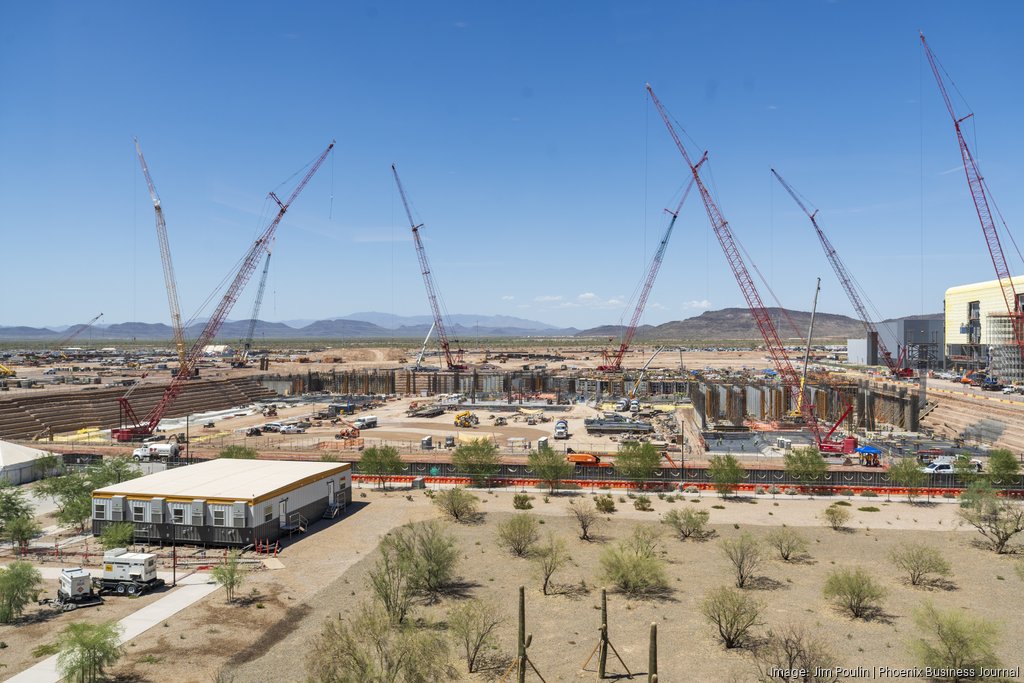
TSMC’s first Arizona fab entered high-volume production in late 2024, using N4 process technology with a yield comparable to its Taiwan fab. The company completed construction of its second fab — which will utilize 3-nanometer process technology — in April and broke ground on its third fab at its north Phoenix site that same month.
TSMC’s third fab is expected to utilize 2-nanometer and A16 process technologies, while its fourth fab will utilize N2 and A16 process technologies. The company’s fifth and sixth fabs are expected to use far more advanced technologies, Wei said in July.