
TSMC, ASU launch tech training program to meet workforce demand
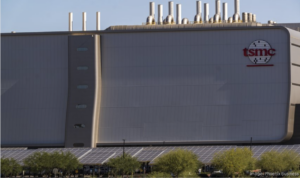
Taiwan Semiconductor Manufacturing Co. is partnering with Arizona State University on a new semiconductor workforce training program that could potentially help fill hundreds of jobs at the company’s chip factory in north Phoenix.
The university announced Tuesday it’s launching the ASU Foundations for Equipment Technician Program in collaboration with TSMC Arizona to prepare people for semiconductor equipment technician roles in weeks or months rather than years, according to a university release. Semiconductor equipment technicians are responsible for maintaining and troubleshooting highly specialized systems that maintain around-the-clock chip production at fabs.
“This is an opportunity for individuals who are looking to try something new or connect more directly with an industry that’s growing rapidly in the Valley,” Adam Eklund, senior program manager for ASU’s Ira A. Fulton Schools of Engineering, said in a statement. “There are a ton of roles that need to be filled and they need them fast.”
The program — offered at no cost to participants — launches as TSMC expands its Arizona manufacturing operations. The company expects to fill thousands of equipment, facilities, process and manufacturing technician roles to support its first three fabs in north Phoenix, where it currently employs more than 3,500 workers.
Participants who complete the training and meet program requirements will be guaranteed an interview with TSMC and also gain industry-recognized credentials that can help them pursue opportunities with other companies and employers across the semiconductor sector, according to ASU.
By the end of this year, TSMC Arizona plans to hire more than 100 equipment technicians, according to the company.
“TSMC Arizona is deeply committed to building a strong and sustainable semiconductor workforce here in Arizona, and that starts with investing in local programs that create meaningful pathways into our industry,” Rose Castanares, president of TSMC Arizona, said in a statement. “Technicians play a vital role in fab operations and are essential to the precision and reliability required in advanced semiconductor manufacturing.”
“Semiconductor manufacturing is expanding rapidly, and existing education pipelines cannot meet demand at the required speed,” Starly said. “With scale, industry alignment and access to advanced infrastructure, ASU can deliver workforce programs quickly.”
To make training more accessible, the workforce training program offers three flexible formats: a five-week equipment technician accelerator, a 16-week intensive program and an 18-week Saturday-only option. Two cohorts begin in June and one starts in July.
Participants will train in environments designed to mirror real semiconductor fabs, gaining exposure to industry tools, systems and safety protocols via ASU’s access to labs and cleanroom facilities across the Valley.
Brisk demand expected for workforce training program
Starly told the Business Journal that ASU has been “silently marketing” the program through its contacts at area high schools and community colleges and is expecting brisk interest from prospective participants.
For each cohort, there’s between 40 to 50 spots available. ASU expects to train about 150 people via the programs by the end of the year, Starly said.
“Once they are done with initial training at TSMC, they can receive job offers,” he said. “Any additional training needed will be determined by TSMC Arizona after they receive a job offer.”
A TSMC spokesperson confirmed the company is contributing financial support — including tuition — for the program but declined to disclose the amount.
The program with ASU is among a family of programs that opens doors for local workers to obtain training as technicians, the TSMC spokesperson said.
TSMC Arizona launched a similar 11-week manufacturing technician training program with Grand Canyon University in 2025. What’s more, Northern Arizona University is hosting a two-year program developed in partnership with TSMC Arizona, Rio Salado College and the city of Phoenix that combines university coursework with on-the-job training at TSMC’s north Phoenix fab site.
The new training program comes as California-based Applied Materials. Inc. said it’s collaborating with TSMC at the company’s EPIC Center, a $5 billion research-and-development hub designed to accelerate the transition of semiconductor innovations from early-stage research to high-volume manufacturing.
ASU, along with Rensselaer Polytechnic Institute and Stanford University, will join Applied Materials’ EPIC Center as inaugural research partners.
At the EPIC Center, engineers and researchers will focus on advancing process technologies that improve power, performance and chip density, according to the Silicon Valley Business Journal.
TSMC, the world’s largest contract chip manufacturer, will gain earlier access to Applied Materials’ research pipeline and tools, potentially shortening development timelines for leading-edge technologies.