AI is transforming unified communications by significantly enhancing workflow management between customer-facing and back-office employees, streamlining data flow, and improving decision-making. By 2026, most enterprises will adopt AI-enabled cloud communication APIs to enhance personalized customer and employee engagement, driving better business outcomes. This shift is leading to increased operational expenditures, reflecting the broader move towards cloud-based digital engagement platforms. This broader trend is reflected in several key developments:
Conversational engagement apps leveraging AI and multiple communication channels are widely planned or in use.
AI is automating simpler customer service tasks through chatbots, allowing human agents to focus on complex interactions.
AI capabilities have become critical criteria in selecting cloud communication platform vendors.
Register for the Council’s upcoming Phoenix and Tucson tech events and Optics Valley optics + photonics events.
Image: Phoenix Community Alliance
Phoenix Community Alliance (PCA) proudly recognizes Christine Mackay, President & CEO of GPEC and former City of Phoenix Community and Economic Development Director, and Tricee Thomas, Founder of House of Patterns and The Garment League, as the 2025 Center City Award recipients for their outstanding contributions to Greater Downtown Phoenix.
Both leaders were honored at PCA’s Annual Member Meeting and Center City Awards.
Register for the Council’s upcoming Phoenix and Tucson tech events and Optics Valley optics + photonics events.
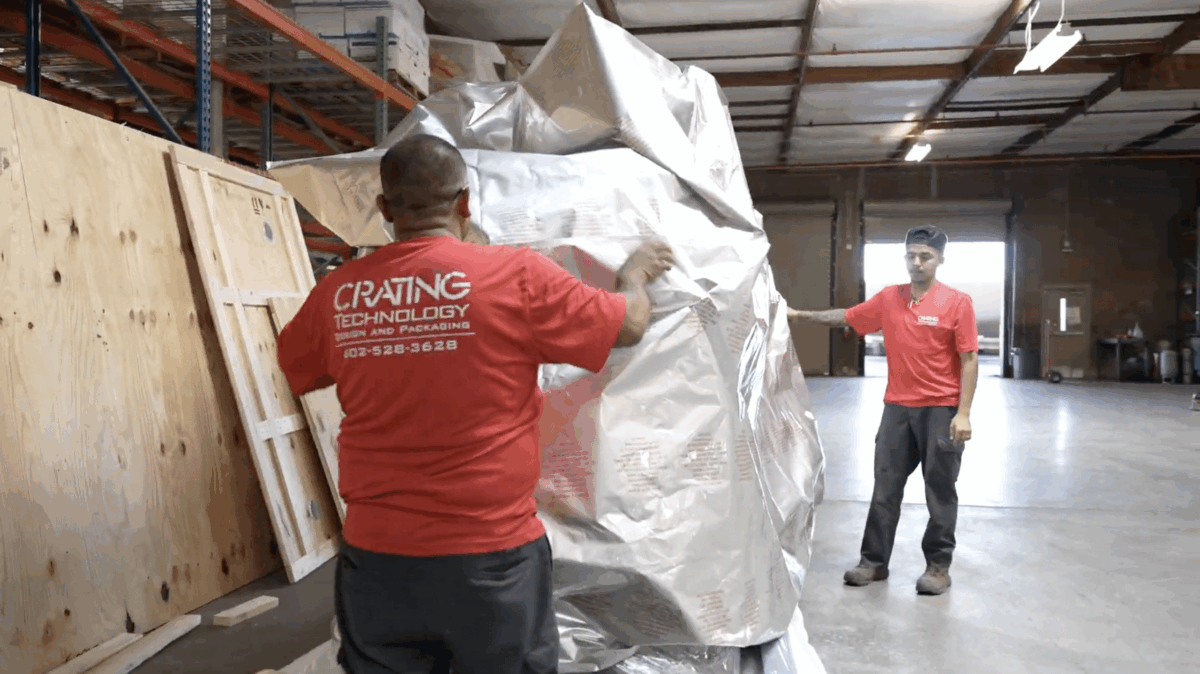
Shipping high-value equipment comes with risk, especially when delays, damage, or regulatory issues interrupt the process. For many manufacturers and tech companies, on-site crating offers a practical alternative. Instead of transporting equipment to a separate location for packaging, the crating is done right at the source. A trained team brings the materials and builds the crate around the product, saving time and reducing unnecessary handling.
Image: Crating Technology
This approach is becoming increasingly valuable in industries where time, space, and precision are critical, like aerospace, manufacturing, medical equipment, and tech. For companies shipping large, fragile, or highly customized assets, on-site crating reduces risk and streamlines logistics.
With years of experience, Crating Technology delivers trusted on-site packaging services to operations teams across the Southwest. Whether you’re shipping machinery, electronics, or sensitive lab gear, our process ensures everything is crated securely and ready for domestic or international shipment.
How On-Site Crating Works
On-site crating is a structured process handled by trained packaging professionals. Here’s how it typically works:
Assessment: Crating experts review your equipment’s specs, fragility, and shipping requirements.
Planning: A custom design is created based on product dimensions, handling needs, and transportation method.
Material Prep: Foam, wood, vapor barrier wrap, and other packaging materials are cut and prepared in advance.
On-Site Assembly: A crating team visits your facility, builds the crate, and installs all protective packaging around the equipment.
Sealing & Labeling: Once the item is secured, the crate is closed, labeled, and ready for pickup or loading.
This process eliminates the need to move your equipment to a third-party warehouse for packaging—saving time, money, and potential damage.
Image: Crating Technology
Key Benefits of On-Site Crating
1. Cost Efficiency
On-site crating minimizes logistics and handling costs. There’s no need to hire transport to move your equipment across town just to have it packed. You also avoid duplicate handling fees and reduce the risk of costly damage that can occur in transit between facilities.
2. Time Savings and Reduced Downtime
In manufacturing and tech, time is money. On-site crating speeds up turnaround by allowing packaging to happen where the equipment already sits. This is ideal for companies operating under strict schedules or preparing for time-sensitive installations.
3. Enhanced Protection for Sensitive Equipment
Equipment like servers, CNC machines, or medical imaging systems are highly sensitive. On-site crating allows for custom industrial packaging that’s built around each item’s specific shape, weight, and fragility. Foam inserts, blocking, bracing, and vapor barriers can all be applied without moving the asset.
4. Compliance with Export and Industry Standards
When shipping internationally or under defense contracts, compliance matters. On-site crating often includes ISPM-15 certified wood, military spec materials, and precise documentation. These features ensure that your crate meets the necessary export and regulatory requirements.
5. Tailored Solutions for Unique Equipment
Every piece of equipment has its quirks—protrusions, irregular footprints, fragile components. On-site crating lets your packaging team measure and fit around those quirks in real time. That level of customization is hard to match in off-site environments.
6. Convenience and Less Disruption
Packaging teams arrive when you need them, at your location. This reduces disruption to your facility’s operations and keeps your team focused on production—not logistics prep.
Preparing Server Racks for International Shipping
A tech company relocating its data center required secure packaging for multiple server racks. The racks were operational until the final day, so on-site crating allowed the company to minimize downtime and ship the racks as soon as they were powered down. Anti-static foam and bracing were applied on-site to ensure safe arrival overseas.
Why Businesses Choose Crating Technology
With over two decades of experience, Crating Technology is a trusted partner for industrial crating solutions. We’ve provided on-site packaging services for manufacturers, semiconductor firms, and aerospace suppliers across the Southwest.
We’re committed to:
Using ISPM-15 certified, export-compliant materials
Designing every crate for the equipment it protects
Delivering fast, dependable on-location service
Key Takeaways
On-site crating reduces risk, saves time, and eliminates unnecessary equipment movement.
It enables highly customized protection for fragile and oversized equipment.
Crating on location supports regulatory compliance and reduces project downtime.
This service is essential for industries like tech, manufacturing, and aerospace.
Ready to secure your next shipment? Contact Crating Technology to discuss your project and get a custom packaging assessment.
FAQs About On-Site Crating
What is on-site crating and who needs it?
On-site crating is when a packaging team comes to your location to build and apply protective packaging for your equipment. It’s ideal for companies with large, fragile, or high-value assets that can’t be easily moved.
Is on-site crating better than warehouse crating?
For many businesses, yes. On-site crating avoids the need to transport equipment off-site, reducing handling risks, costs, and delays.
How much does on-site crating cost?
Costs vary based on crate complexity, materials, and location. However, savings from reduced handling, transport, and downtime often outweigh the cost of on-site service.
What kind of items can be crated on-site?
Items like semiconductor tools, industrial machinery, server racks, and medical devices are commonly crated on-site. Any equipment that is sensitive, oversized, or expensive may benefit from this service.
Register for the Council’s upcoming Phoenix and Tucson tech events and Optics Valley optics + photonics events.
Salt River Project wants to develop a new 1,675-megawatt energy generation hub as power demand continues to grow statewide.
The proposed site — called the Marigold Energy Center — would include solar arrays, battery storage and natural gas turbines. Officials hope to put it on approximately 5,000 acres of land near Stanfield, located about 45 miles south of Phoenix.
The utility, which serves electric to about 1.1 million customers, has long eyed that area as a potential home for new generation infrastructure. Bill McClellan, director of resource planning, acquisition and development at SRP, said several transmission lines and gas pipelines already run near or through the site, making it easier to connect various types of energy resources.
“It can host solar, storage and also natural gas resources — and one of the reasons for that is it’s got the existing infrastructure there to be able to support those different types of generation,” he said.
He said much of the site would be devoted to utility-scale solar, which is generally considered a land-intensive form of energy generation. The utility will pair that with lithium-ion batteries, which store energy and then deploy it during periods of high power demand. McClellan said he hopes to configure the site such that those batteries could also charge from the broader energy grid.
Both of those resources would come online by the end of the decade. McClellan said SRP would have to add a new substation and short transmission line to get them up and running.
Later, the utility would also seek to add natural gas units at the proposed hub. McClellan said that would require a new lateral line connecting the turbines to one of the gas pipelines that run near the proposed energy center. He said that work could be completed by the mid-2030s.
Utility officials don’t yet have a cost estimate for the new center and its associated infrastructure. But McClellan said it is economical to put several types of generation at the hub.
“It makes a lot of sense to bring the different generating resources together at the same site because you’re able to take advantage of the additional infrastructure that you will need to interconnect into the power system,” McClellan said. “One of the benefits of putting them all in proximity to each other is they can share some of the upgraded infrastructure, which helps with reducing some of the cost of the project.”
Why is Arizona’s energy demand rising?
The utility’s proposal comes as it forecasts its energy needs growing rapidly over the next decade — part of a national trend of surging power demand.
In recent years, it has sent utilities’ summer peaks higher and higher. SRP most recently reported an energy demand record of 8,542 megawatts between 3 p.m. and 4 p.m. on Aug. 7. It marked the third consecutive year that it saw unprecedented demand — and the third time last summer that a new record was set.
“It really works with the rest of our system to provide reliable, affordable energy for all customers,” he said.
What’s next for the project?
SRP still needs to jump through some administrative and regulatory hoops before it can start work on its proposed center.
For starters, its Board of Directors has yet to approve the project. McClellan said he anticipates bringing the pitch to them next summer.
The utility would also need an environmental certificate from state regulators to build out a new transmission line, and additional certificates and air quality permits to put natural gas units at the site.
And, it could find itself subject to local zoning processes. Several pieces of land that would be part of the proposed hub appear to be currently zoned for rural uses or residential development, which wouldn’t allow any energy generation.
For now, SRP is launching a public engagement process. It plans to host a slew of informational meetings about the proposal in coming months, and gather community feedback.
McClellan said it is also working “very closely” with a nearby electric utility to determine if the new center could also benefit locals.
SRP’s service territory covers much of metro Phoenix, but not Stanfield or Maricopa. Those areas are served by Electrical District 3, a small, not-for-profit utility that he said could potentially take some power off of the proposed hub.
Register for the Council’s upcoming Phoenix and Tucson tech events and Optics Valley optics + photonics events.
Arizona State University and DCX will study microreactor energy for AI
AI data centers may consume one-eighth of U.S. electricity soon
The Energy Department selected five research teams for MARVEL program
The U.S. Department of Energy has selected Arizona State University and DCX USA, LLC, as key research partners for its Microreactor Application Research Validation and Evaluation (MARVEL) program, an innovative national effort led by Idaho National Laboratory to establish novel applications for advanced microreactor technologies.
A joint ASU–DCX research team will study whether a small modular reactor can provide dependable energy for the growing demands of artificial intelligence and high-performance computing, strengthening U.S. competitiveness in AI.
This landmark project will generate key performance data on microreactor reliability, load-following capability and stability under artificial intelligence workloads.
“At ASU, energy research and education are focused on exploring and advancing a diverse portfolio of resilient and viable energy solutions,” said Sally C. Morton, executive vice president of ASU Knowledge Enterprise. “Now, more than ever, we need collaborative and vigorous innovation to solve the challenges of an evolving energy future.”
AI data centers are among the most energy-intensive computational facilities in the world, and meeting future AI power requirements is widely recognized as a national priority. They are projected to consume up to one-eighth of the total electricity in the U.S. in the next few years — equal to the current power use of California and Texas combined.
Scaling the nation’s energy supply to meet the growing demands of AI — while ensuring energy security, reliability and affordability — will be essential to U.S. security and leadership in AI.
“Data centers are the backbone of our digital future, and the energy they require is growing exponentially,” said George Slessman, founder of DCX. “Through this partnership with ASU and INL, we’re demonstrating that nuclear-powered, AI-optimized infrastructure is not only feasible — it’s essential. This work lays the foundation for sovereign, resilient and infinitely scalable AI capacity built here in the United States.”
The ASU-DCX research team will conduct an in-depth evaluation of microreactor-grid interactions, AI load modeling and thermal-to-electric system optimization. The study’s findings will help determine how small, transportable reactors can directly power modular data centers — an approach that could reduce dependence on traditional electrical grids, enable deployment of AI computing in remote or infrastructure-limited environments, and provide a continuous, carbon-free power source.
Register for the Council’s upcoming Phoenix and Tucson tech events and Optics Valley optics + photonics events.
Image: GateWay Community College
By Danny Fisher, Dean of Manufacturing, Industrial Technology, and Trades, GateWay Community College
This past October, I had the privilege of representing GateWay Community College at SemiCon West in Phoenix, participating in a panel titled “Arizona: Supplying the Next Generation of Talent.” The event brought together education, industry, and government leaders from across the semiconductor ecosystem to discuss how Arizona is leading the nation in building a sustainable, highly skilled workforce for this rapidly expanding industry.
Our panel—moderated by Kolu Wilson of the Arizona Commerce Authority and joined by Nick Irigoyen of the SEMI Foundation and Scott Holman from Amkor Arizona—focused on one key question: How is Arizona preparing the next generation of semiconductor talent?
At GateWay, that answer is rooted in collaboration and access. As part of the Maricopa County Community College District, we are building direct pathways from classroom to cleanroom—connecting students with hands-on technical training that aligns with industry needs. Through partnerships with leading semiconductor companies and regional workforce initiatives, we are ensuring students can step into high-demand roles in fabrication, maintenance, and advanced manufacturing.
The momentum is undeniable. Arizona is home to some of the world’s largest semiconductor investments, and with that growth comes a profound responsibility—to make sure our local communities benefit from these opportunities. GateWay’s role is to help students see themselves in these careers, no matter their background or starting point.
Our programs are designed to be industry-responsive, accessible, and future-focused. Whether it’s through accelerated technician training, upskilling opportunities for incumbent workers, or partnerships with high schools and correctional facilities, we are building an ecosystem where every learner can find their place in this transformative industry.SemiCon West reaffirmed what many of us already know: Arizona’s strength lies in collaboration. When education, industry, and government work together, we don’t just fill jobs—we create pathways to lifelong success.
GateWay Community College is proud to be part of that vision, preparing the workforce that will power the technologies of tomorrow.
Register for the Council’s upcoming Phoenix and Tucson tech events and Optics Valley optics + photonics events.
Western governors, gathered for a conference in Paradise Valley, concentrated on the need to grow the American energy industry dramatically to meet the nation’s exploding demand for electricity.
The theme of the Western Governors Association conference this year was “superabundance” — largely referring to energy industries. But much of the talks focused on the lack of energy to meet rising demand, largely created by AI data centers.
The discussion highlighted some differences in opinion between the governors and the Trump administration on how to best address that deficit.
Utah Gov. Spencer Cox, a Republican who chairs the association, said states need to take an all of the above approach that utilizes both new technologies and older ones, including nuclear power, in order to meet rising needs and ensure costs don’t skyrocket for average residents.
“What I love about this issue is that it is no longer a partisan issue,” said Cox, who was joined by Republican and Democratic western governors. “It’s very much a bipartisan issue. We all know that we need more of everything right now, and we’ve got to figure out how to do that.”
In a keynote address, U.S. Interior Secretary Doug Burgum said the Trump administration’s policies focus more on increasing energy output and less on regulating it or transitioning to different energy types of energy.
“The West is rooted in innovation and its innovation, not regulation, that’s led to American greatness,” Burgum said.
But the Trump administration has, so far, appeared to pick winners and losers with that approach, taking steps to incentivize more coal and gas production on federal lands while scaling back renewable energy projects, including cancelling a massive solar project on federal land in Nevada.
“We’re going to go from something that was reliable to something that was dependent on the weather,” Burgum said. “OK, like we were heading towards a world where every light switch would have to have a sign that this may or may not work based on whether the wind is blowing or the sun is shining.”
Cox said he agreed with the Trump administration’s decision to cancel certain wind and renewable projects, arguing some cost too much money that could have been invested elsewhere.
But he acknowledged that solar projects, especially with battery storage that can be used any time of the day, should be part of the country’s energy mix.
And he said the changing priorities from coming from the White House aren’t helping address states’ energy needs.
“I think the pendulum swinging from one administration to another isn’t great,” Cox said. “The last administration was shutting down projects that needed to move forward, and so now we have a different set of ideas. What we’re looking for is just stability and certainty.”
Burgum and the governors did agree that the U.S. is in an artificial intelligence arms race against countries like China, and growing the domestic energy industry is critical to winning.
“Electricity can run a light bulb. It changed the world,” Burgum said. “But now electricity can be converted directly into intelligence.”
And that will drive massive demand. Lisa Tiffin with the Tri-State Generation and Transmission Association, told the governors that there are 7.2 gigawatts of requests in the pipeline for her member utilities.
Another speaker said a single future project in Wyoming could use up to 10 gigawatts of energy.
“So I just want, again, to put that into perspective, the entire state of Wyoming runs on less than a gigawatt of power right now,” Cox said.
Burgum emphasized the need for the U.S. to continue mining and extracting oil internally rather than relying on other countries.
“We’re building a club of nations that’s saying we’re not going to be held hostage to one nation,” Burgum said, referring to China.
As for environmental regulation, Burgum said he’s still in favor of protecting the environment. But he argues the country can protect it and produce more at the same time.
It’s more damaging for the environment, Burgum said, if U.S. states like California purchase oil from the Middle East or Asia where there may be fewer environmental regulations and the carbon footprint attached to the goods is higher because it has to be shipped across the world.
He criticized environmental regulations under the Biden administration for being too restrictive and tied those policies to Biden’s loss to Trump.
“There’s a reason why every major tech company leader was standing at the inauguration last year,” Burgum said. “They had to agree with one thing; is this going to be the team that’s for energy transition or is this going to be the team that’s for energy subtraction? Because ‘energy transition’ as was being defined by the prior administration was actually energy subtraction.”
The Farm Bill
Western governors want the federal government to reauthorize the federal Farm Bill for five years, rather than extending it, as they have recently, on an annual basis.
At a panel discussion, representatives of the fire, forestry and agriculture industries in western states urged governors to communicate with House Speaker Mike Johnson about the importance of reauthorization.
The Farm Bill is a wide-ranging agricultural law last reauthorized in 2018. According to rural farming advocates, that makes it outdated to the point of being inadequate for agricultural producers.
The Farm Bill includes several rural development funding programs, but eligibility for those programs is population based.
Rural County Representatives of California Chair Geri Byrne said the population caps need to be higher so the funding is more accessible.
She also said it’s urgent that the Farm Bill needs to be updated to account for inflation.
She and other panelists indicated there’s plenty of support to pass a reauthorization if Congress agrees to put the matter up for a vote.
“It seems like the support is there but it’s being piecemealed,” Byrne said.
“That’s the problem with piecemealing, right? Then they lose their coalitions,” Cox added.
Cavalier County, North Dakota Commissioner Stanley Dick told the western governors the federal government doesn’t appear to want a more permanent farming policy in place, since they chose to extend the Farm Bill this month once again, rather than reauthorizing it.
“I’m not real sure this administration wants a five-year farm bill. They like, in my mind, they like to a certain extent chaos. They like short term things where they can move quickly from one thing to another,” Dick said.
Across the United States, the agricultural industry is in dire straits. Young people aren’t entering the industry and the price of farming has increased significantly over the past few decades.
“There are more active farmers 75 years and older than 35 years and younger,” Dick said. “That means we’re heading towards a cliff rapidly.”
The Farm Bill is a huge piece of the agriculture industry, but it also affects other things like forestry.
The short-term extensions of the Farm Bill also make it harder to secure money for contracts, Idaho Gov. Brad Little said.
“They are not gonna invest in a sawmill if they think it’s predicated on a four-year rolling cycle of farm bills. We have to have this long term supply,” Little said.
Little says long term contracts are better for financial security and ultimately for forest health.
All the panelists spoke in favor of keeping the Farm Bill’s Good Neighbor Authority, known as the GNA, which is a provision that allows state and local governments to do projects on federal agencies.
A key part of the GNA is that states can retain the receipts from things like timber sales and use them to fund other projects on non-federal land. For example, Arizona could participate in a GNA project and use the receipts to invest in mitigating wildfire risk by Flagstaff.
Republican Montana Gov. Greg Gianforte said the states should be allowed to manage much more of national forests.
“We have a forest health crisis because we’ve been unable to really get in and get the work done to improve habitat,” he said.
The Colorado River water negotiations
The WGA conference takes place as basin states who rely on Colorado River water are engaged in an ongoing battle over who will have to make cuts to their water use.
Lower basin states, like Arizona, are offering to make cuts, but want upper basin states like Utah to do the same.
Cox said he still thinks the states can come to a solution on their own, without the federal government stepping in.
“What matters is that I don’t really think that any of us really want the federal government or a judge to make the ultimate decision, that it’s better if we do that together, and I’m confident that we’ll get there,” he said.
The basin states were supposed to come up with a new river agreement by Nov. 11, but the deadline passed without a deal.
Hobbs has taken a different tone and repeatedly urged the Trump administration to exert its influence in negotiations.
The states are now approaching a Feb. 14 deadline to come to an agreement. If the states still can’t agree on a water use deal, the federal government is expected to take control and force their own plan on the states.
Burgum is a key figure on the federal side of river talks and appeared at the conference. He noted that he and Hobbs discussed the matter. But Burgum didn’t elaborate on his position and didn’t take questions from reporters.
“Both times I’ve been here [in Arizona] it’s rained, so I’m just going to keep coming back,” Burgum joked.
Register for the Council’s upcoming Phoenix and Tucson tech events and Optics Valley optics + photonics events.
Today, Governor Katie Hobbs announced a critical milestone in Arizona’s plan to invest $967 million to expand broadband infrastructure across the state. Arizona received final approval from the National Telecommunications and Information Administration (NTIA), paving the way for the project’s implementation.
Arizona’s Broadband Equity, Access & Deployment Program (BEAD) Program is the state’s largest-ever broadband investment, furthering Governor Hobbs’ goal of ensuring reliable, high-speed internet connection for all Arizonans by 2030 through her ConnectAllAZ initiative. Arizona’s BEAD plan leverages significant private investment and represents a mix of technologies that reflect Arizona’s uniquely varied geography.
“Opportunity for every Arizonan means access to fast, affordable, reliable internet, no matter your zip code,” said Governor Katie Hobbs. “With this historic investment, we’re not just closing the digital divide, but also opening doors to economic opportunity in every corner of our state. I’m grateful to the ACA and everyone who has played a role in advancing this critical project. From education to health care to workforce development, broadband is key to Arizona’s present and future.”
Following extensive planning, community engagement, and stakeholder outreach efforts, the ACA submitted Arizona’s BEAD Final Proposal to NTIA on September 4, 2025. Arizona’s plan outlines 70 project areas with roughly 160,000 eligible households, or Broadband Serviceable Locations, and 1,256 Community Anchor Institutions, such as schools, libraries, and hospitals, that are currently not connected to quality, reliable high-speed internet. The total investment amounts to $967 million, including $447 million in federal funding and $520 million in private-sector matching dollars.
The plan enables the installation of more than 7,709 miles of fiber optic technology, supporting the creation of roughly 5,000 jobs and connecting hundreds of thousands of Arizonans to reliable, affordable high-speed internet.
“Congratulations to Arizona on the approval of their BEAD Final Proposal. Arizona’s plan leverages a strong mix of technologies, commits substantial matching funds, and identifies significant cost efficiencies,” said Assistant Secretary for Communications and Information and NTIA Administrator Arielle Roth. “This thoughtful and strategic proposal reflects the principles of our Benefit of the Bargain reforms, ensuring every dollar delivers real value to Arizonans.”
“This is a transformational moment for Arizona,” said Sandra Watson, President and CEO of the Arizona Commerce Authority. “With final BEAD approval, we are moving full speed ahead to connect every household and community with high-speed internet. We’re grateful to Governor Hobbs, our federal and state partners, and the thousands of Arizonans who helped shape this plan through their input and engagement.”
“On behalf of the Kaibab Band of Paiute Indians, I wish to express our appreciation and gratitude for this BEAD program and the prospect of connectivity,” said Roland Maldonado, Tribal Chairman of the Kaibab Band of Paiute Indians. “As a far northern Arizona tribe in an extreme rural community without the modern conveniences of readily available connections to cellular networks and fiber optics with high-speed internet access, this becomes a real-time technological welcomed change. Thank you!”
“The BEAD funding will help finance broadband installation at approximately 400 sites on the Nation,” said Tohono O’odham Nation Chairman Verlon M. Jose. “We greatly appreciate the support from NTIA and the Arizona Commerce Authority as we continue to build a 21st Century infrastructure for our people.”
“Every Arizonan, regardless of their zip code, deserves access to reliable, high-speed internet, and this final approval means many communities are one step closer to getting connected,” said Arizona Senator Mark Kelly.
“I’m glad to see that the NTIA approved Arizona’s proposal for the BEAD program to expand broadband internet access to communities that need it most, like rural and Tribal areas. This program was something I fought to include in the Bipartisan Infrastructure Law, and I’m excited to see these funds get to work in Arizona,” said Arizona Senator Ruben Gallego.
“Pinal County is experiencing tremendous growth and with that comes the infrastructure needed to support it,” said Stephen Miller, Chair of the Pinal County Board of Supervisors. “I am extremely excited that the internet carriers who provide service to Pinal County are going to receive more than $62,000,000 in support from the BEAD grants. These grants are going to allow providers to bring high-speed internet to parts of the county that do not currently have it – under-served and communities with no high-speed internet will benefit tremendously from this grant. This is a big win for the county, allowing us to continue to grow and develop as we look to our future success. We are grateful to Governor Hobbs and the ACA for all their efforts.”
“I am grateful for this $55.4 million BEAD investment into Mohave County,” said Travis Lingenfelter, Chairman of the Mohave County Board of Supervisors. “Fiber broadband is core 21st-century infrastructure, and this BEAD funding further equips rural Mohave County with the connectivity needed for education, healthcare services, public safety, industrial and small-business growth, and a stronger quality of life. I sincerely thank Governor Hobbs, the Arizona Commerce Authority, and the Arizona State Broadband Office for their leadership and commitment to Arizona’s future.”
“Today’s approval is tremendous news for rural communities across our state!” said Stephanie Irwin, Mayor of Pinetop-Lakeside. “These dollars will allow for many more opportunities for the Pinetop-Lakeside community to grow our economy with additional broadband capacity. We are very grateful to Governor Hobbs and the ACA for all the hard work that went into making this a reality.”
To develop Arizona’s BEAD plan, the ACA facilitated over 365 outreach engagements across the state, reaching over 5,000 stakeholders. The process included an extensive effort to identify addresses absent in the federal broadband map, resulting in the inclusion of an additional 60,000 Arizona households in the BEAD Program and the addition of $273 million to Arizona’s BEAD award. BEAD builds on existing state investments and federal partnerships, including the Arizona Statewide Middle Mile Network, Arizona Broadband Development Grant Program, and Arizona Rural Broadband Development Grant Program, representing more than $1 billion in total public investment in Arizona’s broadband infrastructure as part of Governor Hobbs’ ConnectAllAZ initiative.
Arizona’s approved BEAD Plan leverages existing infrastructure and prioritizes unserved and underserved households in an effort to improve connectivity, support economic growth, and enhance education and health care access throughout Arizona.
To accelerate the deployment of broadband infrastructure, the ACA launched the Arizona Permit Finder, a first-of-its kind interactive permitting map. The tool consolidates permitting requirements into a centralized source, ensuring Internet Service Providers (ISPs) and subgrant recipients have access to important agency and contact information.
With NTIA’s approval of Arizona’s BEAD Final Proposal, the submission moves to the National Institute of Standards and Technology (NIST) for final review. Upon NIST’s approval, the ACA will receive a Notice of Award from NTIA, enabling Arizona to access BEAD funds for broadband deployment. The ACA continues to support subgrantees with environmental reviews, permitting, and deployment planning. Construction is anticipated to begin in early 2026.
Read more about Arizona’s comprehensive broadband initiatives at ConnectAllAZ.com.
Register for the Council’s upcoming Phoenix and Tucson tech events and Optics Valley optics + photonics events.
Introduction: The New Challenge in Arizona’s Tech Boom
Arizona’s technology ecosystem is thriving, fueled by unprecedented investments in sectors like semiconductors, finance, and advanced healthcare. This rapid growth, which we’ve explored in previous articles, has cemented the state’s status as a top-tier innovation hub. Yet, with every success story comes a new challenge: talent scarcity, competitive wages, and the difficulty of scaling specialized tech teams quickly and affordably.
Many organizations in Arizona are now bottlenecked not by market demand or innovation, but by the ability to hire and retain highly skilled software engineers. The conventional solution of domestic hiring is often slow and expensive, and traditional offshore models frequently sacrifice seamless collaboration for cost savings.
To sustain this historic growth, Arizona companies need a strategic solution that allows them to scale rapidly, reduce labor costs, and access specialized expertise without sacrificing quality or compliance. This is why FPT’s Bestshore Delivery Model is quickly becoming the standard for intelligent scaling in the Southwest.
The Bestshore Advantage: Redefining Global Sourcing
The Bestshore Delivery Model is not a simple geographical choice, it is a unique, strategic approach designed to overcome the friction points of modern outsourcing. It represents a blended method that combines three core principles: Onsite leadership (local management and client interface), Nearshore development (Americas-based), and Offshore capacity (global scale).
This approach delivers an optimal solution for businesses globally because it focuses on achieving the right mix of capabilities, compliance, and quality, not just the lowest price point. Companies adopting this model consistently achieve tangible results, including cost efficiencies ranging from 30% to 50% while maintaining rigorous quality standards. Our commitment to this model is demonstrated by FPT’s robust support structure, which includes 14 offices throughout the Americas, placing talent closer to your headquarters.
III. Nearshore as the Arizona Talent Bridge (Operational Benefits)
The Nearshore pillar is the central strategy that directly addresses the talent acquisition challenges faced by North American tech companies. By leveraging engineering hubs within the Americas, organizations gain a crucial competitive edge anchored in practical benefits.
The advantages of this regional focus are immediate and quantifiable:
Cost Efficiency: The Nearshore model enables clients to realize significant cost reductions compared to high US labor costs, directly tackling Arizona’s concerns about rising labor expenses.
Rapid Scaling: Leading firms in the Nearshore space provide the ability to scale specialized teams rapidly, often within 2–4 weeks, ensuring project timelines are met and new opportunities aren’t missed.
Deep Expertise: Companies gain access to vast, highly-skilled talent pools with expertise in niche areas like advanced software product development.
Crucially, this model ensures essential strategic alignment: minimal time zone differences and strong cultural alignment guarantee seamless collaboration. Furthermore, by adhering to stringent operational standards, it maintains complete intellectual property security and regulatory compliance necessary for key Arizona industries.
Strategic Consolidation: Investing in the Americas’ Talent Pipeline
The future success of the Nearshore model relies on the ability of partners to continually access and deepen the talent pipeline. This requires significant, ongoing investment and often strategic mergers and acquisitions to consolidate expertise.
Latin America’s talent pool is now recognized as a wealth of operational experience, successfully addressing the increasing market demand for modern practices like Agile software engineering. By focusing on development centers in strategic nearshore locations, including Colombia and Costa Rica, partners can provide specialized expertise that is geographically and culturally aligned with North American business practices.
To exemplify this commitment, FPT made a strategic investment in Intertec International, a move designed to consolidate and strengthen our Bestshore delivery capabilities, ensuring Arizona businesses have immediate access to world-class talent and expanded operational experience across the Americas.
Validated Expertise & Continuous Thought Leadership
A true global partner provides continuous support beyond simple staffing. The industry standard is the “follow the sun” strategy, ensuring clients receive 24/7 continuous support. Whether it’s a late-night fix or a weekend deployment, the client’s team is always backed by a global network.
The central challenge in any global team is communication. As Mark McCloud, FPT EVP and Partner, noted in a recent Arizona Technology Council spotlight, the core challenge is communication: “You do have to have a clear communication plan with your customer… if the managers and the people below them are not bought in or have not been communicated with what the plan is, it can unravel quickly.” This underscores the absolute necessity of culturally aligned and transparent Nearshore teams.
To provide clear guidance on the future of this model, the industry’s top leaders frequently gather for thought leadership. Recently, FPT served as a Gold Sponsor at Nexus Miami 2025 (October 8–9), the Nearshore industry’s premier gathering.
Strategic Pillars from the Nexus Panel: The panel at Nexus confirmed critical shifts in the evolving nearshore landscape that Arizona leaders must heed:
Nearshore is Strategic Growth, Not Fallback: Nearshore is now viewed as core to a successful business model, driving competitive advantage and accelerating innovation.
AI Disruption is Imminent: AI capabilities are rapidly becoming a key differentiator. Companies must adapt now, as the window to leverage AI for growth is narrowing.
Transparency is Now Table Stakes: Trust is built through radical transparency in pricing, processes, and team expertise, moving past simple marketing polish.
Specialization is the Competitive Edge: The era of “we do everything” is ending. Clients seek partners with deep vertical or technical specialization to solve niche, complex problems.
These validated pillars of strategic positioning, AI-readiness, and specialization define the commitment FPT brings to every Bestshore engagement in Arizona.
Conclusion: Secure Your Competitive Edge
The need for high-quality, scalable, and cost-effective technical talent in Arizona will only intensify. The solution is not to look further, but to look strategically.
The Bestshore Model is the proven pathway for Arizona companies to overcome the talent bottleneck. By providing rapid scaling, cost reduction, and seamless cultural integration, a partner like FPT can help you translate your global vision into local market leadership.
Register for the Council’s upcoming Phoenix and Tucson tech events and Optics Valley optics + photonics events.
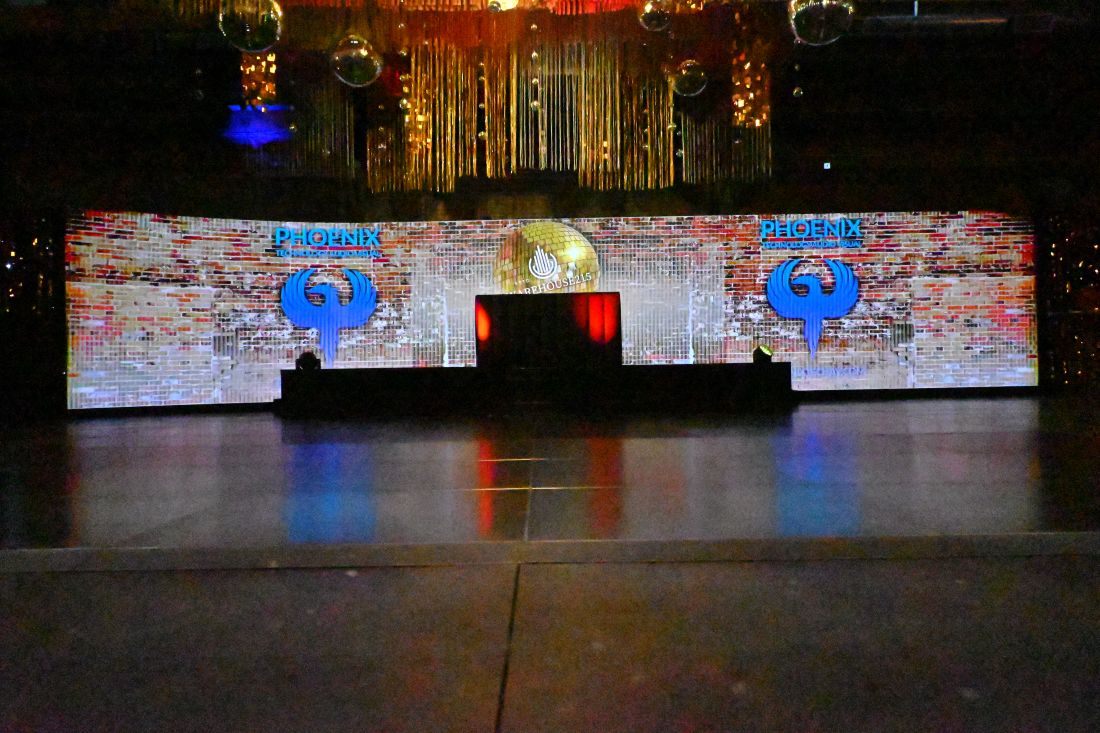
Image: Phoenix Technology Audio Visual
In today’s visually driven world, video isn’t just a nice-to-have—it’s an essential part of event production and audience engagement. Whether your goal is to expand reach, document your event, or create content for future marketing, strategic video solutions can dramatically increase the value and visibility of your efforts.
At Phoenix Technology Audio Visual, we specialize in full-service video solutions for live events, conferences, fundraisers, galas, and more. From real-time streaming to polished post-event highlight reels, we help you harness the power of video to captivate audiences both in the room and around the world.
Here are the top video options that can help you be seen, heard, and remembered—while maximizing your event’s impact and extending its reach far beyond the venue.
1. Multi-Camera Live Streaming: Broadcast Your Event in Real Time
If you’re looking to reach a global or remote audience, live streaming is a must. Multi-camera live streaming allows you to showcase your event from multiple angles—capturing speakers, audience reactions, and dynamic on-stage activity.
Why It Works:
Increases accessibility for remote attendees
Creates real-time engagement with viewers via chat or social interaction
Offers multiple perspectives for a more immersive online experience
Best Use Cases:
Fundraisers and charity galas
Corporate conferences with keynote speakers
Hybrid events or international team meetings
Pro Tip: Use a streaming platform that allows for custom overlays, branding, and chat moderation to give your online audience a polished, interactive experience.
2. IMAG (Image Magnification): Help Everyone See the Stage Clearly
IMAG refers to projecting a live feed of the speaker or performer onto large screens throughout the venue. This ensures that even guests seated at the back have a front-row experience.
Why It Works:
Enhances visibility in large venues or wide seating setups
Keeps the audience engaged with speaker expressions and gestures
Improves accessibility for guests with visual impairments
Best Use Cases:
Awards galas and stage shows
Corporate meetings in large ballrooms
Faith-based or nonprofit gatherings
Pro Tip: Pair IMAG with great lighting and tight camera angles to capture natural, impactful close-ups that bring your presenters to life.
3. Event Recap Videos: Tell the Story After the Curtain Falls
A highlight or recap video captures the energy and essence of your event in a short, professionally edited format. These videos are powerful marketing tools for future events, fundraising campaigns, or internal company morale.
Why It Works:
Creates shareable content for social media and email campaigns
Reinforces the event’s success to sponsors and stakeholders
Serves as a visual memory and promotional tool for years to come
Best Use Cases:
Nonprofit annual galas and fundraisers
Corporate milestone celebrations
Conferences and summits with major moments
Pro Tip: Schedule time for interviews with key attendees or donors to add personal stories and testimonials to your recap video.
4. Pre-Produced Video Segments: Polish Your Presentation
Not everything at your event needs to be live. Pre-recorded video segments can be played during your program to add depth, variety, or professionalism to the content delivery. These might include client testimonials, mission-driven storytelling, sponsor features, or product demos.
Why It Works:
Allows for editing and refinement before showtime
Breaks up the live flow with high-quality storytelling
Helps control timing and pacing in your program
Best Use Cases:
Mission-based nonprofits wanting to show impact
Corporate product or brand launches
Events with remote speakers or unavailable guests
Pro Tip: Work these segments into your run-of-show like you would any keynote. They should complement—not replace—live interaction.
5. Video Walls and Projection Mapping: Add Visual Drama to Your Set
Want to turn your stage into a dynamic, ever-changing backdrop? Video walls and projection mapping allow you to showcase content, animations, or brand visuals that can completely transform your set design.
Why It Works:
Creates immersive, high-impact stage environments
Adds movement and depth to traditional décor
Enhances storytelling with visual transitions and effects
Best Use Cases:
High-profile galas and large-scale fundraisers
Product reveals or brand showcases
Sales kickoffs or award celebrations
Pro Tip: Coordinate video content with your lighting and audio cues for a fully synchronized, multimedia show experience
6. Social Media Video Clips: Keep the Conversation Going
Short-form vertical videos optimized for social media are an ideal way to extend your event’s life beyond the day-of. Capture key soundbites, moments of applause, or behind-the-scenes glimpses to post across Instagram, Facebook, LinkedIn, and TikTok.
Why It Works:
Keeps your audience engaged post-event
Boosts visibility and reach with easy sharing
Highlights emotional or exciting moments in a digestible format
Best Use Cases:
Donor recognition videos
Speaker soundbites and takeaways
Post-event thank-you content
Pro Tip: Use branded overlays and music to keep your clips polished and professional.
Final Thoughts
From livestreaming to recap reels, from massive projection walls to snackable social content—video is your event’s megaphone. It amplifies your message, extends your reach, and creates lasting content you can use long after the chairs are folded and the lights come down!
Register for the Council’s upcoming Phoenix and Tucson tech events and Optics Valley optics + photonics events.
Image: Intero Digital, iStock
Key Takeaways:
AI in digital marketing streamlines workflows, enhances targeting, and increases efficiency.
Arizona tech businesses are using AI while preserving human brand voice and values.
Ethical AI use includes transparency, accuracy, and alignment with brand identity.
Combining humans and machines leads to more scalable, yet authentic, marketing strategies.
As artificial intelligence continues to reshape the digital landscape, tech companies across Arizona are asking the same question: how do we embrace AI in digital marketing without losing the human touch that makes our brand unique?
The answer lies in balance. When AI is used strategically — not as a replacement for people, but as an extension of them — it can streamline production, increase personalization, and enhance decision-making across marketing channels.
Human-Centered AI in Content Creation
AI can help draft blog posts, create headlines, and organize campaign assets. But real authenticity comes from the human layer found in editing, brand voice, and emotional nuance. See how to incorporate AI without losing your humanity.
Smarter SEO and PPC with AI Assistance
In paid search and SEO, AI helps identify trends, optimize bidding, and generate responsive ad copy faster than ever. Arizona-based startups are using tools like Google’s AI Overviews to expand reach while maintaining control over messaging. Learn more about Google’s AI updates and traffic insights.
Ethical Use and Brand Integrity
Maintaining brand integrity means being transparent about how AI is used and ensuring that messaging reflects your mission. Thoughtful integration also includes understanding when human oversight is required. Stay up to date on Google’s evolving AI features.
Discover More Opportunities
Intero Digital’s digital marketing solutions help businesses integrate AI tools for businesses without losing the heart of their brand. And for more strategies and peer insights, check out Arizona Technology Council’s upcoming events to connect with innovators shaping the future of Arizona tech.
Register for the Council’s upcoming Phoenix and Tucson tech events and Optics Valley optics + photonics events.
The future of Intel’s contract chipmaking business, Intel Foundry, has been a subject of investor debate. Image: Intel
Intel shares surged 117% in 2025 on Apple chipmaking optimism
Apple may use Intel Foundry for MacBook chips starting in 2027
U.S. government’s $8.9 billion Intel investment doubled to $18.9 billion
Intel (Nasdaq: INTC) shares climbed nearly 9% and reached a new 2025 high Tuesday amid growing optimism around Intel Foundry, its money-losing contract chipmaking business.
Some analysts still hold to the view that Intel’s best bet is to jettison its foundry ambitions, but for now at least, the investor tide is heading in the other direction.
The Intel rally began on Nov. 28, after a respected Apple analyst reported the company was in good position to build Apple chips used in MacBooks and iPads beginning in 2027.
“For Intel, the significance of securing advanced process orders from Apple far exceeds the actual contribution of this order to revenue and profits,” Ming-Chi Kuo wrote in an X post translated from Chinese.
Apple used Intel x86 chips in its computers for more than a decade. But that relationship wound down early this decade when Apple turned to a processor designed in-house and manufactured by Taiwan Semiconductor Manufacturing Co., the world’s dominant chipmaker that has a massive campus in north Phoenix.
Kuo said his reporting indicates that Intel could make a “lowest-tier” version of that Apple processor on a variant of Intel’s most advanced manufacturing process 18A.
Intel, still one of Arizona’s largest corporate employers with 10,000 workers at its Chandler Ocotillo campus despite companywide layoffs, has talked about foundry customer prospects before. But nothing has turned heads like Kuo’s report.
Register for the Council’s upcoming Phoenix and Tucson tech events and Optics Valley optics + photonics events.
Boeing will produce 96 AH-64E Apache helicopters for the Polish Armed Forces under a Foreign Military Sales contract awarded by the U.S. Army (Boeing image). Boeing Co.
Boeing’s Mesa plant received a $4.685 billion military contract
The contract covers Apache helicopters through May 2032
Poland, Egypt and Kuwait supplied nearly half the funding
The Boeing Co.’s Mesa operation has just been awarded a $4.685 billion contract from the U.S. military for continued work on its Apache helicopter output.
Under the deal announced Nov. 25, the Mesa plant will build new Apache AH-64E attack helicopters, Longbow crew trainers, and associated components, spares, and accessories. Work is expected to be finished by May 30, 2032.
The contract came through the U.S. Army but nearly half of the funding was supplied through Foreign Military Sales customers Poland, Egypt and Kuwait.
Among those, the biggest customer by far was the Polish Armed Forces, which ordered 96 Apaches. That’s the largest number of the attack helicopters ever ordered outside the United States in the program’s history, Boeing said.
Boeing added that the Polish Ministry of National Defense is already training pilots in anticipation of the Apaches’ deliveries, which will begin in 2028. Poland is currently using eight leased Apaches from the U.S. Army, Boeing said. Boeing is also working with Poland to prepare its local industry for maintenance and support.
Lucid Motors, a company that has only been building cars for four years and currently sells just two models, has been named the best luxury electric vehicle brand for 2025 by U.S. News & World Report. The publication ranked Lucid above Rivian, BMW, Porsche, and even Tesla, praising the American EV maker for “its level of overall excellence.” For a newcomer with limited experience, beating Tesla and several long-established brands is a notable achievement.
Lucid’s range begins with the Air sedan, a car that has earned a reputation for combining efficiency, performance, and luxury in a way few electric rivals can match. When we tested the 2025 Air Touring, it impressed on almost every level. It outperformed Mercedes-Benz in refinement, sprinted from 0 to 60 mph in 3.4 seconds thanks to its 620 hp output, and delivered more than 400 miles of range. Starting at $78,900, the Touring sits in the middle of the Air lineup yet still punches well above its segment. Above it are the 819-hp Grand Touring at $114,900 and the flagship 1,234-hp Air Sapphire at $249,000. U.S. News scored the Lucid Air at 9.3 out of 10.
On the SUV side, Lucid recently expanded the Gravity lineup with a new base trim, called the Touring, that starts at $79,900. It competes directly with the BMW iX and Rivian R1S, two of the most established electric SUVs in the luxury space. The Gravity Touring offers seating for up to seven, a range of 337 miles, and a 0 to 60 mph time of 4 seconds with its 560 hp electric powertrain. Lucid also offers the Gravity in Touring and Grand Touring spec, costing $79,900 and $94,900, respectively, with up to 450 miles on a single charge. U.S. News awarded the Gravity a perfect 10 out of 10 score.
Lucid’s growth plan is ambitious. Nick Twork, the company’s Vice President of Communications, told us they expect to produce 20,000 vehicles in 2025, and that the brand secured a $300 million investment from Uber to deploy up to 20,000 Lucid EVs as robotaxis. Beyond that, Lucid intends to launch three new mid-sized models by late 2026, likely going for the head of the Tesla Model Y and other compact mainstream rivals. It’s safe to say that Lucid has already made an impact on the EV space, exceeding everyone’s expectations in just four years, and will continue to do so for many years to come.
Register for the Council’s upcoming Phoenix and Tucson tech events and Optics Valley optics + photonics events.
Semiconductor chips power everything, from Nintendo Switch games and TikTok videos to Mars rovers and virtual reality headsets, yet few understand how they work. That’s why ASM, a leading semiconductor equipment and process technology company, launched its “From Sand to Stars: A Semiconductor Adventure” exhibition at Arizona Science Center, which transforms the mysterious world of microchips into a playground of discovery for young minds.
The exhibition has already captivated over 7,300 visitors since its opening in late September. This includes about 5,700students from low-income Phoenix schools who attended through ASM-sponsored field trips.
The Arizona Science Center exhibition turns complex semiconductor concepts into hands-on adventures. Students complete electrical circuits with their own bodies, light up a periodic table featuring semiconductor superstars like silicon and hafnium oxide, and marvel at a nearly 8-foot-tall photo wall of ASM’s massive XP8 Synergis technology found in the world’s leading chip fabs.
“For nearly 50 years, ASM has led semiconductor innovation right here in Arizona to support our worldwide customers, and now we’re inspiring the next generation of talent to shape the future of our industry,” said Vamsi Paruchuri, Corporate VP, Technology, Innovation & Market Research at ASM. “Seeing students engage with our technology is especially meaningful as we invest in our new Scottsdale R&D center. The same kids lighting up circuits today could be designing our next breakthrough materials and equipment in a decade.”
The exhibition’s launch coincided with SEMICON West, North America’s largest semiconductor conference, which was held in Phoenix for the first time in the show’s 50-year history.Arizonanow leads the nation in semiconductor investments, with the Semiconductor Industry Alliance projecting nearly 115,000 new jobs by 2030, with an estimated 58% at risk of going unfilled without initiatives like this exhibition inspiring the next generation.
“Since opening in September, the From Sand to Stars: A Semiconductor Adventure exhibition has not only introduced countless guests to the wonder of semiconductor science—it has inspired them to imagine themselves as the next engineers, innovators, and problem-solvers,” said Tammy Stewart, Interim Hazel A. Hare President & CEO, Arizona Science. “We’re incredibly proud to see how this journey is sparking both understanding and possibility.”
“My students were so excited about the ASM Semiconductor exhibition,” said an Arizona teacher whose students visited the exhibition. “The experience helped them understand how much science and technology go into creating something so small but so important.It definitely opened their eyes to how the semiconductor industry works and even got some of them thinking about pursuing careers in this field.”
Families can still experience “From Sand to Stars” through December 24, 2025, at Arizona Science Center, located at 600 E. Washington St. in downtown Phoenix. The exhibition is displayed in the Center’s lobby and is included with general admission.
Register for the Council’s upcoming Phoenix and Tucson tech events and Optics Valley optics + photonics events.
Arizona Corporation Commission threatens to repeal renewable energy standards. Standards attracted billions in investment and created thousands of jobs. Arizona Technology Council urges modernization instead of complete repeal.
Register for the Council’s upcoming Phoenix and Tucson tech events and Optics Valley optics + photonics events.
Image: Intero Digital, iStock
Key Takeaways:
Google Local Services Ads appear at the top of search results, making your business instantly visible.
Verified listings improve trust, click-through rates, and regional traffic.
Targeted ad setup and budget optimization can drive strong local lead generation.
Performance tracking ensures long-term ad efficiency and ROI.
When Arizona customers search for local services, they’re not scrolling far. That’s why Google Local Services Ads (LSAs) are a must-have for tech companies aiming to reach nearby clients. These ads appear at the very top of local search results, giving your business a premium position where it matters most.
What Are Google Local Services Ads?
LSAs are pay-per-lead ads designed for service-based businesses. Unlike traditional PPC campaigns, you only pay when a potential customer contacts you through the ad. They also show your Google Guaranteed badge, reviews, service area, and hours—building instant credibility. If you’re new to LSAs, start with this step-by-step guide on how they work.
Setup Tips and Budget Optimization
Begin by verifying your business with Google, choosing your service categories, and setting a weekly budget. LSAs prioritize proximity and reputation, so keeping reviews strong and service areas accurate is key. To expand your strategy, see how to leverage Google Ads and SEO together.
Measure, Refine, Repeat
Use the Google Local Services dashboard to track call leads, cost per lead, and ad impressions. These insights help you make data-driven decisions and increase ad performance over time. Want to extend your reach further? Consider layering in remarketing campaigns to re-engage past visitors.
Discover More Opportunities
Intero Digital’s paid ad solutions help Arizona businesses get found by the right local customers at the right time. And to stay connected with the region’s tech leaders, explore Arizona Technology Council’s upcoming events for expert insights, partnerships, and growth.
Register for the Council’s upcoming Phoenix and Tucson tech events and Optics Valley optics + photonics events.
Artist’s concept of Hypersonic Air-breathing Weapons Concept (HAWC) missile being jointly developed by Raytheon Missiles & Defense and Northrop Grumman. Nastco/Provided by Raytheon
Eight university research and development projects landed grants to support the growth of Arizona’s national security missions.
The eight projects, based at Arizona State University, Northern Arizona University and the University of Arizona, will each receive $90,000 to support technology validation, mentorship and commercialization training, according to a news release.
“Arizona’s universities are pioneering technologies that advance both national defense and commercial innovation,” Doug Goodyear, chair of ABOR, said in a statement. “By bridging research with real-world application, these projects strengthen our state’s role as a hub for dual-use technology, ultimately driving discovery that keeps our nation secure and powers new industries across Arizona.”
Teams will also gain access to follow-on funding opportunities through a Phase II acceleration program and participate in a six-month startup accelerator focused on customer discovery, with the Southwest Mission Acceleration Center providing access to military leaders to better align university research with defense needs.
The funding is through the Regents Grant program, a partnership between the Arizona Board of Regents and the recently established Arizona Office of Defense Innovation, which is a public-private partnership between the Arizona Commerce Authority and SWMAC.
The collaboration between the two organizations is designed to leverage federal investments in applied research, focused on fostering dual-use innovations to support both commercial and national security markets.
“This initiative redefines how Arizona’s research enterprise moves ideas from the lab to the marketplace,” Drew Trojanowski, CEO of the Southwest Mission Acceleration Center, said in a statement. “By aligning our universities more directly with industry and federal partners, we’re accelerating commercialization, driving economic growth, and ensuring that critical technologies make it into the field where they’re needed most.”
The ACA and SWMAC selected the projects through a competitive application process, which consisted of more than 55 applications. Proposals were evaluated based on alignment with key technical domains, such as advanced propulsion systems, artificial intelligence and secure connectivity.
Register for the Council’s upcoming Phoenix and Tucson tech events and Optics Valley optics + photonics events.
Tech Parks Arizona proudly announces that The Refinery, the flagship building at the University of Arizona (UA) Tech Park at The Bridges, has earned LEED Silver Certification from the U.S. Green Building Council. This achievement reflects a shared commitment to sustainability and innovation by Tech Parks Arizona and its development partner, The Boyer Company, one of the largest full-service real estate development firms in the Western United States.
The Boyer Company invested more than $30 million to design, develop and finance The Refinery, engaging local talent to bring the project to life. Together, the teams navigated site evaluations, building design options, ground lease negotiations, tenant agreements and construction, all while overcoming the challenges of a global pandemic. A LEED (Leadership in Energy and Environmental Design) certification is a globally recognized mark, administered by the U.S. Green Building Council, that verifies a building or project has met rigorous criteria across energy, water, materials, indoor environment and site development to deliver healthier, more efficient and sustainable built environments. Achieving this certification highlights the building’s energy-efficient design, responsible for material selection and environmentally conscious construction practices.
“From the beginning, our shared vision with Tech Parks Arizona was to create a space that not only supports innovation but also embodies sustainability and design excellence,” said Matt Jensen, Partner at The Boyer Company. “Earning the LEED Silver Certification is a reflection of that commitment and the collaboration of an incredible team that brought The Refinery to life for the Tucson community.”
Building strong community connections was a priority. Boyer assembled a dedicated development team for this project, partnering with Swaim Architects, CORE Construction, Tech Parks Arizona and the University of Arizona Planning, Design & Construction. This collaboration fostered thoughtful site planning, innovative design solutions and careful budget alignment.
“Achieving LEED Silver certification for The Refinery reflects our commitment to building sustainably and operating with excellence in everything we do,” shared Carol Stewart, Vice President of Tech Parks Arizona. “This milestone demonstrates how we integrate environmental responsibility with innovation, creating spaces that support both the University of Arizona’s mission, the broader community and drive university-based economic development.”
The Refinery opened in April 2022 as a 120,000-square-foot, four-story Class A office building, with half of its space dedicated to University of Arizona programs. Built next to the richest mine—the University of Arizona’s deep resources of talent and research expertise—The Refinery was designed as a place where ideas are refined into technologies and real-world solutions. As a multi-tenant facility, it offers an ideal environment for companies seeking to co-locate with the University and tap directly into its people, discoveries, and innovation ecosystem. To ensure seamless connectivity, the University of Arizona’s free CatTran shuttle system runs regular routes between The Refinery parking lot at UA Tech Park at The Bridges and the main campus, making transportation easy, safe, and accessible for students, faculty, and partners.
Strategically positioned in the heart of Tucson, The Refinery ignited the vision for the UA Tech Park at The Bridges, setting in motion an activation that brought the Mission Integration Lab, SpringHill Suites, and Arizona Public Media’s new campus to life. The 65-acre UA Tech Park at The Bridges is part of a 350-acre mixed-use development featuring retail and entertainment destinations including Costco, Dave & Buster’s, Cinemark and Bass Pro Shop (under construction).
About The Boyer Company
The Boyer Company, www.boyercompany.com, is a full-service real estate development firm. Founded in 1972, the company specializes in delivering successful Public-Private Partnership projects that balance overall project costs with specific public requirements. The company has established working partnerships with a wide variety of city, state, university and federal government agencies. Completed projects include parking structures, office buildings, multi-phased mixed-use developments, research centers, medical clinics and a wide variety of special purpose governmental buildings. The Boyer Company has closed over $5 billion in construction and permanent loans within the past 10 years. The company is actively pursuing new development opportunities throughout the Western United States.
Register for the Council’s upcoming Phoenix and Tucson tech events and Optics Valley optics + photonics events.
XNRGY Climate Systems, a leading North American manufacturer of sustainable liquid and air-cooling technologies and control systems, today announced it had completed its previously announced financing round with an investment from Capital Bridge Group and Prologis Ventures, joining Decarbonization Partners, a joint venture between BlackRock and Temasek, Climate Investment, and Activate Capital. This growth equity financing provides added resources for the 2023 investments from Idealist Capital and MKB, who remain key shareholders in XNRGY.
Capital Bridge Group is a growth-stage investment and advisory firm founded by Michael Ronen, who recently was with Fortress Investment Group, and previously a former Partner and COO of Global Technology, Media and Telecom (TMT) banking at Goldman Sachs and subsequently a Managing Partner at SoftBank’s Vision Fund.
Wais Jalali, Founder, Chairman and CEO of XNRGY, commented: “We are thrilled to partner with Capital Bridge Group as we rapidly scale to meet customer demands for reliable and energy-efficient data center cooling solutions. The firm’s expertise aligns perfectly with our vision for being the leader of the AI data center cooling market.”
Michael Ronen, Managing Partner of Capital Bridge Group, commented: “Our investment in XNRGY is a defining moment for Capital Bridge Group – our inaugural investment. We are very pleased to be working with Prologis, the global leader in logistics and data infrastructure real estate, as a partner to Capital Bridge and strategic investor in this round. As demand for AI-driven data centers accelerates globally, XNRGY’s advanced cooling and energy-efficient systems are uniquely positioned to become mission-critical infrastructure.”
“Meeting the world’s growing energy needs requires new approaches to efficiency,” said William O’Donnell, global head of Corporate Development and Growth at Prologis. “Our investment in XNRGY helps advance the technology that supports the build out of the data center infrastructure that our daily lives run on.”
Christopher Fazekas, Vice-Chairman of the Board of XNRGY, commented: “Michael is highly respected in the investment community and I couldn’t be more delighted to partner with him and Prologis Ventures. Their investment provides further validation for XNRGY as we continue our rapid growth and expansion to meet the very high customer demand for our data center cooling products.”
XNRGY is a leading North American manufacturer of high-efficiency liquid and air-cooling systems with integrated controls and AI capabilities. Its technologies are designed to meet the evolving demands of hyperscale data infrastructure, offering modular scalability, reliability, and energy efficiency in high-ambient-temperature environments. XNRGY continues to implement state-of-the-art production systems inspired by the automotive standards, integrating digital tracking and rigorous quality control throughout its manufacturing process. Its comprehensive thermal management solutions, spanning Liquid Side, Air Side, and full thermal management solutions with proprietary controls integration are engineered by a team of seasoned experts to meet the increasing demands of modern data infrastructure.
On October 23, 2025, XNRGY celebrated the grand opening of its Mesa 1 manufacturing facility with a ribbon-cutting ceremony in Mesa, Arizona. The event was attended by over 200 people including Arizona dignitaries, XNRGY’s customers and partners, and XNRGY’s Mesa, Arizona, employees. XNRGY is rapidly expanding its U.S. manufacturing footprint and accelerating the deployment of next-generation cooling solutions to meet the demand from data centers and other mission-critical infrastructure. XNRGY operates with divisions in Montreal, Canada, and Mesa, Arizona, and is strategically positioned to serve customers across North America.
About XNRGY Climate Systems:
XNRGY Climate Systems is a prominent North American provider specializing in the sustainable design and advanced manufacturing of Thermal Management and Liquid Cooling systems. Leveraging decades of experience in thermal management engineering and manufacturing, XNRGY delivers innovative, energy-efficient solutions tailored to meet the critical requirements of diverse industries. These include hyperscale and modular data centers, healthcare facilities, pharmaceutical labs, semiconductor clean rooms, electric vehicle battery manufacturing, and life sciences facilities. Operating with divisions in Montreal, Canada, and Mesa, Arizona, XNRGY is strategically positioned to serve its clientele across North America.
For additional information, please visit www.xnrgy.com.
About Capital Bridge Group
Capital Bridge Group is a growth-stage investment and advisory firm founded by Michael Ronen, a former Goldman Sachs Partner and COO of Global Technology, Media and Telecom banking, and Managing Partner at SoftBank’s Vision Fund, where he led investments in automotive AI, infrastructure and mobility. Capital Bridge Group specializes in technology-led growth, structured equity, and strategic capital solutions across industries and geographies. Combining the rigor of a disciplined investment firm with the creativity of a strategic advisory partner, Capital Bridge Group pairs institutional and family-office private capital with sound strategic advice and focuses on empowering visionary founders at key inflection points. The firm’s differentiated model combines strategic advice, flexible investment structures, and a world-class global network built over three decades at the forefront of technology and finance.
Arizona State University received $35 million from NASPO
The gift will rename and strengthen the supply chain department
Funds support scholarships, research, and new procurement academic programs
Arizona State University today announced a historic $35 million gift from the National Association of State Procurement Officials to elevate the role of procurement and strengthen the Department of Supply Chain Management at the W. P. Carey School of Business, which will be renamed the NASPO Department of Supply Chain Management.
The gift will support new initiatives, scholarships and academic innovation through the launch of new procurement tracks in undergraduate and graduate supply chain-specific programs, endowed faculty positions, research, experiential learning, facility enhancements and strategic partnerships — further solidifying ASU as a global leader in procurement, logistics, operations and supply chain education and research.
The gift underscores procurement’s critical role as the starting point of every supply chain — influencing how organizations source, produce and deliver goods and services ethically and efficiently.
It also highlights public procurement as a vital function that underpins effective governance and economic stability across states and the nation.
By advancing procurement as a driver of responsible supply chains, the investment aligns with the Building Supply Chain Futures priority within ASU’s Changing Futures campaign, which aims to expand the university’s leadership in building resilient and sustainable global networks.
“World events in recent years have underscored our vast reliance on supply chains and the need to develop greater resilience,” ASU President Michael M. Crow said. “This gift represents a visionary contribution in one of ASU’s most globally recognized programs, deepening our shared commitment to innovation, access and impact, and ensuring that supply chain management education continues to evolve in step with the challenges and opportunities of the modern world.”
The NASPO Department of Supply Chain Management at W. P. Carey offers programs that are consistently ranked among the nation’s top three by U.S. News & World Report. The NASPO gift will further elevate procurement as a central theme in supply chain education and research, enhancing the department’s leadership in the field.
Student success and collaboration are key priorities, with funding for the NASPO Scholars Program offering tuition support for undergraduate and graduate students. To promote faculty excellence, the investment creates multiple endowed positions, including the NASPO Endowed Chair of the Department of Supply Chain Management.
Arizona State University Professor Enrique Vivoni founded startup Tributary
Tributary measures water benefits from forest restoration using AI
The company uses lidar scans to model forest thinning effects
Wildfire seasons are getting longer and hotter, threatening forests and the water supplies they protect.
Forest restoration, especially thinning dense stands of trees, can reduce wildfire risk and improve water availability — but measuring the water benefits of forest management has been challenging.
That’s why Arizona State University Professor Enrique Vivoni founded the startup company Tributary. Its mission is to give utilities, governments, nonprofits and companies better tools to measure the real water outcomes of forest restoration projects.
The technical work is complex, but the outcomes are simple.
“Clients don’t want to wade through equations,” Vivoni says. “They want to know: How much water will this project save each year? That’s the translation we provide.”
As the ASU Fulton Professor of Hydrosystems Engineering in the School of Sustainable Engineering and the Built Environment, in the Ira A. Fulton Schools of Engineering, and director of the Center for Hydrologic Innovations, Vivoni has built a career teaching, mentoring and conducting research in hydrology and water resources in arid regions like Arizona.
Tributary grew out of decades of research and a desire to make his expertise useful beyond academia.
Vivoni teamed up with Zhaocheng Wang, an expert in remote sensing and AI, and Josh Cederstrom, an expert in technology development, and the trio is designing Tributary to bring this science to the market.
“This is a full-scale effort to make a real impact,” Cederstrom says. “We are taking rigorous science and making it usable for water managers and utilities.”
The 2025 Comcast Business Cybersecurity Threat Report delivers insights from 34.6 billion cyber events detected across our security customers. Our data shows an increasingly smart and sophisticated landscape and offers an in-depth perspective on emerging threats, attack evolution, and how enterprise organizations can align defenses to better protect their business.
Read this year’s report to get data-driven intelligence on how the tactics used by cyber adversaries are evolving, alongside the advanced strategies and technologies organizations can deploy to counter them.
Key Takeaways include:
Threat Volume and Velocity Continue to Grow: Cyberattacks are increasing in volume, speed, and stealth.
AI is an Enabler as well as a Risk Multiplier: AI is accelerating both attack sophistication and defense capabilities, while expanding the attack surface.
Human Factors & Fatigue Stymie Security Efforts: Security teams face burnout and users remain vulnerable, making human error a major risk despite technical safeguards.
Multi-Layered & Adaptive Defense Is Critical: Effective cybersecurity requires layered defenses, strategic partnerships, and strong cyber hygiene to counter evolving threats.
It’s Time to Rethink Enterprise Risk: Organizations must align cybersecurity with business risk and use AI-powered tools to speed remediation.
ManpowerGroup, an innovative workforce solution provider, announced a strategic partnership with Maricopa Community Colleges in Arizona, one of the nation’s largest community college systems.
The collaboration will accelerate workforce development in the fast-growing semiconductor and advanced manufacturing sectors by addressing one of the industry’s most urgent challenges: the skilled labor shortage. The partnership creates direct pathways to high-demand careers through specialized, industry-informed training programs aligned with real-time employer needs.
With decades of experience in workforce transformation and talent strategy, ManpowerGroup is bringing its expertise to help bridge the gap between education and industry. This partnership expands access to training that empowers individuals to build future-ready careers while helping employers meet their evolving talent requirements.
“The semiconductor industry is the backbone of nearly every critical technology of the future; from AI and robotics to clean energy and medical innovation,” said Ger Doyle, Regional President, ManpowerGroup North America. “We’re proud to collaborate with Maricopa Community Colleges and co-create scalable, inclusive workforce solutions that prepare people for high-impact roles and help companies stay competitive in a rapidly changing economy.”
“ManpowerGroup is proud to lead this inclusive workforce transformation initiative,” Allison Dadoun, Global Client Director at ManpowerGroup, said. “By collaborating with Maricopa Community Colleges, we’re ensuring students gain both technical skills and career connections to thrive in Arizona’s fast-evolving semiconductor and advanced manufacturing sectors.”
Through this partnership, ManpowerGroup and Maricopa Community Colleges will create end-to-end training pathways that prepare students for sustainable, high-demand careers.
ManpowerGroup will design and support programs with Maricopa Community Colleges focused on developing talent in AI/ML, engineering, STEM, and technician roles. The curriculum will include industry-recognized certifications and immersive, hands-on experience, complemented by career readiness resources, internships, and apprenticeships. Graduates will have direct connections to full-time employment opportunities with leading semiconductor and manufacturing employers.
“Together with ManpowerGroup, we’re bridging the gap between classroom learning and real-world workforce needs,” said Dr. Steven R. Gonzales, Chancellor of the Maricopa County Community College District. “This partnership supports Arizona’s economic future by ensuring our students are prepared to lead in the semiconductor and manufacturing industries.”
“At The Arizona Advanced Manufacturing Institute, we’re focused on building a talent pipeline that meets the immediate and future needs of Arizona’s high-tech industries,” said Leah Palmer, Executive Director of AZ-AMI at Maricopa Community Colleges. “This partnership with ManpowerGroup enhances our ability to deliver high-quality, job-aligned training and directly connect learners with careers in semiconductor manufacturing.”
This initiative builds on ManpowerGroup’s broader commitment to tackling critical talent shortages through targeted training and inclusive employment programs. Earlier this year, ManpowerGroup announced a strategic partnership with SEMI, the leading global industry association representing the electronics manufacturing and design supply chain, to address workforce challenges across the semiconductor sector.
The collaboration extends this work regionally, creating localized pathways that support Arizona’s vision to become a national hub for semiconductor innovation and manufacturing excellence, while complementing broader efforts tied to the CHIPS and Science Act.
Register for the Council’s upcoming Phoenix and Tucson tech events and Optics Valley optics + photonics events.
Arizona and 21 other states are suing the EPA over its decision to cancel the Solar for All program. The plaintiffs argue the agency exceeded its authority by voiding previously awarded grants, including a $25 million grant for the Hopi Tribe and a total of $156 million designated for Arizona. State officials warn the loss of this funding will limit access to clean energy, drive up energy costs, and make it harder to meet surging electricity demand as utility rates rise and data center electricity use grows.
The lawsuits center on the EPA’s interpretation of H.R. 1, a federal tax and spending package that rolled back several clean energy initiatives. Arizona leaders contend that Congress intended to rescind only unallocated funds, not grants that had already been awarded. They argue the cuts will accelerate the end of the federal residential solar tax credit and cost Arizona billions of dollars and thousands of jobs tied to clean energy projects.
Raytheon inks deal with Avio establishing U.S. solid rocket motor facility
Raytheon receives preferred access to share of new plant’s production capacity
Partnership follows September deal for $26M Standard Missile engineering work
The Raytheon missile-making division of RTX Corp. (NYSE: RTX) has taken another step to bolster its supplier network by agreeing to help a key partner boost manufacturing in the United States.
Raytheon signed a memorandum of understanding with Italian company Avio to establish a U.S.-based solid rocket motor (SRM) facility. It will serve customers besides Raytheon, but Raytheon will have preferred access to a share of the plant’s production capacity to meet future demand, according to Raytheon, which has its missile operations based in Tucson.
A U.S. location for the new facility has not been announced, but Avio USA is based in Arlington, Virginia, which is where RTX is headquartered. The companies said it will be instrumental in meeting the growing demand for advanced SRMs.
“This agreement will help establish an additional supplier of solid rocket motors within the U.S. and demonstrates our commitment to meeting the increasing demands of our customers,” said Bob Butz, vice president of Operations, Supply Chain and Quality at Raytheon, in a statement. “By leveraging Avio’s experience and unique capabilities in solid rocket motor propulsion development and manufacturing, we’re strengthening our capacity for critical weapon systems.”
The latest move follows a deal the two announced in September to collaborate on the Standard Missile, one of Raytheon’s stalwart products. Under that agreement, Avio USA will do up to $26 million in engineering work on the Mk 104 dual-thrust rocket motor.
The two companies had signed a deal late last year for preliminary work on that project, which Raytheon said resulted in successful system requirements and preliminary design reviews.
Pima Community College is investing millions of dollars into innovative training programs aimed at fulfilling the urgent demand here for skilled employees in technical fields.
“We’re very much a career-oriented institution, so all of our degrees and certificate programs have some emphasis on technology because no matter what you’re doing, whether it’s in healthcare, cybersecurity, aviation, and even recently, working on our education area, there’s a huge technological component,” said Jeffrey Nasse, who stepped into the PCC chancellor’s job in August 2024 with an eye toward feeding the talent pipeline.
“There are, of course, programs specific to technology,” he said of PCC’s offerings. “We have a lot of applied technology programs that are in really high demand.”
The college offers dozens of degrees, certificates and short-term programs in tech, including the PimaFastTrack program, which provides hands-on training in as few as two months in areas such as building and construction technology, information technology and automotive technology.
Pima works closely with the Arizona Technology Council, the University of Arizona Tech Parks and local employers to ensure that its programs are relevant.
“We have a lot of integration,” said Nasse, a former U.S. Marine who earned bachelor’s and master’s degrees from East Carolina University, and then a Ph.D. in educational leadership and research methodology from Florida Atlantic University.
“One of the phrases we use at Pima is ‘market-driven curriculum,’” Nasse said. “So, we are really reliant on building a lot of partnerships with our local industries to help inform what we’re teaching, and that, of course, includes technology.”
Among those partners is AGM Container Controls, a Tucson-based manufacturer of hardware for missiles, nuclear reactors and the International Space Station. AGM, which also makes automated wheelchairs, has offered tuition reimbursement to its employees since the 1970s. Just over 20% of AGM’s 135-140 employees participate in the program, many taking STEM courses relevant to their roles.
“One of the common complaints amongst my fellow manufacturers is, ‘We can’t find the skilled people that we need,’” said AGM President and CEO Howard Stewart. “AGM doesn’t really have that problem because we’re constantly creating pathways for people to move up in our organization. And by the way, that’s why we also have a great retention rate. Our turnover rate is less than half that of the national average for U.S. manufacturers. And I think in part it’s because the tuition reimbursement program keeps people with us.”
AGM employees can go to any accredited institution, but most choose Pima. The college offers deferred billing that allows employees to attend school and not have to pay tuition up front, which could be a burden. If they pass and meet requirements, the college bills the employer.
“The reason these employers, these industries, are engaged with us is because they need good talent to fill these programs,” Nasse said. “There are some programs like the cyber program, applied technology and building construction where we can’t put graduates out fast enough.”
The demand is so high that employers conducting mock interviews on campus often hire students immediately. “So, it’s actually a challenge, because we’re trying to get more people (into classes). The whole idea is expanding capacity,” Nasse said.
The college has several Centers of Excellence that merge industry with training and education, including the Center of Excellence in Applied Technology at the Downtown Campus. That center features a $12.5 million Automotive Technology and Innovation Center, a $35 million Advanced Manufacturing building and a Science and Technology building that is undergoing renovation and will house building construction sciences and Workforce Development Pathways.
“The facilities really are top tier, with a significant investment in the facility itself and the equipment that goes into those facilities,” Nasse said. “I think it’s really important that students are seeing things that they will see out in the world. We don’t want to have students working on equipment and facilities that are 10 years behind what they’re going to see out in the industry.”
The $33 million Center of Excellence in Health Professions features high-tech labs and $2.5 million in HUD-funded equipment. “We have a huge simulation component in the Center for Excellence in Health Professions, and the technology in that curriculum, in that building, is just amazing,” Nasse said.
Pima also expanded its Aviation Technology Center at Tucson International Airport, doubling its size to 87,000 square feet and increasing student capacity to 250. Students can earn an associate’s degree in about two years or complete one of eight certificates in less time.
“For the aviation program, for example, you’re not in school forever,” Nasse said. “And I think that’s an important point, too. In aviation, particularly, they can quickly move through the ladder and be working really good-paying jobs.”
One of the fastest-growing fields at Pima is cybersecurity, supported by its “live fire” Cyber Warfare Range, which allows students and community members to engage in real-world cyber-attacks and defenses at the Center of Excellence in Information Technology and Cybersecurity at the East Campus.
“It’s really an amazing facility. I was just at a conference in Wisconsin, and Pima was featured for the Arizona Cyber Warfare Range,” Nasse said. “In fact, the state of Arizona is partnering with our cyber program to train with them – that’s how advanced that program is.”
According to the U.S. Bureau of Labor Statistics, the mean hourly wage in Tucson in May 2024 was $29.91. “Computer and mathematical” occupations, on the other hand, have a mean hourly wage of $51.03.
“We track job placements, and in fact we evaluate our programs now with the median wage outcomes,” Nasse said. “We never want people to graduate from programs at PCC to go into a low-paying job. It’s in our name: community college. That’s another one of the things we’re really proud of – the vast majority of our students are from here and they stay here.”
Register for the Council’s upcoming Phoenix and Tucson tech events and Optics Valley optics + photonics events.
When your company ships large, high-value, or delicate equipment, custom crating solutions aren’t a luxury — they’re a necessity. Whether you’re moving industrial machinery across state lines, exporting energy components overseas, or transporting precision aerospace assemblies, the right crate can mean the difference between flawless delivery and costly damage.
Crating Technology building a custom wooden crate for heavy machinery in Phoenix.
At Crating Technology, we design and build custom crating solutions engineered to protect your equipment from every shipping hazard imaginable — vibration, moisture, corrosion, shock, and improper handling. Our approach is rooted in engineering precision, compliance, and decades of expertise across multiple high-stakes industries.
Why Custom Crating Solutions Are Essential for Heavy Equipment
Standard wooden crates simply aren’t designed to handle the unique demands of heavy or specialized machinery. Every piece of industrial equipment has its own stress points, weight distribution, and environmental sensitivities — all of which must be considered in the packaging design.
Vapor barrier and corrosion-resistant materials for overseas shipments
Ramp fabrication and skids for smooth loading and unloading
Completed industrial shipping crate for heavy equipment, staged and ready for freight loading.
Unlike off-the-shelf packaging, our crates are built around your equipment, not the other way around. That’s why industry leaders in energy, manufacturing, and aerospace rely on Crating Technology to design shipping systems that meet both ASTM packaging standards and ISPM 15 export compliance.
Heavy Equipment Shipping: Risk, Cost, and Why Crating Matters
Shipping large industrial or manufacturing equipment comes with inherent risks. Vibration, stacking, or shifting in transit can cause internal misalignment or costly downtime on arrival. A single damaged component can delay an entire project, costing thousands in repairs and logistics rescheduling.
Custom crating solutions act as your first line of defense. At Crating Technology, we engineer every crate to meet the physical, logistical, and environmental demands of your shipment. From industrial packaging services for local freight to export crating for overseas transport, our team provides tailored packaging to protect your investment from origin to destination.
Testing and verification for balance, securement, and labeling compliance
We also handlehazardous materials packaging andcontainer loading and staging, ensuring your shipment complies with all relevant safety and export regulations. This holistic approach is what allows us to deliver not just crates, but complete shipping assurance systems.
Local Expertise: Crating Services in Phoenix, Arizona
Arizona’s advanced manufacturing and semiconductor industries, in particular, demand packaging that’s built for precision. With Crating Technology, your shipment benefits from localized expertise, fast turnaround times, and engineering-grade reliability.
Sustainability Meets Strength: Reusable and Eco-Friendly Crating
As sustainability becomes a growing priority in logistics, Crating Technology integrates reusable and eco-friendly crating options wherever possible. Our reusable crates are engineered for multiple shipping cycles, reducing waste and long-term cost while maintaining durability.
We also prioritize materials that are recyclable and sourced from responsible suppliers — balancing environmental goals with performance. Learn more about how we’re building greener logistics through custom crating solutions.
Final Thought: Protect Your Equipment Before It Moves
Completed shipping crate for heavy equipment, staged and ready for freight loading
Shipping heavy equipment doesn’t have to mean taking risks. Custom crating solutions from Crating Technology ensure your machinery, electronics, and industrial systems arrive exactly as they left — secure, intact, and ready to perform.
From aerospace and oil & gas to energy, defense, and semiconductor industries, our clients trust us for precision-built protection that travels the distance.
Ready to secure your shipment? Contact our team for a custom quote or consultation
Register for the Council’s upcoming Phoenix and Tucson tech events and Optics Valley optics + photonics events.
Maricopa County Community Colleges District purchased Tempe headquarters for $27 million
Widewaters sold former Target Financial Center after buying it for $20.5 million
The property includes 188,960 square feet and 917 parking spaces
Maricopa County Community College District just plopped down $27 million in cash for Tempe office space that will serve as its new headquarters.
New York-based Widewaters sold the 25.29-acre property, which includes 188,960 square feet of office space, to the community college district after buying that property in August from Target Corp. for $20.5 million, according to Tempe-based real estate data firm Vizzda LLC.
Two office buildings at 8530-8550 S. Priest Drive previously served as the Target Financial Center. Target had invested $8 million into that property in 2019, but its staff never ended up moving back in after the pandemic hit.
Paul Borgesen, Dylan Sproul, Bill Zurek, Jim Achen Jr., and Royden Hudnall at Transwestern Real Estate Services represented Widewaters in the sale of that property that closed Nov. 5. Transwestern also had brokered Widewaters’ purchase of that property in August.
On Wednesday, the Arizona Governor’s Office of Resiliency announced the members of the Arizona Energy Promise Taskforce, which was established by Executive Order 2025-13, signed by Governor Katie Hobbs. The first meeting of the Taskforce is scheduled for Thursday, November 6, and the Taskforce will meet monthly through February 2026 and periodically thereafter.
“Arizona is at a critical point in our energy story. The work of the Arizona Energy Promise Taskforce will shape Arizona’s energy future, ensuring Arizona families and businesses continue to grow and thrive,” said Governor Katie Hobbs. “Aging energy infrastructure, a growing population and economy, and extreme weather increase Arizona’s need for cost-effective energy solutions. We also know too many Arizonans struggle to afford their energy bills. The Arizona Energy Promise Taskforce is central to strengthening Arizona’s energy system, growing our energy economy, and expanding energy affordability access to all Arizonans.”
Members of the Arizona Energy Promise Taskforce (listed alphabetically by last name following the chair):
Chair: Maren Mahoney, Director, Arizona Governor’s Office of Resiliency
Sean Bodkin, Office of General Counsel, Arizona Corporation Commission
Diane Brown, Executive Director, Arizona PIRG
Jason Chavez, Director of Tribal Affairs, Office of the Arizona Governor
Michael Crow, President, Arizona State University
Colin Diaz, Western Regional Director, Chambers for Innovation and Clean Energy
Suresh Garimella, President, University of Arizona
Ted Geisler, President/CEO, Arizona Public Service (APS)
John Graham, President/CEO, Sunbelt Holdings
Susan Gray, President/CEO, Tucson Electric Power (TEP)
Karen Haller, President/CEO, Southwest Gas (SWG)
Nicole Hill, Climate and Energy Program Director, The Nature Conservancy
Autumn Johnson, Executive Director, Arizona Solar Energy Industries Association
Kimber Lanning, Executive Director, Local First Arizona
Dave Lock, Chief Executive Officer, Grand Canyon State Electric Cooperative Association
Cheryl Lombard, CEO, NAIOP
Kelly McGowan, Executive Director, Wildfire AZ
Kevin Moran, Associate Vice President, Regional Affairs, Environmental Defense Fund
Jim Pratt, General Manager, Salt River Project (SRP)
Robyn Sahid, Commissioner, Arizona State Land Department
Jason Sangster, Business Manager, Ironworkers Local 75
Rikki Seguin, Executive Director, Interwest Energy Alliance
Danny Seiden, President/CEO, Arizona Chamber of Commerce & Industry
Russell Smolden, CEO, B3 Strategies
Adam Stafford, Assistant Attorney General, Arizona Attorney General’s Office
Kristin Strobel, Director of State Government and Industry Affairs, Microsoft
Sandra Watson, CEO, Arizona Commerce Authority
Ellen Zuckerman, Head of Energy Market Development North and South America, Google
Representative, County Supervisors Association of Arizona
Representative, League of Arizona Cities and Towns
“The Arizona Energy Promise Taskforce is a catalyst for Governor Hobbs’ Executive Order to unlock Arizona’s energy potential and ensure our energy system works for Arizonans. It’s composed of private and public sector leaders, consumer advocates, and subject-matter experts who are committed to Arizona’s energy future,” said Maren Mahoney, Director of the Governor’s Office of Resiliency and Chair of the Arizona Energy Promise Taskforce. “Our energy system is changing, and our policies and approaches need to change too. Together, we will work towards increasing access to affordable and secure energy for all Arizonans, reducing barriers to Arizona’s energy and economic future.”
By March 1, 2026, the Taskforce will deliver the following reports to Governor Hobbs:
A responsible policy framework for large energy users like data centers that preserves Arizona’s competitive edge while protecting ratepayers from undue impact.
A comprehensive Arizona energy strategy plan to identify and capitalize on opportunities presented by emerging energy technologies, such as geothermal and advanced nuclear power.
A generation and transmission corridor strategic plan to streamline the deployment of infrastructure by cutting red tape related to the use of state lands, requiring consultation with diverse government, tribal, and utility stakeholders.
Specific subject-area working groups will complete initial research, drafting recommendations and reports for consideration by the Taskforce. Working group topics will include large load growth, nuclear energy, geothermal energy, and generation and transmission.
The Taskforce will provide several opportunities for stakeholder engagement, soliciting feedback from members of the public and conducting robust Tribal consultation.
Register for the Council’s upcoming Phoenix and Tucson tech events and Optics Valley optics + photonics events.
Carole Basile applies business approach to transform education system
Basile introduces Next Education Workforce model with teacher teams
ASU dean aims to change narrative about Arizona’s schools
As dean of the Mary Lou Fulton College for Teaching and Learning at Arizona State University, Carole Basile is taking a business approach to changing the educational system.
“I want to be remembered as someone who tackled the systems of education, not just created a lot of programs, projects and activities,” said Basile, who is starting her 10th year as dean at ASU, ranked No. 1 for innovation by U.S. News & World Report for the past 11 years.
While the majority of university deans started out as classroom teachers, Basile took a different route.
She started out in the corporate world, working for various companies, including Amoco Oil Co. in Houston, where she focused on training and organizational development for employees.
That’s when she began thinking younger students would benefit from the team-building, stress management and communication skills she was teaching employees.
She enrolled in a doctorate program at University of Houston, graduating 2.5 years later.
“I spent 15 years working in sales and management and organizational design before I decided to get a doctorate that would allow me to think like an organizational designer about our education system,” she said. “I had been working with kids really as an avocation. At work, I was teaching adults things like creative thinking skills and leadership and creative problem-solving. And I realized we needed to be doing those things with kids at a much younger age. How we design learning environments for those kinds of skills matters. It doesn’t just happen — not for kids or adults.”
After 15 years in the business world, she finally found her calling.
“What you bring from business is this idea that we cannot be about programs and projects and activities,” Basile said. “In education, we have to start thinking about the entire system. It’s all about what are the levers we can begin to push that can change the education system.”
For example, Basile is leading an initiative to change the structure of the classroom learning environment.
Traditionally, schools are set up with one teacher per classroom.
Instead, she’s introducing the Next Education Workforce model, restructuring the classroom where a team of teachers share a roster of students.
Cybersecurity teams have long been aware of the increasing prominence of artificial intelligence in the cybercrime playbook. Attackers use it with increasing frequency to scale phishing, automate reconnaissance, and generate plug-and-play malware.
The 2025 Comcast Business Cybersecurity Threat Report reveals another layer to the story: how security teams are managing the evolving cyber risk stemming from their own enterprise AI adoption. As AI usage soars in the workplace—both company sanctioned and through shadow IT—it is changing the foundation of modern cybersecurity.
Based on the analysis of 34.6 billion cybersecurity events detected across Comcast Business security customers, the threat report explores how AI-native infrastructure, non-human identities (NHIs), and new patterns of data movement are creating risks that traditional defenses weren’t built to handle. In this new environment, identity has become the new perimeter, serving as the lynchpin for establishing trust, managing access, and limiting risk.
Changing infrastructure, changing vulnerabilities
Enterprise environments today look markedly different from what they did just two years ago. Cloud-hosted models, automated DevOps pipelines, and edge AI devices are now widespread. These environments shift where sensitive data resides and how it moves:
Data at rest is distributed across on-prem systems, multiple clouds, and transient storage tied to model training or inference.
Data in motion flows between AI agents, APIs, and services across multiple trust boundaries, often in ephemeral, machine-to-machine exchanges.
This distribution expands the attack surface and raises the risk of unintentional data leakage into AI systems, especially when workflows span multiple environments.
Traditional Identity and Access Management (IAM) tools weren’t built for today’s scale and fluidity, or for the massive influx in machine identities. Rule-based detection systems struggle to keep up, since they rely on signatures and static rules. The volume, as well as the changing nature of the identities at play, can provide attackers with an opportunity to bypass defenses. More critically, it can provide cover for them to blend in once they do.
Detection challenges are compounded when defensive AI tools are poorly tuned. Overly aggressive configurations can generate alert fatigue through false positives, while under-sensitive ones create blind spots where adversaries move unnoticed. The result is the same: post-compromise activity that slips past security teams until it has already escalated. Enterprises must therefore rethink how they manage both the movement of data and the identities, human and non-human, that access it.
The new role of identity in the AI era
With data moving fluidly across clouds, pipelines, and APIs, there’s no fixed network edge left to defend. Every digital interaction, whether initiated by a user, an application, or an automated agent, hinges on identity.
And non-human identities now outnumber human users in most enterprise environments. They operate fast, often with long-lived credentials, and can accumulate excessive privileges if not actively managed. A single compromised NHI can open the door to large-scale lateral movement.
That’s why modern defenses focus on tightening access and continuously validating trust:
Extending IAM to non-human identities to give the same visibility, governance, and credential rotation that humans receive.
Enforcing least privilege and just-in-time access so identities only get the minimum rights, and only for the exact window of time needed.
Integrating zero trust principles and Secure Access Service Edge (SASE) to continuously verify every connection and help protect data at rest and in motion.
Identity-first security must also be layered with advanced detection. Managed detection and response (MDR) and similar capabilities help provide a safety net for when identities are compromised, catching post-compromise activity that IAM controls alone may not.
AI-driven analytics such as behavioral baselining and anomaly detection can uncover activity that static rules overlook. Their value, however, is greatest when paired with human expertise. Analysts bring the context that automation lacks, helping prioritize real threats over false alarms and ensuring the response is both timely and accurate.
In this environment, breaches should be assumed to be inevitable. The enterprises that build resilience will be those that treat identity as the control point, secure data flows across hybrid environments, and pair AI-driven analytics with human judgment to detect, respond, and contain threats at speed.
Register for the Council’s upcoming Phoenix and Tucson tech events and Optics Valley optics + photonics events.
Mattur is developing modular hybrid generators and a wind turbine system powered by its Adaptix AI system to deliver lower-cost energy to customers and utilities. Mattur
Mattur develops AI-powered modular generators and wind turbines for lower-cost energy
Company plans to launch products next year, targeting utilities and construction
Mattur seeks $15M funding for new manufacturing facility in Arizona
A Valley startup aims to redefine energy generation, storage and delivery with its modular, grid-optional systems powered by artificial intelligence.
Mattur is developing modular hybrid generators and a wind turbine system powered by its Adaptix AI system to deliver lower-cost energy to customers and utilities, with plans to launch both products in the market next year.
“We built two ends of the spectrum. One is a diesel generator, but it burns significantly less fuel and costs way less money than a typical one,” said Kaleim Manji, cofounder and CEO of Mattur. “Then, the other side of it is wind turbines that convert wind to electricity at lower wind speeds, with the core energy being the generator.”
Mattur is already demonstrating its wind turbine system to various utility companies in a pilot program at Matori Farms in Tonopah, Manji said.
“They’ve allowed us to put a few of these wind turbines next to their water pumps to experiment with how much electricity we can create on a piece of land,” he said. “It’s just an hour outside the city, and so we’re demonstrating that to a few utilities.”
Background: A 40-plus Avnet veteran with a passion for serving customers, Gallagher was named CEO of Avnet in November 2020. Previously, he served as global president of Electronic Components, where he was responsible for leading the company’s massive broadline components distribution business worldwide. He recently was awarded the AccountabillT Lifetime Achievement Award from the Arizona Technology Council and the Arizona Commerce Authority. He also received the Lee T. Hanley Community Leadership Award from the Arizona Diamondbacks.
Essential leadership qualities: “The most important qualities in a leader today are empathy, humility and self awareness. I have seen infinitely more careers end because of bad attitudes, negativity and just overall poor ability to work with others than actual business mistakes or lack of intelligence. These qualities reflect a higher level of emotional intelligence (EQ), which today is essential to any leader’s success.”
Leadership style: “I just believe in people. I want my team to walk into my office with good news—and run in with bad news. We’re all going to make mistakes and it’s OK to say, ‘I messed this up.’ As a leader, it’s also important to say, ‘Hey, what do you think?’ and actually listen to the answers. The further up you go, the more you tend to think you know everything. In reality, you need to trust your team to know more than you do.”
Defining moment: “Early in my career in sales, when I was around 22 years old, I was working to get in with a customer in Philadelphia. I tried for months but never got past the receptionist, whose name was Yvonne. I made a point to get to know her and learned she had some grandkids, so since I couldn’t get in to the decision maker, I gave her some of our marketing giveaways for them. One day she told me to come with her, then walked me into her boss’ office. She introduced me and insisted that he meet with me because I was nice to her. I ultimately earned their business, and we ended up becoming their top supplier within 18 months. More importantly I learned a lesson that’s been foundational to my career: be kind to others. People watch you more than they listen to you, and you always need to understand where the influencers are—it’s usually not the boss.”
Register for the Council’s upcoming Phoenix and Tucson tech events and Optics Valley optics + photonics events.
Chetu, a global digital intelligence and software solutions provider, proudly announces that it has received a 2025 Gold Globee® Business Award for Achievement in Technology. The international-focused competition recognizes the best-performing organizations that achieve groundbreaking innovation, business excellence, and leadership on a worldwide scale.
With this latest recognition, Chetu has been awarded its second Gold Globee® in 2025. Previously, the company had been recognized in the U.S.-based competition for Achievement. Both programs commend organizations for excellent achievements, but they differ in their geographical reach and criteria.
“The Gold Globee® award is a significant validation of the diligence, professionalism, and inventiveness of our crew,” said Prem Khatri, Vice President of Operations at Chetu. “By winning two Gold Globee® awards within one year, we are underlining our dedication to the relentless exploration of the technological frontier and the provision of high-value solutions to our clients all over the world.”
Chetu has been leading the way with its innovations in custom software development, AI-powered digital intelligence, and transformative technology solutions for more than 40 industries.
“The 2025 Globee® Awards for Business honor the leaders, teams, and organizations setting the benchmark for success. These winners are proof that business excellence is not just about profits — it’s about purpose, resilience, and measurable impact,” says San Madan, President of the Globee® Awards.
Khatri said the honor also indicates Chetu’s strength as a reliable partner to enterprises on the lookout for cutting-edge software and digital intelligence solutions.
“It epitomizes our company’s unwavering pledge to deliver technologies that generate tangible outcomes,” he added.
For more information about Chetu or to contact us, please visit www.chetu.com.
About Chetu:
Founded in 2000, Chetu is a global leader in digital transformation, Artificial Intelligence, and custom software solutions. Chetu’s specialized technology and industry experts serve startups, SMBs, and Fortune 5000 companies with an unparalleled software delivery model suited to clients’ needs. Chetu’s one-stop-shop model spans the entire software technology spectrum, with a strong focus on Artificial Intelligence. Chetu simplifies AI adoption with its proprietary Track2AI™ framework, guiding clients through eight strategic steps from assessment to deployment. Headquartered in Sunrise, Florida, with 11 locations across the U.S., Europe, and Asia, Chetu serves clients worldwide. For more information, visit www.chetu.com.
About the Globee® Awards:
The Globee® Awards present recognition in ten programs and competitions, including the Globee® Awards for Achievement, Globee® Awards for Artificial Intelligence, Globee® Awards for Business, Globee® Awards for Excellence, Globee® Awards for Cybersecurity, Globee® Awards for Disruptors, Globee® Awards for Impact. Globee® Awards for Innovation (also known as Golden Bridge Awards®), Globee® Awards for Leadership, and the Globee® Awards for Technology. To learn more about the Globee® Awards, please visit the website: https://globeeawards.com.
Register for the Council’s upcoming Phoenix and Tucson tech events and Optics Valley optics + photonics events.
Honeywell announced the appointment of Jim Currier as President and Chief Executive Officer of Honeywell Aerospace, which will become an independent, publicly traded company following its planned spin-off expected to be completed in the second half of 2026. Honeywell also announced that Craig Arnold has been selected to serve as Chairman of the Honeywell Aerospace Board of Directors.
Arnold will assume his role as non-executive Board Chair upon the completion of Honeywell Aerospace’s planned spin-off from Honeywell. In the interim, he will serve on Honeywell’s Board of Directors effective immediately.
As a standalone company, Honeywell Aerospace will be one of the largest publicly listed pure-play aerospace suppliers, with more than $15 billion in 2024 sales
“Together, Jim and Craig bring extensive leadership experience and complementary industry expertise across aerospace and industrial operations that make them the ideal fit to lead Honeywell Aerospace in this new chapter,” said Vimal Kapur, Chairman and CEO of Honeywell. “As a pure-play aerospace supplier with a highly focused leadership team, Honeywell Aerospace will not only have greater flexibility to advance innovative new technologies but also to sharpen its strategic focus and optimize capital allocation as it delivers for stakeholders while continuing to shape the future of aviation.”
Currier has served as the President and CEO of the Honeywell Aerospace Technologies business since 2023. Previously, he spent nearly two decades in senior roles across the globe at Honeywell, including as President of the Electronic Solutions business, President of the company’s Aftermarket organization across Europe, Middle East, Africa and India, and Vice President of Airlines, North America. Under his leadership, the Aerospace Technologies business has strengthened its position as a leading aerospace and defense supplier.
“As a Honeywell veteran, Jim’s unmatched knowledge of our aerospace and defense business, our global customer base and our vast supply chain make him exceptionally well-suited to drive Honeywell Aerospace’s accelerated growth while unlocking further scale and efficiency,” added Kapur.
Arnold brings more than two decades of experience in senior leadership roles at industrial and technology businesses. Most recently, he served as Chairman and CEO of Eaton Corporation, where he drove the global intelligent power management company’s transformation through operational excellence, a strong corporate culture and disciplined capital allocation. He previously spent more than two decades at General Electric where he held international leadership roles across multiple businesses. He currently serves as lead director on the board of directors at Medtronic, Inc.
“Craig is a proven leader with a deep track record of delivering transformational results and driving continuous improvement that will enable him to provide strong strategic and governance oversight as Honeywell Aerospace evolves its business,” concluded Kapur.
Register for the Council’s upcoming Phoenix and Tucson tech events and Optics Valley optics + photonics events.
Image: inBusiness Greater Phoenix, Courtesy of Samantha Chow/Arizona State University
Arizona State University, in partnership with integrated design team SmithGroup and general contractor McCarthy Building Companies, has completed construction of the $185 million Interdisciplinary Science and Technology Building 12 (ISTB 12) at ASU’s Polytechnic campus in Mesa, Ariz. The state-of-the-art facility serves as the cornerstone for the Ira A. Fulton Schools of Engineering’s School of Manufacturing Systems and Networks, advancing ASU’s role as a global hub for innovation, and represents a $250 million investment in the region as part of the ASU Polytechnic Innovation Zone.
The 173,194-square-foot ISTB 12 provides specialized laboratory, research, instructional and collaboration space for additive manufacturing, robotics for smart manufacturing and industry automation, cyber manufacturing and operations research, semiconductor manufacturing, and manufacturing systems for the energy sector.
The building, which officially opened for the 2025 fall semester, represents a major addition to ASU’s East Valley Polytechnic Innovation Zone. There are 20+ classes being held in ISTB12 this semester and more than 50 classes are expected for the spring 2026 semester. Going forward, the university anticipates holding more than 100 classes in ISTB12 each year with more than 10,000 students utilizing the newly constructed space’s classrooms, instructional labs, meeting enclaves and other space each academic year.
“ISTB 12 provides ASU with advanced lab space for additive manufacturing, robotics, and semiconductor research while being purpose-built to adapt to future technologies,” said Tim Smith, vice president for ASU Facilities Development and Management. “This flexibility ensures ASU continues to drive innovation and support the East Valley’s growth as a center for advanced industry and opportunity.”
ISTB 12 is the first at ASU to use various prefabrication innovations, including multi-trade corridor racks, prefabricated enclosure panels, and an embedded overhead uni-strut system to improve long-term flexibility. During design and construction of the building, the project team overcame supply chain challenges through an early procurement strategy, which provided for the timely arrival and sequencing of critical electrical and mechanical equipment. McCarthy’s craft workforce performed the project’s concrete, civil, plumbing and steel scopes, which aided in meeting the project schedule and maintaining both quality and budget.
“As the construction partner, we’re proud to deliver a facility that reflects innovation not only in its purpose but also in the way it was built for opening day and decades of adaptability,” said Carlos Diaz, project director for McCarthy Building Companies. “ISTB 12 will have a lasting impact on the East Valley and economic development in our state by preparing the next generation of industry leaders and supporting the rapid growth of the advanced manufacturing industry in metro Phoenix and around the globe.”
Sustainability was also a core priority for ISTB 12. The building incorporates energy recovery through preconditioned exhaust air capture, a building wide chilled beam system, advanced building controls, solar-ready infrastructure, with the project tracking LEED Gold certification in alignment with ASU’s sustainability goals.
“ISTB 12 has been designed as a flexible, future-ready research environment that reflects ASU’s commitment to innovation and sustainability,” said Mark Kranz, design director at SmithGroup. “The building’s U-shaped form creates a collaborative gateway to campus and a strategic link to the East Valley Innovation Research District, while the adaptable framework supports emerging technologies and evolving teaching methods. The design not only meets today’s academic needs but also positions ASU for continued leadership in research and innovation.”
Construction of the building began in October 2023 and was completed in July 2025. The facility was designed by SmithGroup and built by McCarthy Building Companies, with trade partners including Comfort Systems USA, Wilson Electric, KT Fabrication, E&K of Phoenix, Western Building Group, Climatec, MGC Millwork and Pete King. Design consultants included SmithGroup’s in-house MEP Engineering, lab planning and landscape architecture teams, along with Wood Patel Associates and PK Associates.
Photos Courtesy of Samantha Chow/Arizona State University
Register for the Council’s upcoming Phoenix and Tucson tech events and Optics Valley optics + photonics events.
“We’re thrilled to be shipping American-made advanced servers from our Houston facility,” Apple Chief Operating Officer Sabih Khan said in a statement. “As part of our $600 billion commitment to the United States, these servers will be installed in our data centers and play a key role in powering Apple Intelligence with Private Cloud Compute. Our teams have done an incredible job accelerating work to get the new Houston factory up and running ahead of schedule and we plan to continue expanding the facility to increase production next year.”
A source familiar with Apple’s local operations told the Houston Business Journal that the server units will be used in Apple data centers across the country, including in Mesa, Arizona, and Maiden, North Carolina.
Grammarly today announced a collaboration with Arizona State University to shape how institutions integrate agentic AI into the teaching and learning experience for students and faculty across higher education.
As part of the collaboration, ASU will be the first university to deploy Grammarly’s latest innovation, Superhuman Go, a new agentic AI assistant developed by Grammarly designed to solve persistent challenges facing educational enterprises, including siloed data and information, tool fragmentation, and contextualized student support.
With 86% of college students now using AI in their studies, institutions face a critical need to guide AI adoption so that the tools used to teach and learn enhance and empower human potential rather than replace it.
Among other opportunities, AI can play a role in helping students develop authentic writing skills and critical thinking, while providing faculty better visibility into the learning process of their students. Through this collaboration, ASU and Grammarly believe that the learning experience in the colleges and universities that adopt AI technologies can better prepare graduates for a workplace where AI collaboration is essential.
“There is no doubt that AI is radically reshaping how we teach, learn, and work,” said Nancy Gonzales, ASU Executive Vice President and University Provost. “ASU’s expertise in educational technology and innovation, combined with our scale and technical sophistication, requires us to take responsibility for how these technologies shape the educational process. We are proud to take the leadership role with partners like Grammarly to ensure that AI improves and expands the success of our students and enriches the teaching experience for our faculty.”
ASU will provide the critical institutional perspective and early-stage validation to ensure this new Grammarly platform effectively meets the needs of higher education. Consistent with its long-standing reputation as the #1 university in the U.S. for innovation that serves students first and foremost, ASU will pressure test Go’s platform capabilities, building its own custom agents on Superhuman’s Agent SDK that can add student value wherever they are reading, writing, or communicating on their devices.
“Arizona State University has been an invaluable partner in defining what agentic AI means for education,” said Jenny Maxwell, Head of Grammarly for Education. “Its willingness to test early versions of our product, provide detailed feedback, and push us to think differently about how AI can support both learning and operations has been crucial to building a platform that actually works for higher education. This partnership represents what’s possible when a forward-thinking institution collaborates closely with an AI-native company.”
In addition, ASU faculty will be development partners with Grammarly’s product leadership in creating a new AI-native assignment workspace. Both ASU and Grammarly recognize that assessment and writing are changing in the AI era, and together, the two partners will collaborate on building a new workspace that reimagines written assignments with AI support.
In the new workspace, instructors can configure assignments to their course needs, while students can brainstorm, research, write, and revise with AI guidance, all with instructor engagement in the assignment creation process. The goal is to provide a model for how higher education and technology vendors can use AI to support authentic learning and support students, faculty, and administrators as they navigate AI integration.
The new collaboration builds on ASU’s record of innovative technology adoption and its established use of both Grammarly and Coda across campus.
The university uses Grammarly for Education to help students develop strong communication skills while learning to work responsibly with AI tools. This initiative directly supports ASU’s commitment to providing all students with high-quality resources that support their success and prepare graduates for the modern workplace.
ASU’s digital learning division, EdPlus, has turned to Coda to enhance operations and centralize information. The platform serves as the team’s single source of truth, housing everything from project trackers to product management documentation. With Coda, EdPlus efficiently manages its diverse portfolio of innovative initiatives, including internal pilots, AI products, and strategic planning efforts.
ASU will have early enterprise access to Go. This will enable students, faculty, and staff to extract, organize, and act on knowledge within their organizational context. Through this close collaboration with Grammarly, the university will help refine Go’s capabilities before it becomes widely available to enterprise customers.
Additionally, the university will develop one of the first institution-built agents for the platform’s agent store. This tool will specifically help higher education institutions with course and instructional design.
Register for the Council’s upcoming Phoenix and Tucson tech events and Optics Valley optics + photonics events.
Lucid Group Inc. plans to launch what it describes as the first consumer-owned Level 4 autonomous vehicles with a new NVIDIA partnership. Lucid Group Inc.
Lucid partners with Nvidia to launch Level 4 autonomous vehicles
Lucid will integrate Nvidia’s technology into midsize EVs by 2026
Lucid adds second production shift at Casa Grande manufacturing plant
Lucid Group Inc. plans to launch what it describes as the first Level 4 autonomous vehicles for consumers to be manufactured in Arizona – with a new Nvidia partnership.
Newark, California-based Lucid (Nasdaq: LCID) said Tuesday it’s integrating Nvidia’s DRIVE AGX Thor accelerated computers and DRIVE AV software into the company’s upcoming midsize electric vehicle lineup, which is slated to launch in 2026.
“We’ve already set the benchmark in core EV attributes with proprietary technology that results in unmatched range, efficiency, space, performance, and handling,” Marc Winterhoff, interim CEO of Lucid, said in a statement. “Now, we’re taking the next step by combining cutting-edge AI with Lucid’s engineering excellence to deliver the smartest and safest autonomous vehicles on the road. Partnering with Nvidia, we’re proud to continue powering American innovation leadership in the global quest for autonomous mobility.”
To achieve Level 4 autonomous capabilities, Lucid will leverage Nvidia’s multi-sensor architecture, including cameras, radar and lidar, in addition to integrating accelerated computers into the company’s cars. At Level 4, Lucid’s cars can perform all driving tasks without human intervention in specific areas and under certain conditions, similar to how Waymo’s robotaxis operate.
What’s more, Lucid’s partnership with Nvidia (Nasdaq: NVDA) will bring additional new automated driving features to Lucid Gravity, the company’s electric SUV that continues to gain traction globally following its recent European debut, according to the company.
Lucid manufactures its Lucid Gravity SUVs and Lucid Air sedans in Casa Grande.
PADT partners with Rapid Fusion to expand 3D printing capabilities
PADT becomes Rapid Fusion’s exclusive North American representative for sales
Partnership expected to create new jobs at PADT
PADT Inc. is expanding its advanced manufacturing capabilities thorough a new partnership with Rapid Fusion, a robotics additive manufacturing systems provider headquartered in the United Kingdom.
Tempe-based PADT earlier this month inked a reseller agreement with Rapid Fusion to provide sales, support and installation services for the European company’s large-format extrusion 3D printing systems, which make large tools for the aerospace, defense, automotive, energy, construction and marine industries.
“We’ve supported aerospace and defense customers with LFAM for years, but they needed more larger-format systems, flexible robotics, and sustainable materials,” Rey Chu, PADT co-founder and principal, said in a statement. “Rapid Fusion is disrupting the sector in the UK and Europe, delivering scalable, high-throughput solutions that exceed the limits of traditional gantry or filament-fed systems.”
The partnership positions Tempe-based PADT — a provider of engineering services for numerical simulation, product development and 3D printing — as Rapid Fusion’s exclusive North American representative to accelerate its entry into the U.S. market.
PADT will initially market Rapid Fusion’s 3D printing systems to potential customers in the Southwest before expanding sales into Michigan, California, Canada and Mexico, said Eric Miller, principal and co-founder of PADT.
NovaSource Power Services, the premium provider of total asset optimization including operations and maintenance for utility-scale solar and battery energy storage services, has announced the official opening of NovaAcademy, a dedicated training center and curriculum designed to accelerate workforce readiness and raise the industry bar for safety, quality, and performance.
“Dedicated, passionate, and trained people are the foundation of NovaSource. Investing in the development of our team is our shared belief and NovaAcademy is our commitment to our value and journey, through an immersive, hands-on experience led by industry technical experts. We look forward to the incredible impact of NovaAcademy on the growth of our talent team,” stated Akshay Sagar, CEO and President of NovaSource.
Located in Avondale, Arizona, the NovaAcademy facility was strategically chosen for its proximity to NovaSource’s corporate headquarters and its capacity to house in-facility equipment for realistic, hands-on competency demonstrations. The center is designed as a blueprint NovaSource can replicate internationally to support global growth.
Built to meet the growing demand for skilled solar and storage talent in the industry, NovaAcademy blends classroom instruction with hands-on equipment practice in one place, integrating advanced teaching aids such as simulation software and AI-powered tools to enhance learning and provide real-world experience.
The program reinforces NovaSource’s value proposition to its customers: a highly skilled, safety-first workforce dedicated to consistently delivering reliable, repeatable, and high-quality operations and maintenance outcomes.
“The launch of NovaAcademy reflects our commitment to ensure we have a trained and competent workforce to support our customer assets. Our industry leading curriculum and dedicated training team, empower our employees to build skills, grow careers, and support our customer needs with confidence,” said Danielle Malbrough, Chief People Officer at NovaSource. “To ensure we are providing our customers with reliable, repeatable, and quality services through a competent workforce, NovaAcademy also enables continuous career advancement through advanced training and formal certifications.”
As NovaAcademy scales across NovaSource’s fleet, customers will see tangible value from day one: a zero-compromise safety culture rooted in standardized procedures and job-hazard protocols. Certified technicians deliver faster, more reliable troubleshooting that reduces mean time to repair (“MTTR”). All work practices align with OSHA, NFPA, and NERC standards and are supported by audit-ready documentation. As a result, operational risks are lowered with fewer incidents and less unplanned downtime.
Setting a global benchmark on training and competency development for solar PV and BESS asset O&M, NovaSource ensures consistent training across all regions and sites, so every NovaAcademy-trained technician meets the same high standard. NovaSource also provides clear proof of competency for customers’ records and insurance requirements. The outcome is safer operations, increased asset availability, and continually growing value realization.
Register for the Council’s upcoming Phoenix and Tucson tech events and Optics Valley optics + photonics events.
Avnet’s corporate headquarters at 2211 South 47th St. in Phoenix. Image: Avnet
Asia Pacific sales grew 9.9% year-over-year to $2.8 billion
Avnet plans to open new global headquarters in Tempe
Avnet Inc. reported an uptick in revenue during its first fiscal quarter of 2026, led by double-digital sales growth in the Asia Pacific region and its Farnell subsidiary.
The Phoenix-based global electronics component distributor generated $5.9 billion in revenue during fiscal Q1 that ended Sept. 30, a 5% increase from $5.6 billion the prior-year quarter, according to a regulatory filing on Wednesday.
The company’s quarterly financial results also exceeded Wall Street expectations as the Zacks Consensus Estimate predicted quarterly revenue of $5.7 billion.
“We’re encouraged by the increasing number of positive signs in our business. We feel good about the recovery in Asia Pacific and progress in the Americas,” Phil Gallagher, Avnet’s CEO, said during an earnings call with analysts.
Avnet’s electronic components segment — a significant part of its business — generated $5.5 billion in sales, a 4.6% increase compared to the prior year. The company saw an 9.9% year-over-year increase in Asia market sales with that segment generating $2.8 billion in the first fiscal quarter.
A recent article by the Financial Times titled “UK brain monitoring start-up goes from teenage idea to $100mn funding” details the London-based company CoMind, a medical technology startup developing a noninvasive brain monitoring device. The article highlights Benchmark as CoMind’s development and manufacturing partner for the innovative device.
CoMind’s technology, which uses low-powered infrared lasers to measure cerebral blood flow, intracranial pressure, and autoregulation, aims to transform patient care for those suffering from traumatic brain injuries and undergoing complex surgeries. It provides a safer alternative to traditional intracranial bolts, which require drilling into the skull and can lead to complications in up to 15 percent of cases. The device monitors vital brain metrics without invasive procedures by sending light through the skull and leveraging advanced signal processing. Recent advances in lasers and graphics processing units make this innovation possible, allowing for rapid data analysis in a compact, hospital-ready form factor.
“The brain is the most important organ that you have and yet it’s the least monitored at the patient bedside,” said CoMind founder James Dacombe in a recent Financial Times article. “We want this [brain monitoring] to become as common as having your blood pressure taken.”
Michael Tarnoff, a US surgeon and CoMind board member, commented, “None of this has ever been done before and it all holds the promise of dramatically changing care standards while reducing costs and improving outcomes.”
With over $100 million in funding and successful clinical trials completed in Barcelona and London, CoMind is now recruiting for its third US-based clinical trial to secure FDA approval.
The partnership seeks to leverage Benchmark’s 40 years of expertise in developing and manufacturing medical devices. This expertise will be instrumental in scaling production and bringing this transformative technology to hospitals worldwide, potentially revolutionizing the way brain health is monitored and managed.
View the complete article here. This article requires a subscription to view.
Register for the Council’s upcoming Phoenix and Tucson tech events and Optics Valley optics + photonics events.
Students work on a robotics machine inside ISTB12, the newest facility on the Polytechnic campus, which will be dedicated to robotics and manufacturing. Armand Saavedra/ASU
ASU opens ISTB12, a new manufacturing school and building
Binil Starly becomes director of School of Manufacturing Systems and Networks
ISTB12 features advanced labs for manufacturing research and education
Binil Starly had been a North Carolina State faculty member for nine years when he heard about an opportunity at Arizona State University.
ASU was creating a manufacturing school and as part of the formation was constructing a new building — ISTB12 — that would make the university a leader in training students for the industries of tomorrow.
“That excited me,” Starly said. “How many universities even think about bringing manufacturing front and center as a school, and then investing in faculty and physical infrastructure to back that up? Usually, at other universities, manufacturing is always part of either mechanical engineering or industrial engineering.
“But ASU decided to give it prominence.”
That decision convinced Starly to become the director of the School of Manufacturing Systems and Networks in July 2022, and on Friday, the grand opening of ISTB12 was celebrated with an event on the ASU Polytechnic campus, where the building is located.
ASU President Michael Crow said ITSB 12 reflects the university’s commitment to innovation and competition.
“Here in Arizona, we have ways in which we have constructed whole new types of institutions, like this university, whole new ways of working, new ways to partner, new ways to come together, new ways to say, ‘Hey, I think that the United States needs the most advanced manufacturing school ever made.’
“Well, OK, why don’t we figure out how to do that? We’re going to work with the city of Mesa. We’re going to work with the leadership of the state of Arizona. We’re going to work with Honeywell and other companies. We’re going to build this thing. We’re going to attract talent from all over the world, and we’re going to bring it together.”
Arizona Gov. Katie Hobbs credited ASU for the state’s success in leveraging the emerging advanced manufacturing industry.
Register for the Council’s upcoming Phoenix and Tucson tech events and Optics Valley optics + photonics events.
Aurora’s next-generation hardware is being integrated with multiple platforms, including the International LT Series, which is slated for driverless deployment without an observer in Q2 2026. (Photo: Aurora)
Aurora Innovation, Inc. (NASDAQ: AUR), the leader in self-driving freight, today announced the rapid expansion of its commercial operations by launching a second driverless route from Fort Worth to El Paso. This comes as the company surpasses 100,000 driverless miles on public roads and shares its plan to deploy hundreds of driverless trucks with its next-generation Aurora Driver hardware in 2026, fortifying a clear path to meet strong customer demand.
“Six months out from launch, we’re achieving more industry-firsts, expanding quickly, and paving the way to deploy hundreds of trucks next year,” said Chris Urmson, co-founder and CEO at Aurora. “Expanding to El Paso, notching over 100,000 driverless miles, and integrating our new hardware with multiple truck platforms extends our strong lead.”
Rapid Scaling and Operational Excellence
The launch of the 600-mile lane from Fort Worth to El Paso, just six months after the inaugural Dallas to Houston route, marks the fastest scaling to a second market in the U.S. self-driving industry. Staffing challenges and the difficulty of completing the 10-hour haul in a single day make the route daunting for carriers, underscoring the Aurora Driver’s value in providing reliable, around-the-clock operations. Customers on the El Paso route include Hirschbach Motor Lines, an early adopter of the Aurora Driver, Russell Transport and others.
The expansion coincides with the Aurora Driver surpassing 100,000 driverless miles on public roads. With five driverless trucks now regularly delivering customer freight, Aurora continues to maintain its perfect driverless on-time and safety record.
Next-Generation Hardware: Ready for Deployment in 2026
Aurora also unveiled next-generation hardware, which is designed to reduce overall cost by half while boosting performance and durability. Key features include:
Increased Reliability: Built to last for over a million miles.
Extended Sensing Range: New generation of FirstLight Lidar detects objects 1,000 meters away—twice the distance of the current generation.
All-Weather Operation: Enhanced sensor cleaning allows the Aurora Driver to operate reliably in harsher weather conditions.
The new hardware is manufactured by Fabrinet and precedes the highly-scalable hardware being jointly developed with AUMOVIO (formerly Continental), which is slated for production in 2027 and is expected to enable the deployment of tens of thousands of trucks.
Simultaneous Platform Integration
The Aurora Driver’s common core architecture allows for seamless integration across multiple truck platforms. The new hardware is being integrated with the Volvo VNL Autonomous, where lineside integration is taking place at Volvo’s New River Valley manufacturing facility, and a new fleet of International® LT® Series Class 8 vehicles at Aurora’s Pittsburgh hardware facilities.
“The integration of Aurora’s next-generation hardware with the Volvo VNL Autonomous on the pilot line at our New River Valley facility marks an industry-first partnership and highlights the meaningful progress we are making together,” said Nils Jaeger, President of Volvo Autonomous Solutions. “By manufacturing trucks purpose-built for autonomy, we’re moving beyond prototypes and creating scalable solutions that are ready to meet the demands of a modern supply chain.”
PACCAR continues to test its autonomy-enabled truck platform at its facilities. Aurora then plans to integrate the platform with the highly-scalable hardware being co-developed with AUMOVIO.
Expanding Customer Capacity
The addition of the International LT Series vehicles is key to providing customers with greater driverless capacity in 2026. Aurora has successfully begun testing the new fleet at its closed test track. Upon completion of a closed safety case for these trucks, Aurora plans to haul freight without a partner-requested observer in Q2 2026 and already has customer interest for this capacity.
“As an early adopter, we embrace the opportunity to help define the future of freight technology,” said Richard Stocking, President & CEO of Hirschbach Motor Lines. “Integrating an additional fleet strengthens our driverless capacity — a vital advancement in ensuring we meet customer demand and deliver operational excellence.”
Aurora Announces Third Quarter 2025 Results
Today Aurora also announced its third quarter 2025 results. The company’s shareholder letter and financial results are available on its investor relations website at ir.aurora.tech. Aurora will host a business review conference call today, October 28, at 5:00 p.m. ET. The conference call will be webcast on Aurora’s investor relations website and an accompanying presentation has also been posted to the website. A replay will be accessible for 30 days following the call.
About Aurora
Aurora (Nasdaq: AUR) is delivering the benefits of self-driving technology safely, quickly, and broadly to make transportation safer, increasingly accessible, and more reliable and efficient than ever before. The Aurora Driver is a self-driving system designed to operate multiple vehicle types, from freight-hauling trucks to ride-hailing passenger vehicles, and underpins Aurora’s driver as a service products for trucking and ride-hailing. Aurora is working with industry leaders across the transportation ecosystem, including AUMOVIO, FedEx, Hirschbach, NVIDIA, PACCAR, Ryder, Schneider, Toyota, Uber, Uber Freight, Volvo Trucks, Volvo Autonomous Solutions, and Werner. To learn more, visit aurora.tech.
Register for the Council’s upcoming Phoenix and Tucson tech events and Optics Valley optics + photonics events.