
LGBT representation tied to greater economic prosperity, Wells Fargo economists find
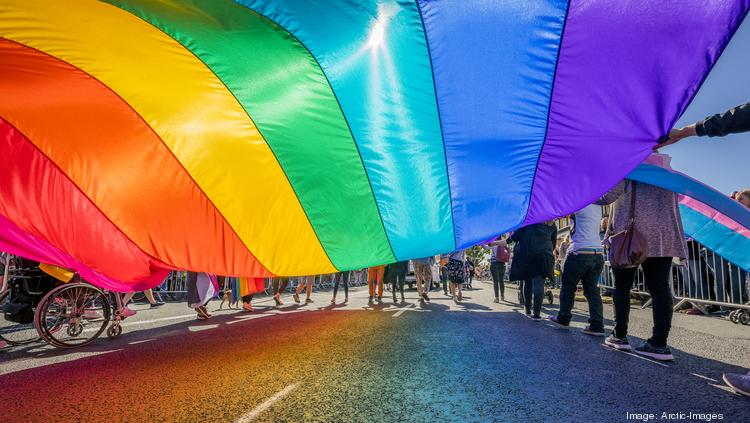
Two Wells Fargo economists say they’ve crunched the numbers and found that a state’s economic growth is “positively correlated with LGBT representation.”
“States with higher concentrations of people who identify as gay, lesbian, bisexual or transgender had higher rates of gross state product growth over the past decade, everything else being equal,” Wells Fargo economists Jay Bryson and Nicole Cerviwrote in a recent report that was issued with June’s Pride Month in mind.
The two economists assessed each state’s growth and whether the LGBT community was over- or under-represented based on the proportion of its population identifying as LGBT, relative to the U.S. population. For example, Oregon in 2012 was home to 1.2% of the nation’s population but 1.7% of the country’s LGBT individuals. So Oregon had LGBT over-representation of 0.5% in 2012, the economists said. Based on similar calculations, South Carolina saw an under-representation by the LGBT community of 0.3%.
The premise that the size of a city or state’s LGBT community relates to its economic growth has been a hot-button issue over the years. The tension is likely even greater this year as several states consider or have recently approved hundreds of anti-LGBTQ laws.
Urban researcher Richard Florida shared a similar correlation in his book, “The Rise of the Creative Class.” Along with talent and technology, Florida considered tolerance a primary influence on a region’s economic growth. Florida saw a city’s concentration of LGBT residents as a possible indication of a region’s openness to differences, diversity and new ideas.
The Wells Fargo economists, in assessing economic growth and LGBT representation in every state and the District of Columbia, also said there was a positive correlation between a state’s rate of business formation between 2010 and 2019 and its ratio of LGBT representation. They also found a positive association between a state’s per capita rate of patents granted in that period and LGBT representation.
The Wells economists cited Florida’s research on the role diversity and creativity plays in entrepreneurship and innovation. Or as Florida put it, “Regions that wish to encourage economic creativity must also encourage diversity.”
“Our finding that states with higher degrees of LGBT representation enjoyed stronger rates of (gross state product) growth between 2010 and 2019, when controlling for other factors, strikes us as remarkable,” the Wells economists said, adding that they’ll leave it to future research to determine the precise links between a state’s economic growth rate and its LGBT presence.
Wells Fargo’s economic research underscores a warning that Florida, the urban researcher, shared earlier this year when he tweeted that there’s a “self-inflicted monkey wrench” being thrown into the red state growth machine.
“The monkey wrench is talent attraction … top knowledge, professional and creative talent being pushed out by a package of reactionary policies,” Florida said, pointing to attacks on women’s rights, gay rights and other popular targets in mainly Republican-led states. “Increasingly, these governors and legislatures appear unhinged.”