Chetu Guest Blog Post: Revolutionizing Websites and Businesses with AI-Powered Chatbots
By Rick Heicksen Vice President of Sales at Chetu
AI chatbots are no passing fad, and there are an array of reasons why companies in a variety of industries are turning to the development of this technology to remain competitive and increase efficiency. This change promises to be as widespread as it is transformative, and comprehending its implications and its implementation will be a must for anyone working to keep their enterprise on the cutting edge.
The Benefits of AI Chatbots
 The best use case for chatbots may be the most obvious. Automated response systems of any type can allow a business to field questions and maintain contact with their customers much more affordably and efficiently than if every interaction required human intervention. Neither time of day nor volume of work keeps a chatbot from its appointed tasks, leaving businesses with a constant point of contact for dynamic interchanges of information. Nobody wants to be put on hold or have a badly scripted one-size-fits-most interaction.
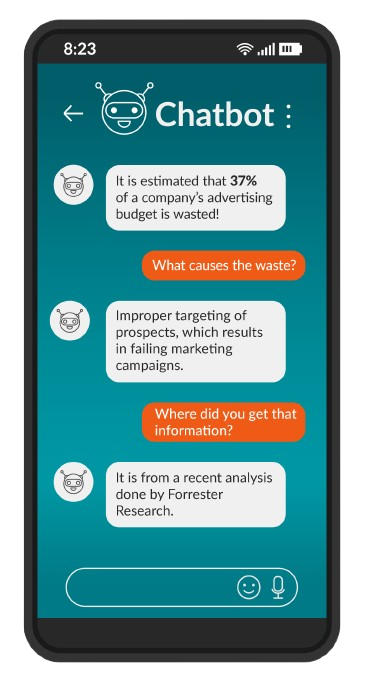
By contrast, an effectively used AI chatbot can vastly improve a company’s ability to provide fast, helpful customer service. AI chatbots are much more than a glorified answering service. They provide critical business intelligence by collecting customer data that supercharge marketing initiatives. Finding the right audience for your message is a perennial challenge for businesses of all sizes. In fact, an analysis by Forrester Research estimates that 37 percent of a company’s advertising dollars are not targeted at the correct consumer demographic.
Chatbots can help rectify this deficiency by turning interactions into opportunities that inform a company what its customers are doing and why. That, in turn, can lead to better decisions on where advertising dollars are best utilized. An AI chatbot isn’t just a way for your customer to learn about your company but a way for the company to learn about them – and to decide on its next promotional steps to ensure that a given message reaches the intended audience exactly when and where it is needed.
What Does an AI Chatbot Look Like for You?
This is a question that goes well beyond finding off-the-shelf software. It speaks to the basic underpinnings of your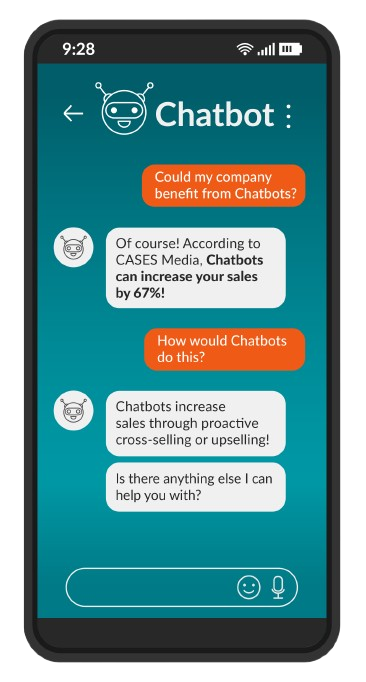 business needs and aims. An effective AI solution isn’t just a feat of programming. It is about knowing what you want as much as it is how you achieve it. Does your business need to boost sales, collect more data, generate more leads, or bridge customer service gaps?
Once the aims are defined, an enterprise can move on to the question of means. For a given chatbot, a menu of choices exists, and it often boils down to three. The solution can be rule-based, AI-powered, or a combination of the two technologies.
The benefit of an AI product is that it incorporates Natural Language Processing (NLP) as well as Machine Learning (ML). These characteristics help ensure that the people at the other end of a conversation feel they’ve been given a useful and comfortable interaction that meets their expectations and serves their needs.
Boosting the Numbers
New leads are the lifeblood of many enterprises and generating them is the holy grail of every marketing executive or CEO. Fortunately, AI chatbots can play a part in that search. A chatbot that collects data can form that information stream into individualized portraits that paint a picture, not just of the interaction but of the potential customers themselves. This allows decision-makers to craft a proper strategy and order sales teams to direct their energies where they are likely to yield the best results. Those results positively affect the bottom line. CASES Media, a publication that deals with industry trends, surveyed businesses and found a 67 percent increase in sales credited to chatbots.
Making it Happen: Buy, Build, or Hybrid
Businesses that want to implement AI Chatbots have several options. They can buy a third-party software product or build a customized version. By purchasing, companies may save on upfront costs and deploy faster. However, third-party products often offer generic features, ongoing subscription costs, and problems integrating with existing systems.
In contrast, a trusted software solutions provider will tailor the AI chatbot to meet the business’s unique needs and will seamlessly integrate it with existing programs. Companies will own the intellectual property and code, have full control over the platform, no recurring licensing fees, and have the ability to easily scale up as the business grows.
The hybrid approach combines the best aspects of buy and custom solutions. Businesses can have a vetted software solutions provider, who is a partner with major tech brands, customize the third-party product to meet their operational needs.
Regardless of whether businesses buy, build, or customize a product, AI chatbots will continue giving companies a competitive advantage by compiling data, improving customer service, saving ad dollars, creating a more effective marketing strategy, or generating better leads; AI chatbots can make a massive difference in how businesses operate.
Based in Tempe, Rick Heicksen is the Vice President of Sales at Chetu, a global software solutions and support services provider.
About Chetu: Founded in 2000, Chetu is a global digital intelligence and software solutions provider. Chetu’s specialized technology and industry experts serve startups, SMBs, and Fortune 5000 companies with an unparalleled software delivery model suited to clients’ needs. Chetu’s one-stop-shop model spans the entire software technology spectrum. Headquartered in Sunrise, Florida, Chetu has 13 locations throughout the U.S., Europe, and Asia. For more information, visit www.chetu.com.