
Arizona leads nation in battery storage growth with 6.2 gigawatt-hours added in Q2
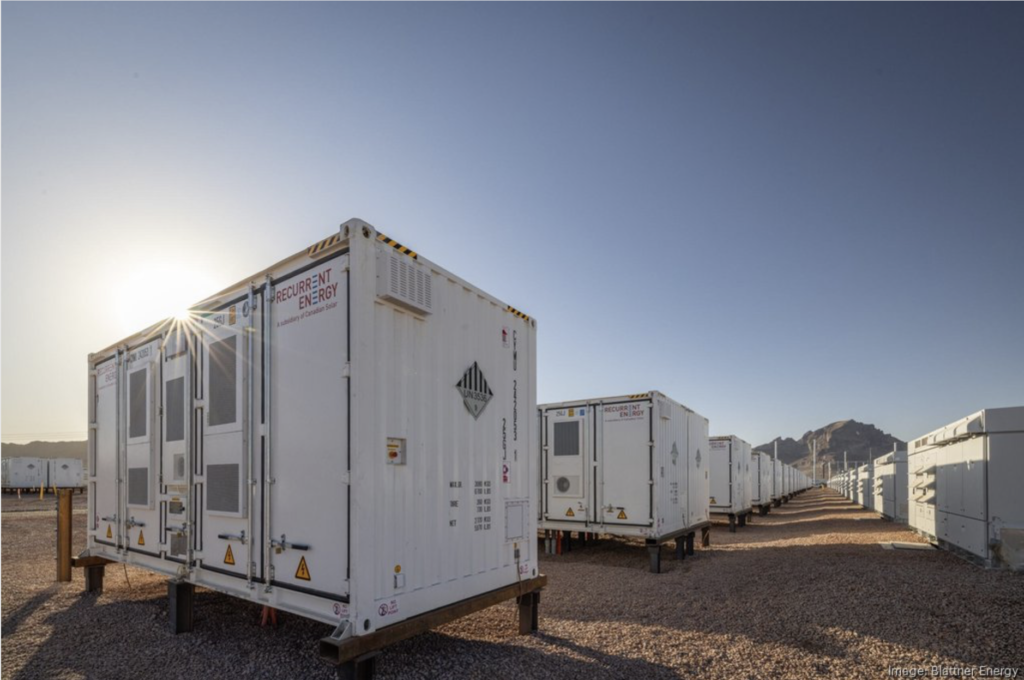
Arizona has become the nation’s growth leader for battery electric storage systems, with more than 6.2 gigawatt-hours of new storage added in the second quarter and two of the nation’s largest projects located in the state.
That storage capacity jump made Q2 the strongest quarter for any single state on record and demonstrates how Arizona is increasingly pairing its solar resources with storage to capture power generated in the state, according to the Q3 U.S. Energy Storage Market Outlook, released Monday by the Solar Energy Industries Association and Benchmark Mineral Intelligence.
Arizona overtook Texas for new capacity added during the first half of the year, with the Grand Canyon State accounting for a 27% market share in 2026, the report said. Arizona and Texas were two out of four states to have deployed more than a gigawatt-hour of battery storage for the year’s first half — the other two states being California and Utah.
The latest results show continued momentum for Arizona, which in the first quarter installed the second-highest amount of battery storage capacity in the nation.
In the U.S. as a whole, utility-scale battery energy stationary storage, or BESS, capacity has increased 23% year-over-year throughout the first half of 2026, with Q2 2026 alone up 11% over Q2 2025 and adding juice to what was a relatively weak start for the year overall, the report said.
Arizona now has third-highest amount of US storage capacity
Arizona now has a total of 26.5 gigawatt-hours of BESS capacity, which is the third-highest amount in the nation, behind California’s 62 and Texas’ 33.1. After Arizona, the next highest BESS is 6.3 gigawatt-hours in Nevada. Arizona’s capacity is enough to power 785,750 homes for 24 hours on a single charge, the SEIA said.
The average BESS project size in Arizona is 489 megawatt-hours, a larger average than in all other states except Utah (averaging 573 megawatt-hours). Nevada’s average is close behind at 452 megawatt-hours, showing those three Western states as potential fast risers.
While Arizona had three of the nation’s 10 largest BESS projects during the fourth quarter, that number has slipped in the report to two after the second quarter. Those two were the TransGrid Atlas VII BESS and Papago Storage Project — with each adding 1,200 megawatt-hours. They were tied with a New Mexico installation to rank Nos. 8-10.
Separately, the largest solar battery project ever built in Arizona, Project Sterling, is now underway in Mohave County – but 90% of its capacity has been presold to one customer, Elon Musk’s Tesla.
Arizona now has about 13.7 gigawatt-hours of standalone BESS capacity, with about 12.8 gigawatt-hours tied to solar installations.
The report forecasts that Arizona will reach 73 gigawatt-hours of total capacity by 2030.
The report also noted that utility-scale storage capacity has nearly doubled during the first 18 months of the Trump Administration, from 88 to 165 gigawatt-hours, and that demand for energy storage is exceeding previous expectations for the future.
“This record growth highlights that storage is a powerful reliability tool that strengthens our energy security, meets rising demand and puts downward pressure on electricity bills,” said Tim Pawlenty, president and CEO of the Solar Energy Industries Association.
The demand for BESS nationwide is being driven by data center expansion, the report said, but this comes at a time when an increasing number of states — including Arizona, with one major project being rejected by local authorities just last week — are looking to tap the brakes on that expansion amid growing local opposition.
The report noted that states are split between supporting and restricting data centers, and it added that the upcoming midterm elections could affect the balance.