
Building a sustainable future for Casa Grande
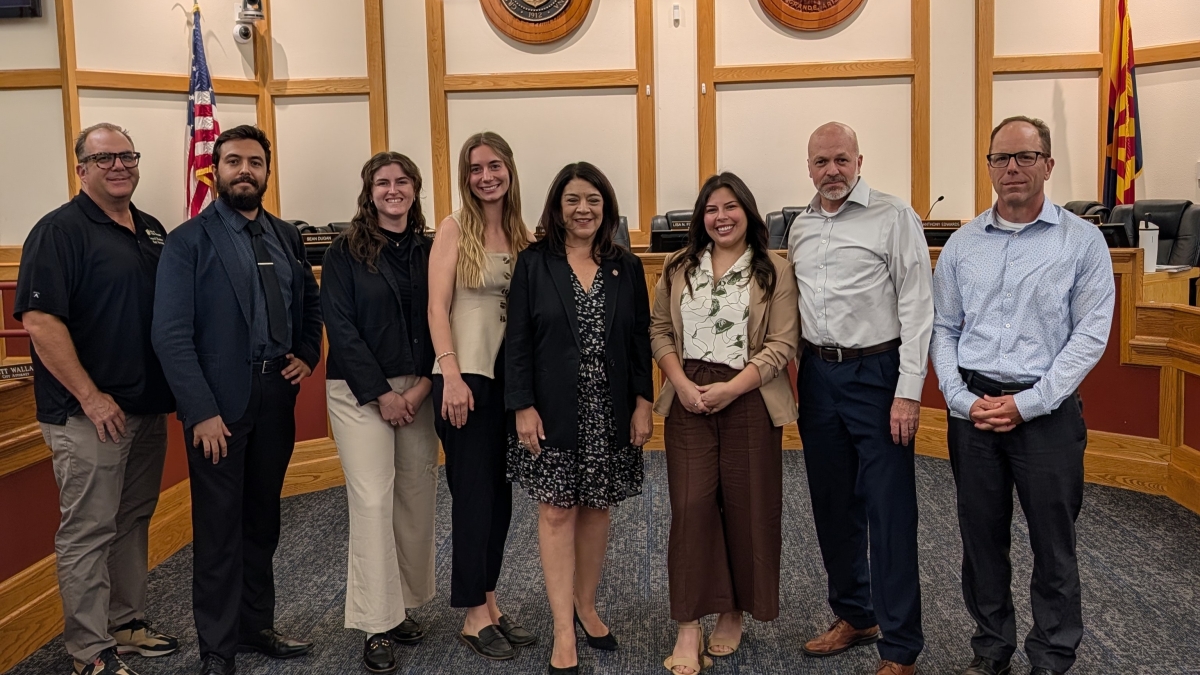
Nestled between Phoenix and Tucson along the I-10, the city of Casa Grande, Arizona, has been catching the attention of home buyers and new business owners as one of the fastest-growing cities in Pinal County.
Casa Grande also caught Jenny Marquez’s attention as she worked alongside fellow graduate students in Arizona State University’s Rob Walton College of Global Futures as they completed their capstone project.
Marquez is a graduate student in the Master of Sustainability Solutions (MSUS) program in the School of Sustainability. In fulfillment of her MSUS capstone project, Marquez teamed up with fellow MSUS graduate students Tracy Alt, Annika Rynders-Kamstra and Sawyer Routt to collaborate with the city of Casa Grande in the development of practical code recommendations to reduce water use through community participation.
“This project looks at how Casa Grande can take a more proactive approach to water conservation,” explained Marquez. “Ultimately, it’s about helping the city grow in a way that feels thoughtful, sustainable and true to the character of the community.”
Marquez’s sentiment stems from calling Casa Grande home for the past few years.
“As a resident, it felt meaningful to give back to my own community,” she said, “especially in a way that supports the city’s future.”
The team had the opportunity to meet with Deputy City Manager Steven Weaver, Mayor Lisa Navarro Fitzgibbons and Planning and Development Director Dan Coxworth to work collaboratively toward leading the city’s sustainable future. These meetings provided a unique opportunity for the graduate students and city officials to learn from each other and the unique perspectives of both parties.
“These public servants prioritize caring for their community, and I am grateful to have worked alongside them,” said Rynders-Kamstra. “All three of them encouraged us in the capstone project, were open-minded toward our recommendations, and helped us understand Casa Grande’s needs.”
For their project, the team produced a draft water conservation chapter of the city code, including nine regulatory sections and complementary materials to assist with implementation. This included the Water Adjusted Value Index (WAVI), an internal decision-making support tool that allows the city to determine the economic productivity of a business or industry based on its anticipated water use, as well as community engagement tools such as infographics and a mock website to demonstrate how the city can engage residents on water conservation.
“City codes are vital to a community’s well-being, as they shape everyday life,” Rynders-Kamstra shared. “Water is a particularly valuable resource in Arizona and should be treated accordingly. These water conservation codes will increase Casa Grande’s resilience as the city grows.”
As Arizona faces an uncertain water future, this project aspired to provide the foundations for long-term sustainability and security in a local community.
“This work matters because the city of Casa Grande is not alone in its efforts to maintain quality of life for its residents,” said Alt. “Communities across Arizona, the United States and the rest of the world are increasingly aware of the role governance plays in shaping our collective future, especially through the lens of resource management and economic development. Our capstone project not only demonstrates the necessity of water conservation in Arizona but also the responsibility that current decisions have for future generations.”
“In a place like Arizona, where climate challenges are so immediate, this kind of work feels both relevant and necessary,” Marquez detailed. “This capstone felt like an opportunity not only to contribute to Casa Grande’s future but also to be part of a broader shift toward more thoughtful, sustainable development.”
Prior to joining the MSUS program at ASU, Marquez served as an Army officer for seven years and transitioned into project management for a renewable energy startup. Her practical experience and background have helped Marquez connect with various sustainability topics such as environmental justice and renewable energy systems.
After graduating this May, Marquez is excited to apply what she has learned through the MSUS program and her capstone project. She envisions her future working with small and mid-scale local governments to shape resilient, sustainable futures for communities. With many cities growing quickly in the face of climate change and sustainability challenges, Marquez sees this as an opportunity to make a lasting impact.
“I’d like to be part of that kind of work, helping communities navigate growth in a way that’s thoughtful, sustainable and grounded in improving quality of life.”