
Arizona adds 337 megawatts of solar capacity in first quarter amid national slowdown
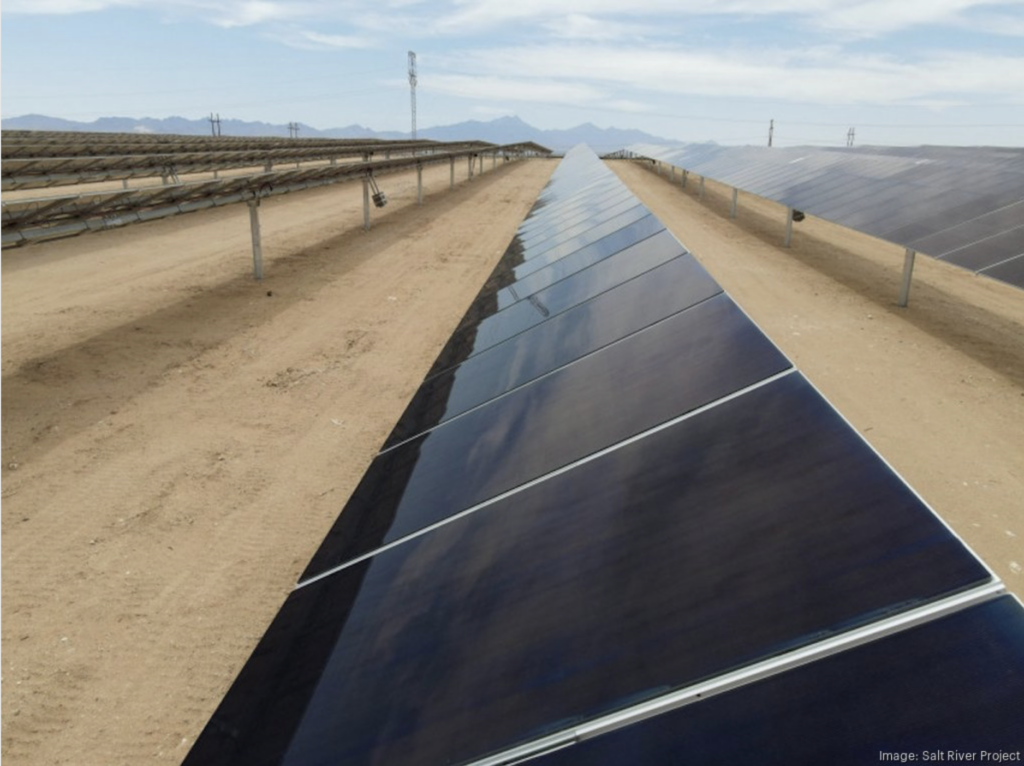
New solar energy generation capacity continues to be added at a robust pace in Arizona, bringing the state to No. 4 in the nation for total capacity.
Arizona’s solar energy capacity increased by 337 megawatts in the first quarter of this year, the eighth-highest amount among U.S. states, according to the latest Solar Market Insight report released June 10 from the Solar Energy Industries Association, along with research firm Wood Mackenzie.
Those figures came out just a few weeks after SEIA released a separate reportthat found Arizona had installed the nation’s second-highest amount of utility-scale energy storage capacity during Q1 2026.
That kind of storage is frequently tied to solar generating projects. The completion of one such case was announced just this week.
Nonprofit Valley utility Salt River Project and EDP Renewables said they recently finished Flatland Energy Storage, a 200-megawatt battery energy storage system just outside the Pinal County town of Coolidge. It is part of the massive Brittlebrush Solar Park. The new storage site can power about 44,500 homes during periods of peak demand, SRP said.
Rush to meet AI needs fuels utility-scale solar
Across the country during the first quarter of this year, new solar and storage installations constituted 91% of all new energy capacity added (60% being just solar). The total 7.8 gigawatts from more than 6 million installations during that period was a 27% decline from a year earlier and at 42% decline from Q4 2025.
At the same time, the report said contracts for utility-scale solar projects rose 15% year-over-year as tech companies seek to secure power amid a boom in AI-driven demand.
In addition to the growing demand pressure, the report’s authors said the clean energy industry has experienced political pressure in the form of tax policy changes and regulatory actions, including permitting delays, initiated by President Donald Trump’s administration.
“As power demand skyrockets, political and regulatory attacks are slowing down the exact resources we rely on. Impeding the only sector that is actively building new power is a reckless gamble that will only drive electricity bills higher,” said SEIA Interim President and CEO Darren Van’t Hof.
Those conditions prompted the report’s authors to predict relative flatness in the number of U.S. solar additions over the next five years. And on the residential side, they forecast a 21% decline nationally this year, but consistent growth in following years.
SEIA and Wood Mackenzie said the quarterly data is collected from nearly 200 utilities, state agencies, installers, and manufacturers.