
Phantom Space acquires rival’s tech to accelerate Arizona rocket development
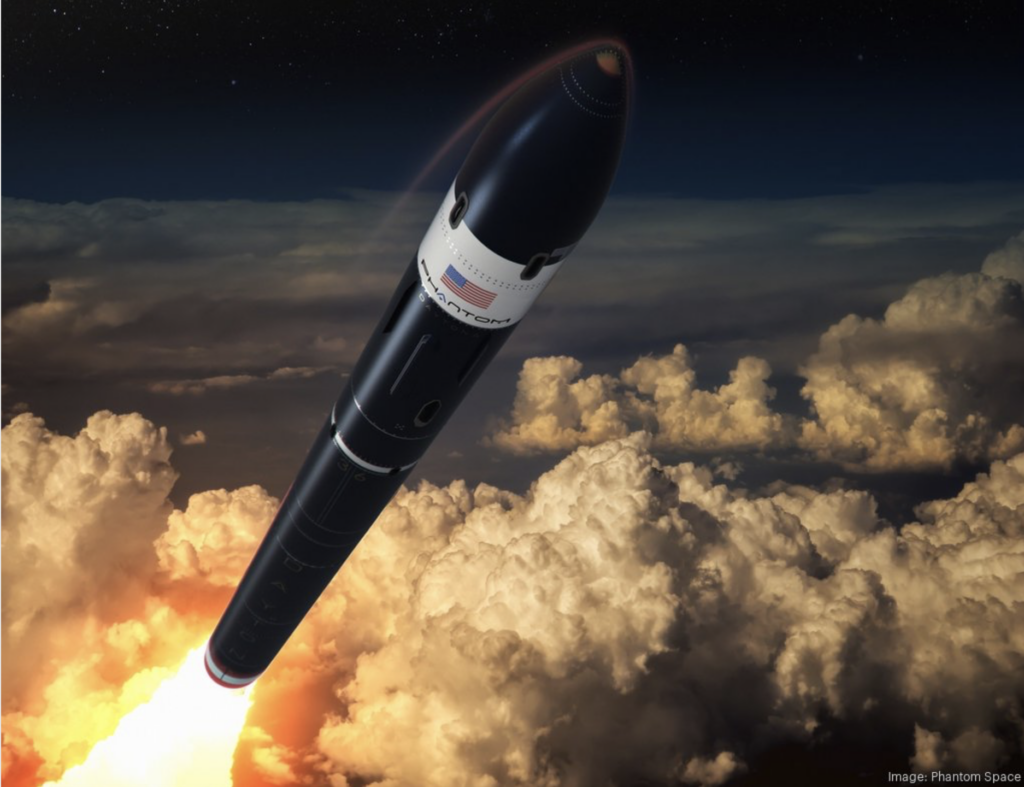
Phantom Space Corp. plans to accelerate development of its rocket launch vehicle after acquiring assets and intellectual property from Vector Launch Inc., a former Tucson-based startup that filed for bankruptcy in 2019.
Phantom Space, also headquartered in Tucson, acquired Vector Launch’s design elements, engineering data and proprietary technologies, all of which will be integrated into its Daytona vehicle architecture to advance its path to orbital flight and serve government and commercial customers, according to a company release.
Financial terms of the acquisition were not disclosed.
“Phantom’s agility and founder-led approach make the company the right steward for this intellectual property,” Jim Cantrell, cofounder and CEO of Phantom Space, said in a statement. “This acquisition strengthens the small-launch ecosystem at a time when demand for responsive launch has never been higher.”
The buyout comes as another space sector acquisition was announced this week involving an Arizona company – Optical Support Inc. – that was acquired by California-based Rocket Lab Corp.
Phantom Space’s Daytona vehicle is a two-stage rocket designed to deliver dedicated launch services for small satellites and spacecraft into orbit. Phantom Space said it has progressed vehicle subsystem testing, including successful hot-fire tests of Daytona’s propulsion assemblies, and plans to begin integration and qualification activities immediately, with stage-level testing and vehicle milestones scheduled throughout 2026.
In addition to its Daytona launch vehicles, the company is also developing Phantom Cloud, an orbital data center constellation.
Phantom Space’s first Daytona launch attempt is on track for the second half of 2027, while its first Phantom Cloud demonstration mission is slated to occur during the second quarter of 2027, a company spokesperson told the Business Journal.
Founded in 2019 by two of the original five members who built SpaceX, Phantom Space aims to expand access to space by combining launch and satellite capabilities under a vertically integrated platform.
Cantrell was previously the first vice president of business development at SpaceX. He also worked at the French Space Agency, NASA’s Jet Propulsion Laboratory, and cofounded Vector Launch Inc. Thompson, meanwhile, led development of the Falcon 1 and Falcon 9 rockets and Dragon capsule structures while at SpaceX.
The Vector Launch transaction ensures that critical U.S. launch technology and intellectual property remain active and productive within the domestic space industrial base, according to Phantom Space.
“As the original architect of Vector’s vision, it’s deeply meaningful to bring these assets home to Phantom,” Cantrell said. “This acquisition isn’t just about technology, it’s about momentum. We’re accelerating Daytona, creating high-tech aerospace jobs in Tucson, and moving faster toward orbital capability.”
Phantom Space has 30 employees and plans to hire an additional 20 workers this year, the company spokesperson said.
Rocket Lab Corp. acquires Optical Support Inc.
Rocket Lab (Nasdaq: RKLB) said that on Feb. 24 it had acquired Optical Support, the Tucson-based company that designs and manufactures custom, high precision optical and optomechanical systems.
Rocket Lab will integrate OSI into Rocket Lab Optical Systems, the company’s payload arm, which is based in Arizona.
As part of the OSI acquisition, Rocket Lab will add 20 employees and continue to operate the company’s 22,000-square-foot component machining, test and integration facility at 1661 S. Research Loop., a company spokesperson told the Business Journal.
“Optical Support, Inc. has been enabling some of the nation’s most critical missions for more than 20 years, and now as part of Rocket Lab we are excited to take our technologies further,” Michael Savard, OSI’s president, said in a statement. “Rocket Lab’s track record of acquiring best-in-class space systems technologies and successfully scaling them to meet the growing needs of commercial and national security markets has been proven multiple times over. We look forward to teaming up to do the same for advanced lenses and optomechanical systems.”
Rocket Lab, founded in 2006 and based in Long Beach, California, established its payload arm last August after acquiring Geost, a developer of electro-optical and infrared sensor payloads based in Tucson.
OSI’s advanced lenses and optomechanical systems are critical enablers for national security and commercial satellites and are key subsystems used in Rocket Lab Optical Systems’ payloads for space protection, and missile warning, tracking and defense, according to the company.
OSI has contributed its optics and optomechanical systems to projects that include NASA’s James Webb Space Telescope, Sphere Las Vegas, and U.S. government defense and intelligence missions.