
Crating Technology Guest Blog: Local Crating, Global Impact: Behind the Scenes of a High-Stakes Semiconductor Shipment
When Arizona-made technology moves across the globe, it carries more than just innovation—it carries the reputation of the companies and regions that built it. Ensuring that equipment arrives safely, intact, and fully operational is a mission-critical step in the global supply chain—especially when that equipment is bound for one of the world’s most advanced semiconductor hubs.
Recently, a Phoenix-based project called for the safe international transport of highly sensitive semiconductor test equipment. The destination: South Korea. The challenge: maintain perfect structural integrity through 20 days of multi-modal transit involving road, sea, and cross-border handling.
The margin for error was zero. And the solution demanded not just packaging—but engineered protection.
The Shipment: Sensitive Semiconductor Test Equipment Bound for South Korea
Semiconductor manufacturing is one of Arizona’s fastest-growing industries. With major fabrication facilities expanding in Chandler, Mesa, and beyond, the region plays a crucial role in supplying critical infrastructure for the global chip market. But building advanced tools is only part of the equation—those tools must also be safely deployed across the world.
In this case, a semiconductor firm needed to ship ultra-sensitive testing equipment overseas. This wasn’t off-the-shelf machinery—it was highly calibrated, electrostatic-sensitive equipment that could be compromised by the slightest vibration or environmental exposure.
The project presented multiple challenges:
- Complex geometry and support requirements
- Zero tolerance for vibration, shock, or moisture
- Electrostatic sensitivity requiring ESD-safe handling
- Multi-leg transport with extended exposure to variable conditions
With over 20 days in transit—across trucks, ports, ocean containers, and international handoffs—the crating solution had to account for every possible risk.
The Engineering Behind the Crate
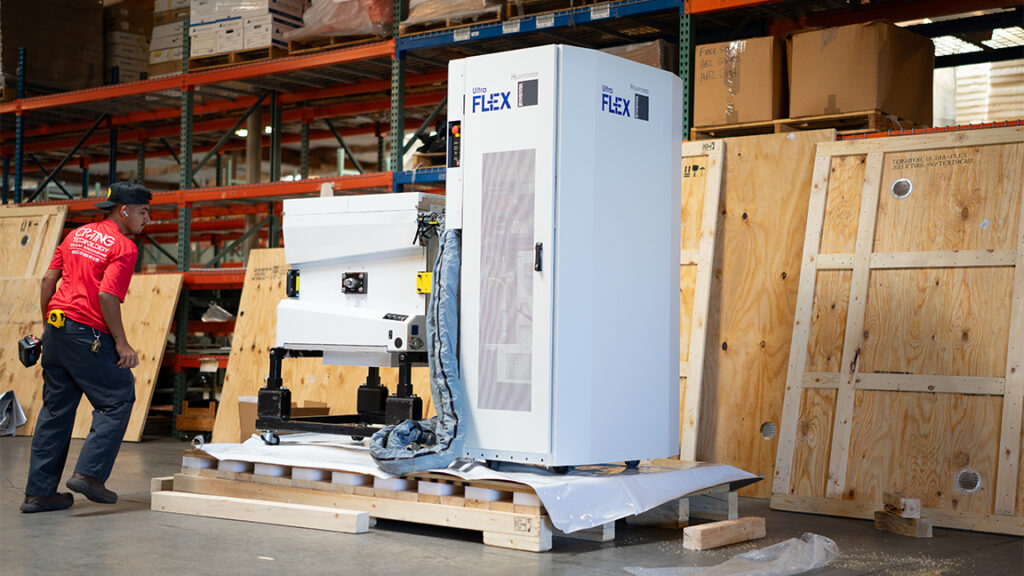
Crating Technology developed a custom crating system, purpose-built for this exact piece of equipment. It was designed to perform like a mobile cleanroom—isolating the equipment from vibration, climate fluctuations, and shifting forces.
Vibration isolation mounts were integrated into the base of the crate, absorbing road shock and ocean movement to protect internal calibration and delicate components.
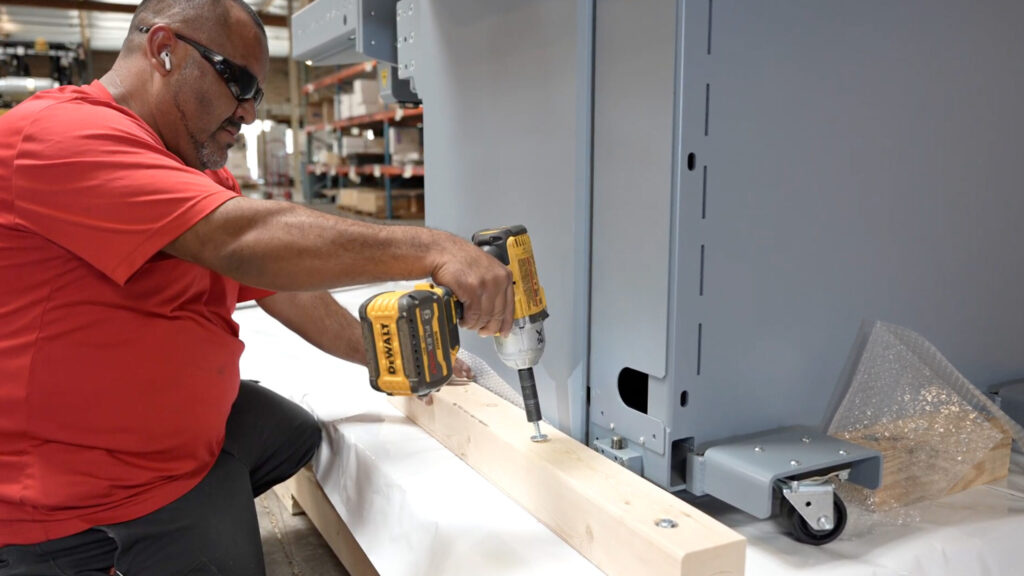
Full Perimeter Blocking with Lag Bolts
We used engineered wood blocking, customized to the unit’s shape, and secured it with lag bolts to prevent any internal shift during transport.
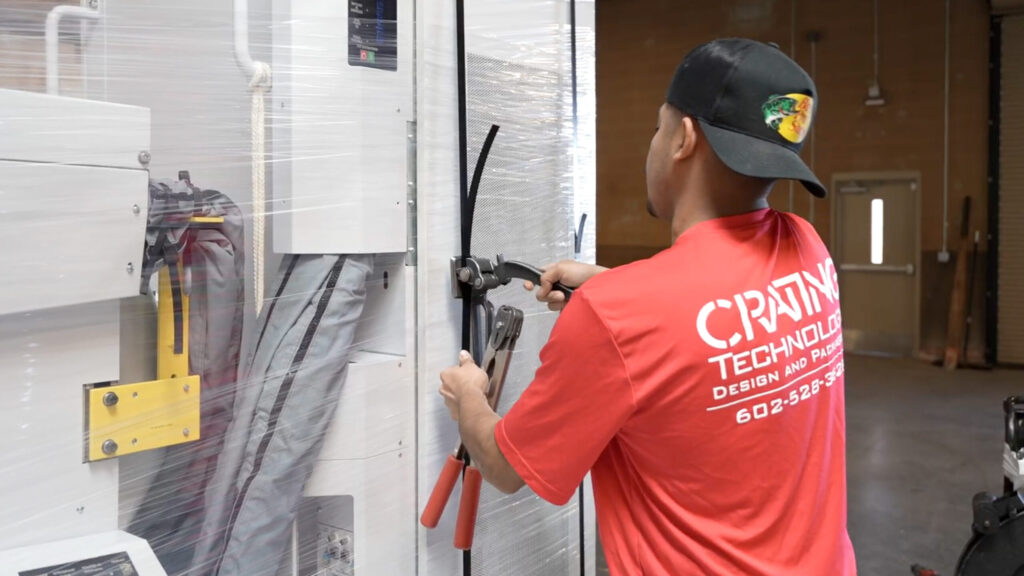
Steel Banding
Heavy-duty steel strapping reinforced the internal assembly and provided compression to keep structural integrity intact under external forces or stacking.
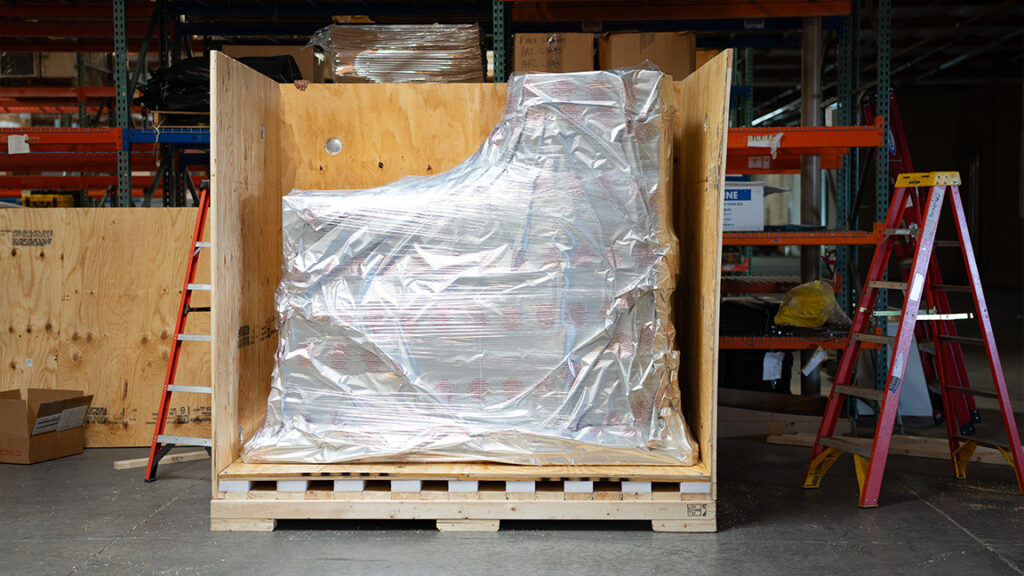
Vapor Barrier System
To combat moisture during ocean shipping, the equipment was enclosed in a sealed vapor barrier liner—airtight and foil-lined to block ambient humidity.
Desiccant Packs
Industrial desiccant was added based on route duration and climate exposure, ensuring the interior humidity stayed below critical thresholds throughout the journey.
Every decision—down to fastener choice and load path—was made to preserve the physical and operational integrity of the equipment.
Global Reach, Arizona Roots
Though this shipment was bound for Asia, every element of the project was handled in Arizona. From engineering consultation and crate fabrication to final loadout, the process was completed entirely in Phoenix.
Key steps included:
- On-site equipment review and consultation
- In-house fabrication using ISPM 15-certified materials
- Anti-static handling protocols during packaging
- Coordination with international freight forwarders and compliance teams
- Supervised crate closure and white-glove final loadout
Arizona’s growing footprint in global supply chain infrastructure isn’t limited to manufacturing—it includes technical logistics and the specialized packaging expertise that ensures those products arrive in perfect condition, wherever they’re headed.
Why It Matters: Arizona’s Supply Chain Advantage
As Arizona continues to attract advanced industries—semiconductors, aerospace, cleanroom technologies, medical robotics—the importance of logistics infrastructure grows in tandem. It’s no longer enough to build world-class technology. That technology must be delivered with the same level of precision.
A single damaged test system can delay production lines, disrupt quality control, or even void warranties. These risks make engineered crating solutions an essential link in the chain—not a luxury.
This project underscores the role local logistics engineering plays in supporting global innovation.
Final Thoughts
Moving high-value, high-sensitivity equipment isn’t just about transportation—it’s about trust. Behind every global shipment is a team of specialists solving invisible problems in vibration, load paths, humidity, and compliance. These behind-the-scenes efforts allow the world’s most advanced tech to perform as expected the moment it arrives.
For Arizona, it’s yet another example of how local expertise is enabling global impact—crate by crate, shipment by shipment.
About Crating Technology
Crating Technology is a Phoenix-based provider of engineered crating, custom foam packaging, and logistics coordination services. As a proud member of the Arizona Technology Council, Crating Technology helps manufacturers, defense contractors, medical innovators, and clean energy companies protect and ship their most valuable assets—across town, across the country, or across the globe.