
Why Arizona’s chip making boom may just be starting
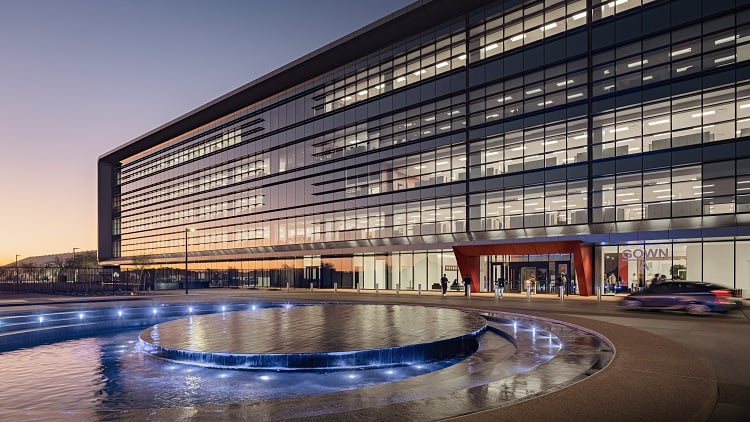
Over the last few years, Arizona has become a technology hub specifically for semiconductor manufacturing as the world’s largest chipmaker and foundry, Taiwan Semiconductor Manufacturing Co. (TSMC), moved to the state and began building state-of-the-art fabrication facilities.
It was quickly followed by other companies seeking to take advantage of the ecosystem the Taiwanese chip giant was building.
More fabs coming
In January of 2026, TSMC announced a $197 million land purchase in Arizona. The additional land signaled that TSMC is looking to build additional fabs in the state as a result of what it believes of the future demand for semiconductors in the U.S. region.
Reports indicate that the land could house at least an additional five fabs at TSMC’s Arizona location near Phoenix.
Currently, TSMC is in the process of building three semiconductor manufacturing fabs in the state with another three fabs planned. Arizona Fab 1 is operational as of the fourth quarter of 2024. Arizona Fab 2 has completed construction and is on track for production by 2028. Fabs 3-6 are aimed for production by 2030. TSMC is also in the process of constructing two advanced packaging facilities reportedly to begin operation by 2028.
Education following
Now, the University of Arizona has formalized an agreement with Taiwan’s National Yang Ming Chiao Tung University (NYCU) to help power the ecosystem with engineering talent in the region. NYCU has been training engineers for many high-tech companies in Hsinchu Science Park, also known as Taiwan’s Silicon Valley.
“Formalizing the University of Arizona’s partnership with NYCU through this agreement marks a pivotal moment in our strategic engagement with Taiwan and our commitment to the global semiconductor ecosystem,” said Suresh Garimella, president of the University of Arizona.
“By establishing the Talent and Innovation Hub with a premier institution that has deep connections to global leaders like TSMC, we are bringing the U of A’s world-class research capabilities to bear on the industry’s most pressing needs, including materials science and engineering, advanced packaging and photonics,” said Garimella.
Arizona State University (ASU) is also expanding its support for the tech hub as it was selected by the U.S. Department of Commerce (DoC) in 2025 for two new semiconductor development facilities: NNSTC Prototyping and NAPMP Advanced Packaging Piloting Facility.
Both are expected to open as soon as 2028.
Budding ecosystem
The move by universities in Arizona to expand its presence for engineers in the region is just the beginning of the ecosystem that will likely be planned in the coming years.
Amkor has already started construction on its Arizona advanced packaging and testing facility as part of the company’s $7 billion investment in the U.S.
The campus was built in the region to complement TSMC’s fabs to create an end-to-end chip manufacturing hub. Amkor and TSMC signed an agreement in October of 2024 to support TSMC’s customers’ designs, particularly those at its fabs in Phoenix, Arizona.
According to the Arizona Commerce Authority, more than 35 companies in the semiconductor space plan to expand or relocate to Arizona.
Intel Corp. already had a fab cluster at its Ocotillo campus in Chandler, Arizona, before it made plans to expand that cluster to build an additional two fabs at the location, investing $20 billion in the expansion.
Outside of the big vendors, the Arizona Commerce Authority said that dozens of smaller companies that work in the supply chain are moving to the region. This includes companies that work in:
- Chemicals
- Packaging
- Transportation
At SEMICON West in 2025, which was held for the first time in Phoenix, Arizona, Katie Hobbs, governor of Arizona said leading edge manufacturing, R&D, equipment, packaging and more were coming to the state.
She pointed to more than 60 semiconductor expansions representing a $205 billion investment.
At the show, the Arizona Commerce Authority and Greater Phoenix Economic Council is convening more than 600 ecosystem partners from 17 countries to highlight why Arizona is becoming a technology hub to spur even further investment.
Some of these investments include:
- ASM expansion in North Scottsdale
- Xnrgy’s air-cooling facility in Mesa
- Applied Materials’ materials-to-fab center
- KPCT Advanced Chemicals and Chang Chung’s chemical venture in Casa Grande
- Sunlit Chemical’s $100 million land buy in Phoenix
- Fujifilm’s $88 million expansion in Mesa
- Air Liquide’s $60 million facility in Phoenix
- Pentagon Technologies’ wafer cleaning in Mesa
Other hubs coming
While Arizona is well on its way to becoming a leading technology hub, other areas are cropping up to compete as well.
This includes all the activity happening in Texas such as Samsung’s construction of new fabs in the state as well as Texas Instruments’ expansion in Sherman, Texas. TI just recently started production at its 300 mm SM1 facility.
Other hubs may be coming to locations like Utah, where TI is building facilities, and New York where GlobalFoundries is expanding its fabs and where Micron has pledged to build another memory fab.