Chetu Guest Blog Post: Are SOA and AI Agents the Key to the Future?
Harness the Power of SOA and AI Agents to Transform Your Business into a Smart, Scalable, and Future-Ready Enterprise
By Rick Heicksen
Vice President of Sales at Chetu
In today’s fast-evolving tech landscape, Service-Oriented Architecture (SOA) and AI agents are emerging as crucial innovations that can redefine how businesses function, scale, and innovate. AI agents, in particular, have the potential to revolutionize business processes by improving decision-making, enhancing automation, and optimizing efficiency.
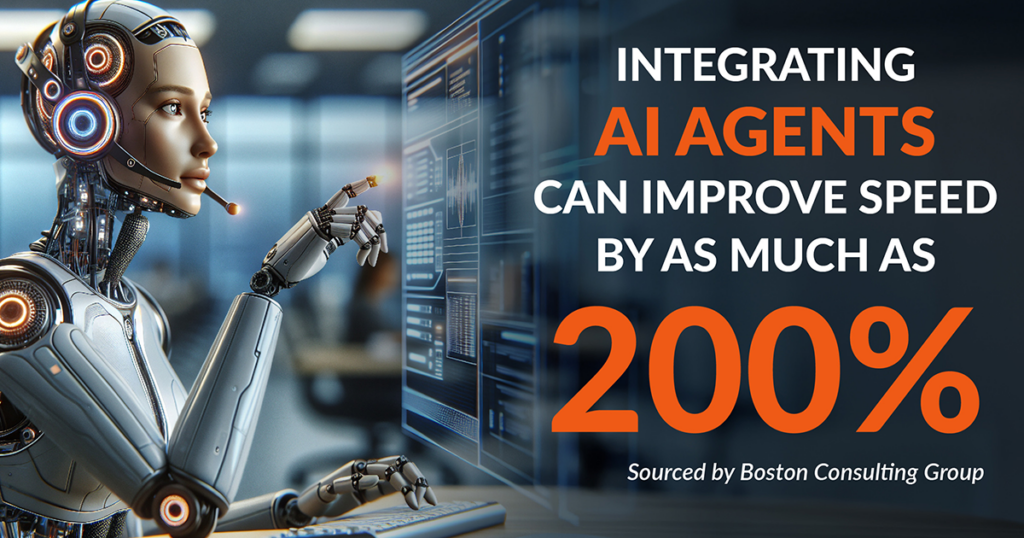
According to the Boston Consulting Group, AI agents can boost operational efficiency by up to 200 percent. By integrating AI agents with SOA, businesses can enhance flexibility, streamline operations, and stay competitive in an increasingly digital world.
In other words, we are entering the next phase of artificial intelligence.
What is Service-Oriented Architecture (SOA) and Why Should You Care?
SOA is a design architecture that breaks down complex systems into smaller, reusable services. By implementing this architecture, businesses can increase interoperability, streamline processes, and reduce the need for costly overhauls.
For example, let’s say an organization uses SOA to track inventory and manage deliveries — they could swap out one part of the system, like inventory management, without disrupting the entire workflow.
Key Benefits of SOA:
- Scalability: Easily scale services as your business grows.
- Flexibility: Implement changes smoothly without overhauling your entire system.
- Future-Readiness: SOA integrates effortlessly with modern technologies like APIs, microservices, and AI tools, positioning businesses to stay ahead of the curve.
The Role of AI Agents: More Than Just Automation
AI agents are intelligent entities that can adapt and learn from their environment. Unlike traditional AI, which follows predefined rules, AI agents analyze data and make autonomous decisions based on real-time inputs, offering dynamic and flexible solutions to complex problems.
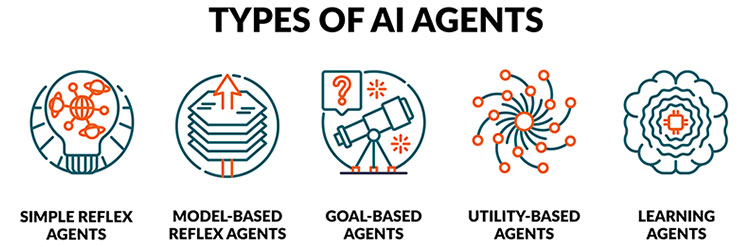
Types of AI Agents:
- Simple Reflex Agents: React based on immediate conditions.
Example: Thermostats that adjust room temperature automatically. - Goal-Based Agents: Work towards specific goals, optimizing operations to meet those objectives.
Example: Logistics companies using AI to find the most efficient delivery routes. - Learning Agents: Improve over time through experience and interaction.
Example: AI chatbots that personalize customer responses as they learn from past interactions.
How SOA and AI Agents Work Together
Combining SOA with AI agents results in systems that not only respond to change but actively drive improvements. SOA provides the structure, while AI agents introduce intelligence — enabling businesses to optimize workflows, predict trends, and make more informed decisions.
Real-World Applications: How SOA and AI Agents Deliver Tangible Results
From automating routine tasks to predicting maintenance schedules, SOA and AI agents can optimize processes across industries. For example, integrating AI agents into inventory management systems can reduce human error, while also automating adjustments in real time.
In finance, AI agents can analyze data to suggest smart investments or predict market trends.
Breaking Through Traditional Business Logic Layers
Traditionally, business logic layers define the system’s functions, but they are static and require constant manual updates to adapt to new business requirements.
AI agents, however, can make real-time decisions based on the data they receive, learning and adapting without needing constant reconfiguration.
A Shift Toward Simpler, Smarter Systems
With AI agents, software development is evolving toward a more efficient, flexible model. Businesses can create systems that are adaptive and capable of responding to changing needs in real time.
- User Interfaces: Optimized for a seamless customer experience.
- AI Agents: The brain of the system, automating decisions based on user input.
- Backend Services: Modular and scalable, supporting AI agents with data and functionality.
A Transformative Business Paradigm

The combination of SOA and AI agents is changing the way businesses think about system design. These technologies allow businesses to build adaptive, scalable, and highly efficient systems that will drive profitability and innovation for years to come.
Looking Ahead: Unlock Your Business’s Full Potential with Chetu
Chetu, a premier software development service provider, is at the forefront of this transformation. Their custom software solutions are designed to help enterprise-level businesses integrate SOA and AI agents, creating systems that are dynamic, intelligent, and future-proof.
Whether you’re looking to automate processes, enhance decision-making, or build smarter systems, Chetu’s team of experts is here to guide companies through every step of the implementation.
Contact Chetu today to learn how they can help transform your business with cutting-edge software solutions.
About Chetu:
Founded in 2000, Chetu is a global software solutions and support services provider. Chetu’s specialized technology and industry experts serve startups, SMBs, and Fortune 5000 companies with an unparalleled software delivery model suited to the needs of the clients. Chetu’s one-stop-shop model spans the entire software technology spectrum. Headquartered in Sunrise, Florida, Chetu has 13 locations in the U.S., Europe, and Asia. For more information, visit www.chetu.com.