
Utility-Scale Solar & Storage: Separating Public Health Fact from Fiction
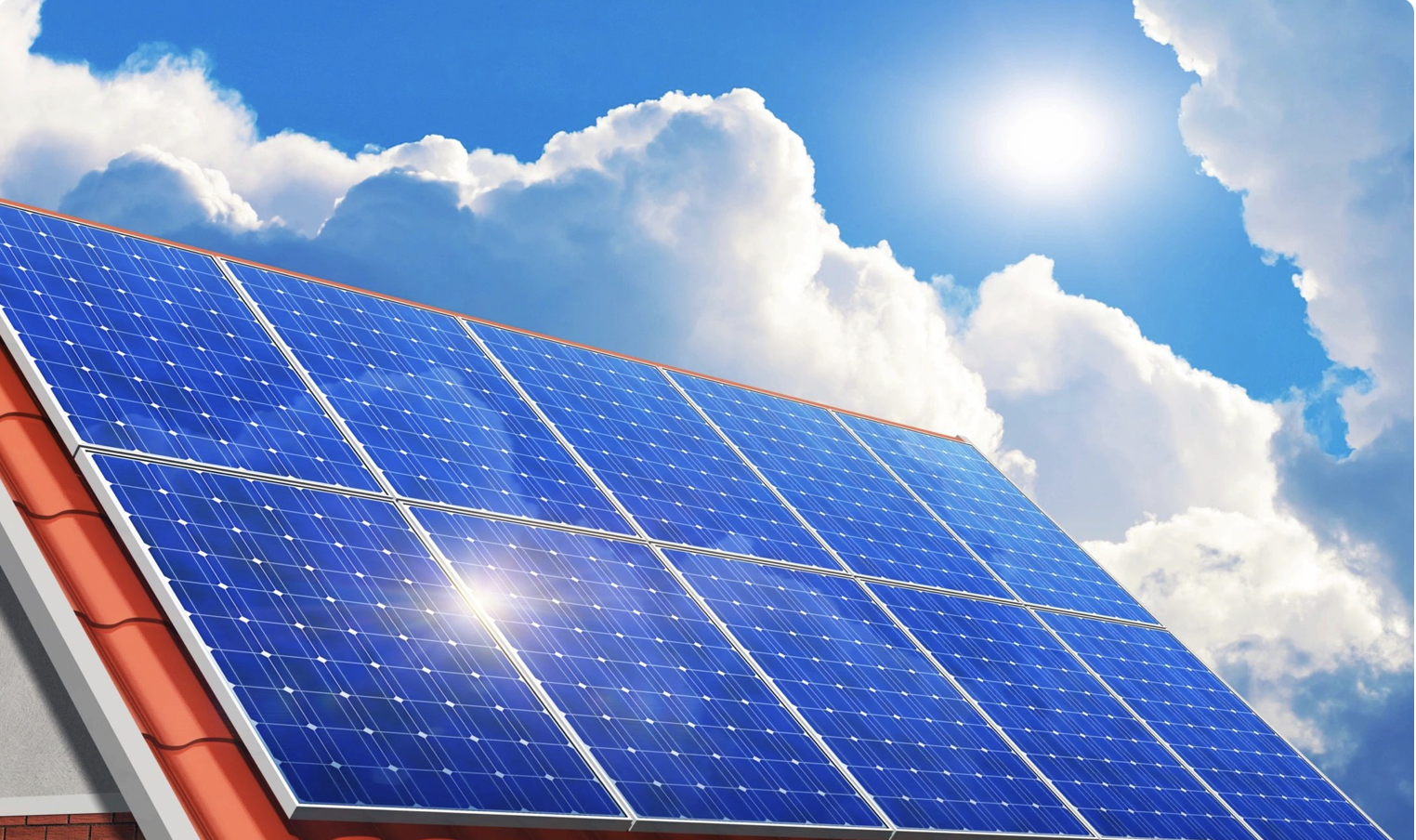
Utility-scale solar projects are popping up all over Arizona. Why? Because solar is often the least expensive option for generating more badly needed electricity.
That’s good for several public health reasons. Cheaper energy generation means (or at least should mean) lower electricity costs, which helps the social determinants of health, especially for lower-income households.
It’s also a lot cleaner than fossil fuel generation and doesn’t emit combustion air pollutants.
Yet… there’s a movement afoot by some to discourage solar generation. Some come from legitimate (but mostly unfounded) concerns about environmental and health issues.
A lot of it though comes from folks who just don’t like renewable energy for ideological and political reasons that have nothing to do with the evidence. It’s pretty hard, if not impossible, to convince the ideological crowd that solar is a cheap and safe source of generation.
But many folks just have questions and are confused because of misinformation coming from opponents.
So let’s dig into some of the misinformation that’s being used to discourage and fight utility-scale solar projects from an environmental and health lens.
Like every type of energy infrastructure, utility-scale solar and battery storage have impacts. Projects need to be properly located, responsibly designed and subject to reasonable operating, fire-safety and decommissioning requirements. Same goes for the battery storage that increasingly goes with solar projects.
But many of the public health arguments being tossed around against solar and storage don’t hold up when you look at the evidence.
Reliability & Battery Storage
One of the buzz words I often hear from the anti-solar crowd is that solar isn’t reliable because the sun doesn’t shine at night, and that the solution for smoothing out the load (battery storage) is bad or dangerous.
Grid systems always have balanced resources that turn on and off, plants that unexpectedly fail, and electricity demand that change by the day of the week, weather and time of day.
Battery storage now makes balancing easier.
A battery doesn’t generate electricity… it just moves electricity through time. Utility-scale batteries can charge during the middle of the day when solar production is robust and send that electricity back onto the grid during the late afternoon and evening when solar production is falling but electricity demand is still high.
That’s especially useful in Arizona. Our summer electricity demand doesn’t disappear when the sun goes down. Air conditioners keep running well into the evening.
Four-hour battery systems are increasingly used for exactly this purpose. Batteries can also react extremely quickly to changing grid conditions, helping operators regulate frequency and match electricity supply with demand on a second-by-second basis.
And this isn’t some experimental technology. By the middle of 2026 the U.S. already had nearly 52 GW of utility-scale battery storage operating on the grid, with Arizona among the states adding the most new battery capacity.
Solar and storage are still just parts of an overall energy mix. But pairing the two makes solar considerably more useful to grid operators by smoothing short-term fluctuations and moving inexpensive daytime electricity into the hours when it’s needed most.
What About Battery Fires?
Battery fires are a legitimate safety issue and shouldn’t be dismissed but managed with state of the art engineering.
Modern utility-scale projects should follow standards such as NFPA 855 and UL 9540/9540A, which address installation, fire and explosion risks and testing for thermal runaway.
Projects should also have site-specific hazard analyses, emergency-response plans, proper separation between battery units and coordination and training with local firefighters.
In other words, regulate the actual risk. When battery storage meets these standards the risk of a bad battery event is negligible. That’s why siting of utility-scale solar and storage should include the fire safety standards above, reasonable setbacks, and decommissioning.
Those issues should be addressed through proper siting requirements, enforceable operating and safety standards, emergency planning and a strong decommissioning plan.
Water and Solar
Let’s turn to water, because this one is especially important in Arizona.
Photovoltaic solar uses remarkably little water because it doesn’t need to boil water and cool steam-driven power plants like methane, coal and nuclear plants do.
In fact, solar, storage and wind are the least water-intensive electricity sources. By far.
Solar PV uses about 20 gallons of water per megawatt-hour. Methane generators use about 300 gallons per megawatt-hour. Coal uses 500 gallons and a hefty 720 gallons per megawatt-hour for nuclear power.
So solar uses less than 10% of what a methane (natural gas) generator uses!
Land Use
There are legitimate land-use issues too. Putting thousands of acres of anything in the wrong place can damage wildlife habitat or eliminate productive agricultural land. That’s an argument for good siting, not for pretending that solar development is inherently destructive.
The U.S. Department of Energy is studying “agrivoltaics,” where solar panels share land with crops, livestock or pollinator habitat. More than 4,000 MW of U.S. solar capacity already includes sheep grazing underneath the panels.
Research underway right here in Arizona is examining whether solar shade can reduce irrigation needs and heat stress for crops.
Again, land use is an important consideration that local officials can and should consider as they make siting decisions, but those decisions should be made with a clear head and use evidence rather than emotions to make siting decisions.
Property Values
Some people say large scale solar projects might have on property values. Here’s the evidence on that front:
A large Lawrence Berkeley National Laboratory study found a small average reduction (about 1.5%) for homes within ½ mile of large utility-scale solar projects with storage, but no measurable effect beyond 1 mile.
So landscaping, setbacks and thoughtful siting do matter and should be considered and taken seriously and incorporated into siting plans.
Air Quality
Operating solar facilities don’t produce air pollution. Construction and disturbed soil can create dust, which should be addressed through siting, construction and maintenance requirements, but there are no actual emissions like there are with all combustion plants like methane and coal.
Those fossil-fuel power plants release nitrogen oxides, sulfur dioxide, particulate pollution and other pollutants. They contribute to asthma episodes, heart attacks, strokes, respiratory illness and premature deaths.
Solar panels don’t have smokestacks. Fossil plants do.
Soil & Groundwater
Then there’s the less common claim that solar panels leach toxic chemicals into the soil and groundwater if they are damaged by hail, lightning, weather events or sabotage.
Photovoltaic solar panels are encapsulated and protected from the environment, so these are unfounded concerns. Panels do, however, eventually wear out or become less efficient after a couple of decades and need to be properly recycled or disposed of, and federal hazardous-waste requirements can apply.
That’s a legitimate planning issue, and when utility-scale solar facilities are sited, decommissioning and replacement should be included in the project plan.
Summary
Moving from fossil fuels toward renewable electricity is a public-health and health-equity strategy because fossil-fuel pollution and climate change disproportionately harm vulnerable communities.
So let’s properly manage utility-scale solar and battery-storage projects. Require responsible siting. Protect sensitive habitat. Manage drainage and dust. Require enforceable recycling and decommissioning plans. Use sensible setbacks, landscaping and modern fire and safety standards.
But policymakers should regulate actual risks based on evidence, rather than reacting to scary claims that don’t survive much scrutiny.