
West Valley city softens proposed battery storage restrictions after industry pushback
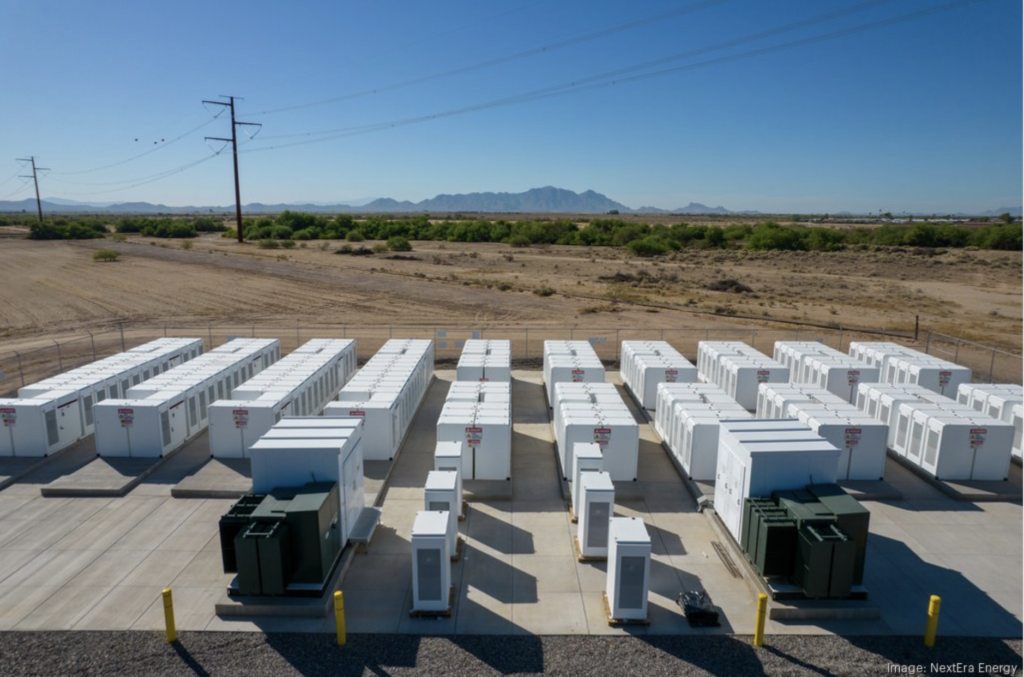
The city of Surprise has spent the past two years trying to work out a new zoning ordinance specifically targeting battery energy storage systems. In that time, demand for these BESS facilities — used to help power data centers and ensure grid reliability — has exploded.
By locking in a new set of rules, the city could avoid another emergency incident like one it faced several years back.
In April 2019, Arizona Public Service’s McMicken Battery Energy Storage System facility in Surprise experienced a “catastrophic failure” when an internal cell failure in a lithium-ion battery caused a thermal runaway event.
A fire ensued in the building, followed by an explosion that knocked four firefighters’ unconscious, sending them to the hospital with concussions, fractures, chemical burns and contusions, according to a report from the Occupational Safety and Health Administration.
Accordingly, the city’s initially proposed BESS ordinance was rigid — and has drawn ire from industry groups saying the restrictions it contains effectively prohibit such projects in the city in most cases.
APS, the Arizona Solar Energy Industries Association, the Arizona Technology Council and an engineering firm currently designing a BESS facility in Surprise were among those sending in letters of opposition.
A proposed 1,500-foot setback requirement from any residential property line was a key concern from those groups that the city’s Planning and Zoning Commission discussed at a Thursday meeting.
Buckeye, Maricopa County have similar 150-foot setbacks
The commission debated reducing the setback to 1,000 feet, 750 feet, 500 feet and 150 feet at the request of those opposing groups.
Ultimately, commission members voted unanimously to approve an amended ordinance requiring 150-foot setbacks, and the measure will head to Surprise City Council for a final vote next month.
“I guess my concern is that the fear of what happened a number of years ago may have caused us as a city to be a bit overcautious,” one commissioner said at Thursday’s meeting.
During the meeting, a planning department employee presented other nearby cities’ ordinances for BESS facilities for comparison with what is being proposed in Surprise.
Goodyear’s model was cited often by speakers and commissioners at the meeting; it stipulates 330-foot setbacks from residential developments, though it allows for reductions through a special use permit dependent on the results of a plume study.
Buckeye and Maricopa County have also formalized their BESS zoning rules. In Buckeye, such facilities require a 150-foot setback from existing or planned residential properties, and in Maricopa, a 150-foot setback is required from the lot line.
Mesa, however, requires 1,000-foot setbacks from residential and 150-foot setbacks for commercial properties.