
Pipeline Design & Engineering Guest Blog Post: Why Every Product Development Engineer Should Speak GD&T

Pipeline Design & Engineering, LLC
When a design leaves CAD and enters the real world, it collides with manufacturing variation. Geometric Dimensioning & Tolerancing (GD&T) is the shared language we use to keep that variation from sinking performance, cost, or schedule. Mastering it is no longer the niche skill of a drawing checker—today’s product development engineer needs GD&T fluency from concept through production launch.
From “Plus-Minus” to Functional Control
Traditional ± tolerances tell you how far a single size can drift, but they say nothing about the collective shape of multiple surfaces. GD&T starts with function: How must the part behave in the assembly? Once that’s clear, you assign datums (your “zero” references) and apply controls that limit form, orientation, location, and runout. The payoff is two-fold:
- Better communication. Machinists, inspectors, and quality engineers all read the same symbols, reducing interpretation errors.
- Looser where possible, tighter where necessary. A profile tolerance can simultaneously open size limits and tighten critical positions, saving both scrap and machining time.
A Quick Look at Total Runout
Runout controls how a feature behaves when you spin it around a datum axis—think shafts, pistons, or any rotary seal surface. Total runout is the most comprehensive version:
- It is symbolized by two arrows in the feature-control frame (see image below, distinguishing it from single-arrow circular runout).
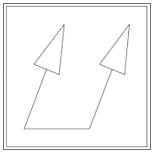
- The control is composite: it limits straightness, cylindricity, taper, and surface profile along the entire length of the feature, but it does not govern the actual diameter.
- It also applies to flat faces that are perpendicular to the same axis of rotation; in that case it simultaneously locks flatness and squareness.
Because the indicator probe must stay the same distance from the datum axis while it scans the length of the part, inspection setups are non-trivial. You often need precision V-blocks, centers, or a rotary table to keep the probe’s path perfectly parallel. The reward is tighter functional control without resorting to unrealistically small size tolerances.
(Tip: R. Dean Odell’s short video demos make this concept click visually—his channel is a gold mine for working engineers.)
Three Everyday Wins for Development Teams
- First-article confidence. Well-applied position and profile controls shrink the gap between simulation and reality, so prototypes reflect true functional variation.
- Supplier flexibility. GD&T lets you communicate requirements technology-agnostically; whether your vendor uses 5-axis machining, additive, or grinding, they know the target.
- Automatic inspection alignment. Modern CMM and vision systems accept GD&T directly from STEP-AP242 or PMI, shortening programing time and eliminating manual calculation errors.
Getting Up to Speed
- Mentorship on tap. R. Dean Odell’s YouTube channel (https://www.youtube.com/@RDeanOdell) breaks down every symbol with real gages and fixtures—perfect micro-lessons for busy schedules.
- Hands-on practice. Nothing cements the theory like clamping a part in a rotary table and watching the dial needle move. If you’re in Arizona this fall, consider joining us at PDX 2025 (Oct 21-22, Mesa Convention Center). Dean will run live workshops where you’ll inspect parts, tweak tolerances, and see how small drawing changes cascade through cost and quality. Details and registration: https://reg.eventmobi.com/product-development-expo-2025
GD&T isn’t just a drafting standard; it’s a design-for-manufacturability superpower. Invest the time to learn it well—your future self (and your suppliers) will thank you.