
How Local First Arizona can help rural businesses tap into solar installation funds
As a small business owner for many years, I always had an ear out for ways to improve my business and make a bigger impact on the community that surrounded me. I wanted to do more, be more and have more, but the realities of small business ownership set in and I was left leaving opportunities on the table to focus on the rigors of daily management.
One of the opportunities I always wanted to explore was how to be a part of the green movement. Living in Arizona, it just seems logical to leverage solar power with our endless amount of sunlight. But as I and many others have discovered, solar and other renewable energy sources are not the most cost-friendly on the front end, which deters many individuals and businesses.
Fast forward to today, opportunities I wish were available when I ran my coffee shop are now becoming a reality through the Inflation Reduction Act and Rural Energy for American Program (REAP).
In Arizona alone, $10 million per year is being made available to small businesses in rural areas and agricultural producers across the state to cut their utility costs through the use of various energy-efficiency and renewable energy projects. Each REAP grant will cover up to 50% of the total project cost, a significant savings.
Small business owners can now consider installing solar, wind or biogas technologies and making energy efficient upgrades knowing that these projects are financially in reach.
The funding can be transformative. Without a REAP grant, a project like solar implemented by a small business could take anywhere from 10 to 15 years to pay off the installation cost where a right-sized project through REAP can be cut down to 2-3 years.
Eliminating barriers for small business owners
But for many small businesses the task of filling out these very intricate grant applications, which the USDA estimates two to three days to fill out, can seem daunting. With this in mind, Local First Arizona is stepping in to make their grant writing services available to those who qualify through our Arizona Economic Resource Center. It brings me great joy to know that an organization that I work for is eliminating barriers for small business owners and opening up doors for them to receive funding for a renewable energy project, potentially saving them tens of thousands of dollars on their annual energy costs. All while helping to improve air quality and the environment at large.
As part of the grant writing services, our team assists the business owner through the entire process. We help them identify the necessary paperwork, facilitate their energy-efficiency audit through the Industrial Assessment School at Arizona State University, fill out the grant form and even assist them in finding a local financial institution with green lending products to maximize the funding while creating a lower impact on their cash flow.
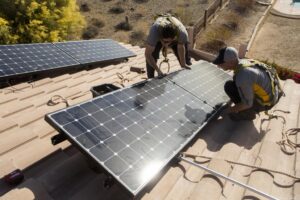
I have seen this transformative funding already come to fruition. Anna May Cory, owner of Pines Inn and Suites in Cottonwood, was an early applicant for this funding and installed a solar array on the roof of her hotel. She was able to achieve essentially 70% off the installation cost with the help of a $32,000 reimbursement from REAP and $23,000 in tax credits and is now estimating an annual cost savings of about $10,000.
This is a once-in-a-lifetime opportunity for rural small business owners and those in the agricultural industry. And for those, like me, who had wanted to find ways to improve our environment, bolster your business and be a part of a more sustainable future for all of us, this is a win-win for everyone.
With the support of Local First Arizona, I implore you to take action and look into this opportunity. Grant applications are open today to qualifying businesses and the next quarterly deadline is Sept. 30. So mark your calendars and seek out the support you need.
Donya Hasiak is the small business sustainability project and REAP technical assistance manager at Local First Arizona. A resident of Flagstaff, she operated her small business in northern Arizona for 10 years.